
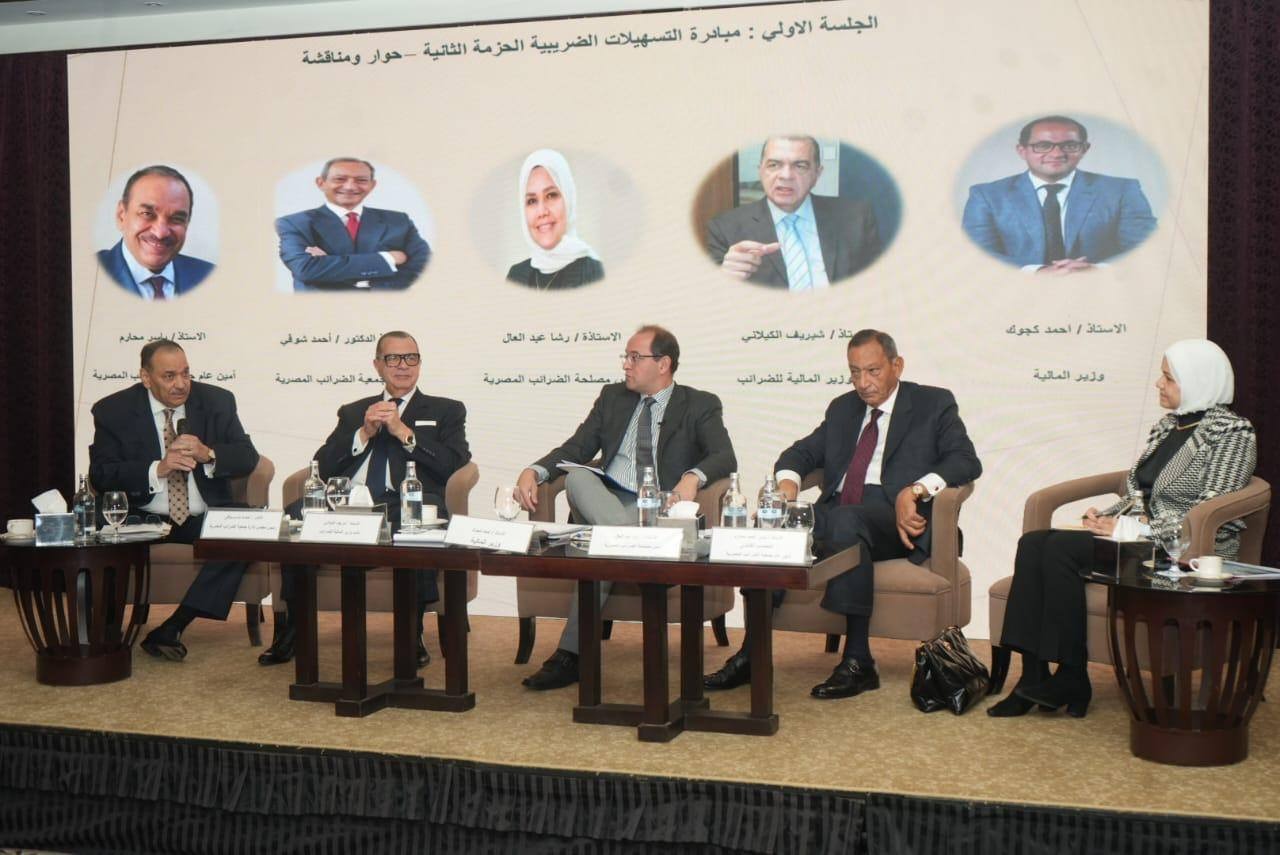
Kouchouk confirmed that a comprehensive tax policy strategy will be unveiled in the first quarter of 2026 to ensure market certainty. "The taxpayer’s rights are as vital as the state’s," the Minister said, emphasizing a transition toward voluntary compliance through better service and institutional support.
Key reforms in the second tax package:
Capital markets: Shifting from capital gains tax to stamp
duty to encourage institutional investment on the Egyptian Exchange (EGX),
alongside incentives for major companies to list.
VAT and refunds: Accelerating value-added tax (VAT) refunds
and establishing a centralized clearinghouse for credit balances.
Corporate support: Allowing the deduction of foreign loan
interest from the tax base for private companies involved in strategic
projects.
Real estate: Fixing the real estate disposal tax at 2.5% per
unit sale regardless of frequency, supported by a new mobile application to
automate the process.
The Minister also announced simplified tax systems with
concessional financing for the first 100,000 individuals and companies to join
the formal economy.
Deputy Finance Minister Sherif El-Kilany reassured
businesses that there will be no increase in tax burdens in the coming period.
Meanwhile, Rasha Abdel-Aal, head of the Egyptian Tax Authority, introduced a
"White List" for compliant taxpayers, offering them exclusive
benefits through a newly launched digital consultation platform.
Ahmed Shawky, President of the Egyptian Tax Association, praised the reforms, noting that the current approach builds a partnership based on trust between the state and the business community.