
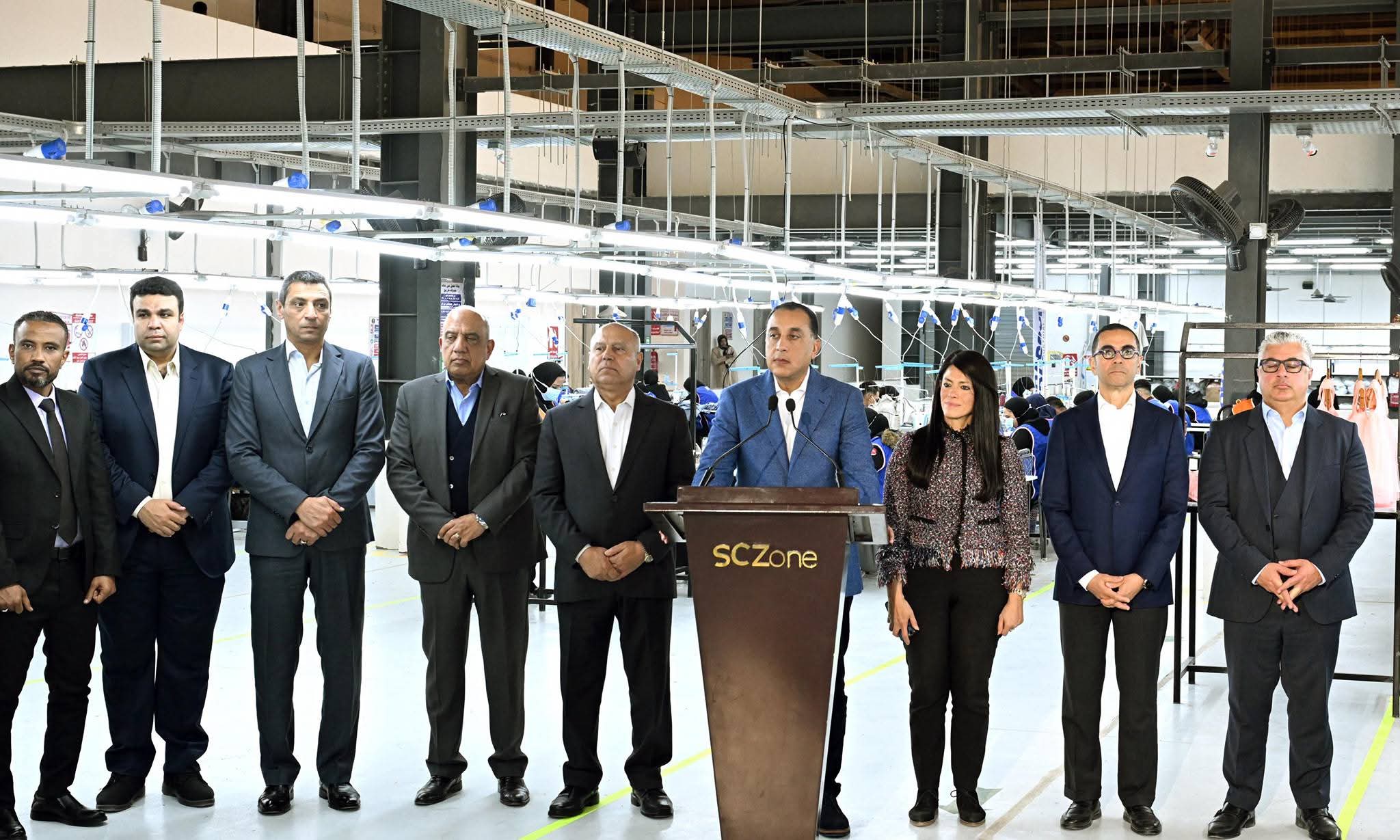
Madbouly said during a press conference held after concluding his tour of the integrated Sokhna Industrial Zone, affiliated with the SCZone, that an additional 150 factories are under implementation and construction. He noted that between 50 and 60 of these factories are expected to be completed during 2026.
The Prime Minister expressed his pleasure at being present
in the SCZone alongside a number of ministers, the governor, and the Chairman
of the General Authority for the Suez Canal Economic Zone to inaugurate new
projects. He stressed his keenness to conduct such visits every three months to
review the outcomes of the extensive efforts exerted in the zone and the major
investments made by the Egyptian state in infrastructure. He said these efforts
aim to position the area as a key destination for foreign and local investment
in one of the world’s most strategically important regions, the Suez Canal.
He said that nine diverse factories were inaugurated during
the visit, covering key industrial sectors and creating thousands of job
opportunities. He explained that these factories specialize in industries that
did not previously exist in Egypt and produce goods that were fully imported in
the past. He added that these facilities now supply part of domestic demand and
export abroad, contributing to foreign currency savings.
The Prime Minister pointed out that presentations delivered
at the newly inaugurated factories showed that 70 percent of production is
exported, while 30 percent serves the local market. He said this outcome would
not have been possible without strong infrastructure and a clear vision from
the political leadership to develop the zone. He highlighted Sokhna Port, which
has become one of the largest ports globally, alongside other ports within the
SCZone and across the country.
He also addressed the types of factories inaugurated during
the tour, noting that the first two factories specialize in producing solar
panel components. He said these projects align with Egypt Vision 2030 and the
state strategy targeting renewable energy to account for 42 percent of total
energy production before 2030. He explained that achieving this target
previously required importing all solar power plant components. He added that
with the inauguration of these factories, where the local content exceeds 50
percent, Egypt has entered a new phase of assembling and producing solar energy
components. He said this enables the state to meet its needs in local currency
instead of relying on imports paid for in foreign currency.
Madbouly added that prior to the start of the tour, several
contracts were signed to establish a large scale renewable energy plant with
investments reaching 1.8 billion US dollars in cooperation with Scatec. He also
referred to the establishment of a battery storage factory, which represents a
key component of solar energy systems. He said the project marks the launch of
a major initiative that will be implemented in the coming period and will
provide strong support to Egypt’s renewable and solar energy capacity.
He further stated that several other factories producing
components previously imported entirely by Egypt were inspected during the
visit. He expressed his satisfaction at seeing Egyptian youth taking bold
decisions to establish these factories with Egyptian financing. He said these
entrepreneurs have clear plans and strong ambitions to export abroad while
covering part of local demand and achieving genuine industrial development within
the Egyptian state.
Madbouly affirmed that the factories witnessed during the
visit, along with others inaugurated previously, achieve all state objectives.
He said these include significantly increasing exports, creating job
opportunities for youth, saving foreign currency previously used for imports,
and deepening local manufacturing. He added that there is continuous keenness
to engage the media and citizens in recognizing the scale of major projects
being launched in the SCZone and across the country.