
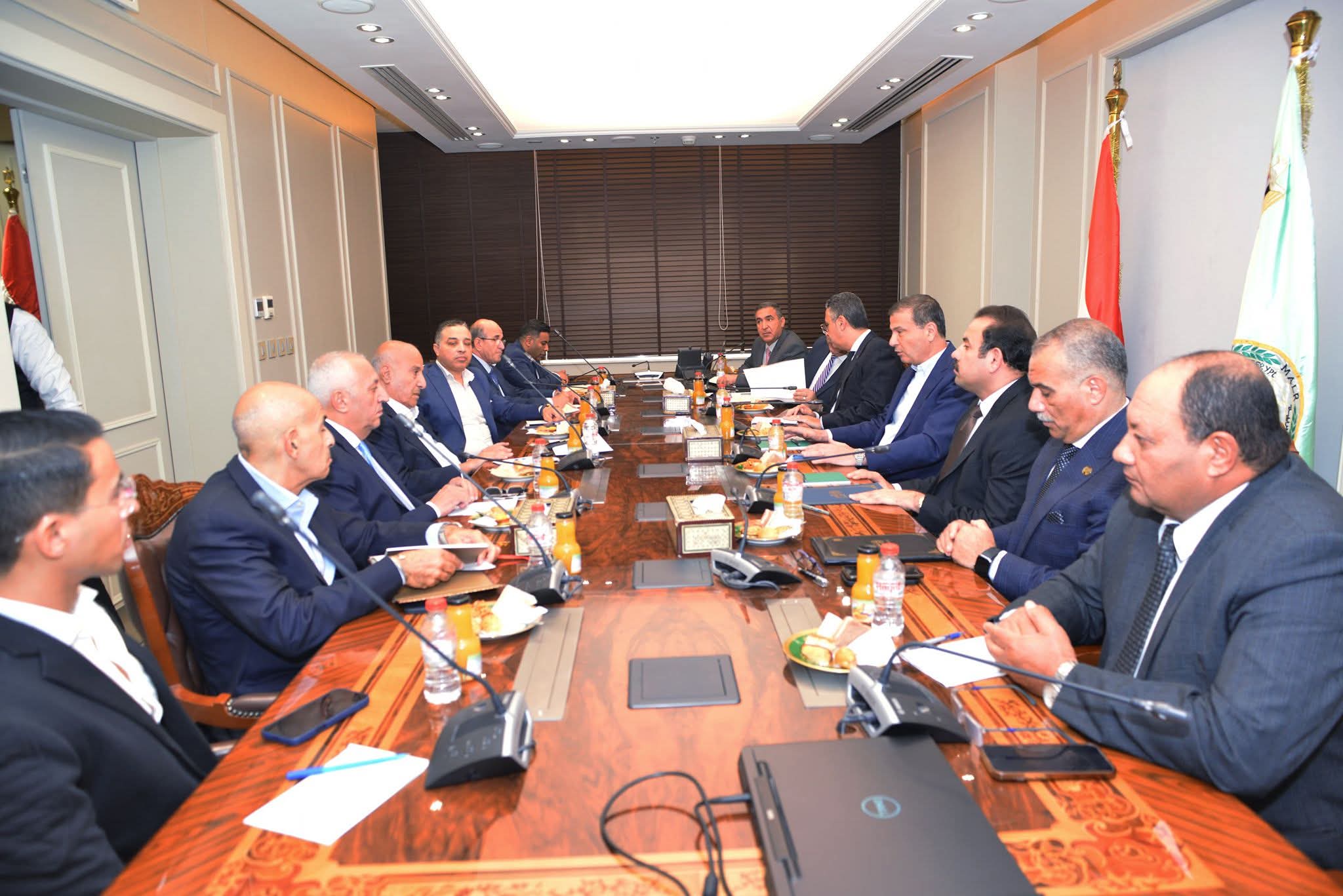
The meeting included members of the General Union of Poultry Producers, key investors in the sector, and senior officials from both ministries. The Poultry Union delegation was led by its Chairman, Engineer Mahmoud El-Anani, and Vice Chairman Anwar El-Abd, alongside major investors such as Sherif Sabeq and Ziad Montasser.
The ministers and the FESDA chairman emphasized that the
initiative falls within the framework of Egyptian state efforts to enhance
local production, ensure sustainability, and protect the national economy from
global market volatility.
They stressed the state's commitment to safeguarding the national
poultry industry, which has an estimated investment volume of 200 billion
Egyptian pounds and employs approximately 3.6 million workers. The industry
currently produces about 1.6 billion chickens and 16 billion table eggs
annually.
The officials highlighted the importance of regulating
market prices to align with production costs while simultaneously serving the
consumer's interest. The goal is to make poultry and egg products available at
affordable prices, especially ahead of the holy month of Ramadan, which
typically sees an increased demand for these products.
Key discussions focused on plans for supplying local
products to FESDA, with an emphasis on the Authority's unified purchasing
administration prioritizing Egyptian-made products at fair and moderate prices
to ensure high quality at reasonable costs.
FESDA stated its role in bolstering the poultry industry
through specialized projects, including support for the production of
veterinary vaccines, and supplying highly weather-resistant chick strains to
minimize losses and boost production efficiency.
FESDA discussed its efforts to increase supply and stabilize
prices through its extensive network of over 1,300 "Super Tawfeer"
(Super Savings) outlets nationwide, which offer high-quality food products to
citizens at equitable prices.
They discussed comprehensive plans detailing the necessary
measures to inject large quantities of poultry and table eggs into the outlets
of the Ministries of Agriculture and Supply, as well as FESDA, in preparation
for the higher demand during Ramadan.
Attendees agreed on stimulating and increasing production through investors to enhance capacity and ensure continuous and sustainable coverage of domestic market needs.