
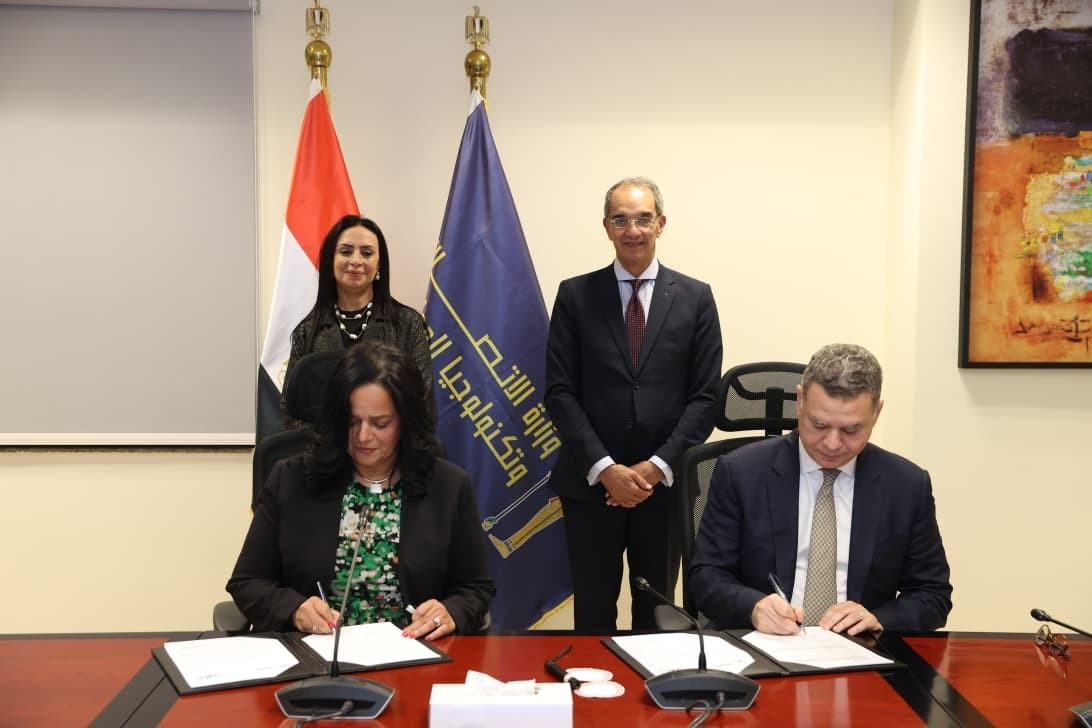
The agreement was signed by Engineer Ahmed El-Zaher, CEO of
ITIDA, and Engineer Neveen Galal, Chairperson of DXC Technology in Egypt, in
the presence of Engineer Hesham Fayad, DXC’s Regional Director for the Middle
East and Africa, along with senior officials from the Ministries of
Communications and IT and Social Solidarity, and representatives of the global
company.
The program will train and qualify more than 60 young men
and women with neurodiverse conditions, including autism spectrum disorder, Attention
Deficit Hyperactivity Disorder (ADHD), and dyslexia, aged between 18 and 30.
Spanning two years from the start date, the program combines personal skills
development with technical training in fields such as artificial intelligence
(AI), software testing, data analysis, and infrastructure monitoring.
Participants will also receive professional support through specialized
inclusion advisory teams, enhancing their ability to integrate professionally
into the workplace.
The official program launch is scheduled for March, with
actual training set to begin before mid-next year.
Dr. Talaat emphasized that the program’s launch reflects the
Ministry’s commitment to building a digital Egypt. He noted that the strategy
focuses on developing digital capabilities across society, providing citizens
with high-quality job opportunities in the digital economy, and ensuring all
citizens participate effectively in Egypt’s digital transformation. He added
that the success of the ICT sector depends on leveraging technology to serve
society and deliver developmental impact.
Dr. Morsy highlighted that innovation is the most effective
path toward full inclusion and independence. She stressed that the digital
economy opens new avenues for youth to become productive contributors and
opportunity creators, rather than merely recipients. Empowering this group in
the labor market is now an economic and social necessity. She noted that work
provides a fundamental right, fosters integration, creates financial
independence, strengthens community participation, and ensures the state
benefits from its citizens’ skills and potential.
She added that the Ministry of Social Solidarity provided
technical support for the program proposal to ensure participant readiness and
high-quality implementation, leveraging its experience in rehabilitation,
diagnosis, and psychosocial support. She praised the institutional cooperation
between the Ministries of Communications and IT and Social Solidarity,
describing it as a reflection of Egypt’s vision for a national system that
supports inclusive employment.
Galal said: “Individuals with neurodiverse conditions
possess unique abilities such as attention to detail, analytical thinking, and
creativity. These skills are highly sought after in software testing and data
analysis. The ITIDA-DXC Dandelion program provides a positive work environment,
tailored training, and professional support, enabling participants to fully
utilize their talents while helping bridge the ICT sector’s skills gap.”
DXC Technology, a Fortune 500 company, operates a regional
outsourcing center in Egypt serving more than 20 clients across the Middle
East, the UK, and Europe. The center currently employs over 600 specialists,
with plans to expand to 1,000 employees by 2027.