
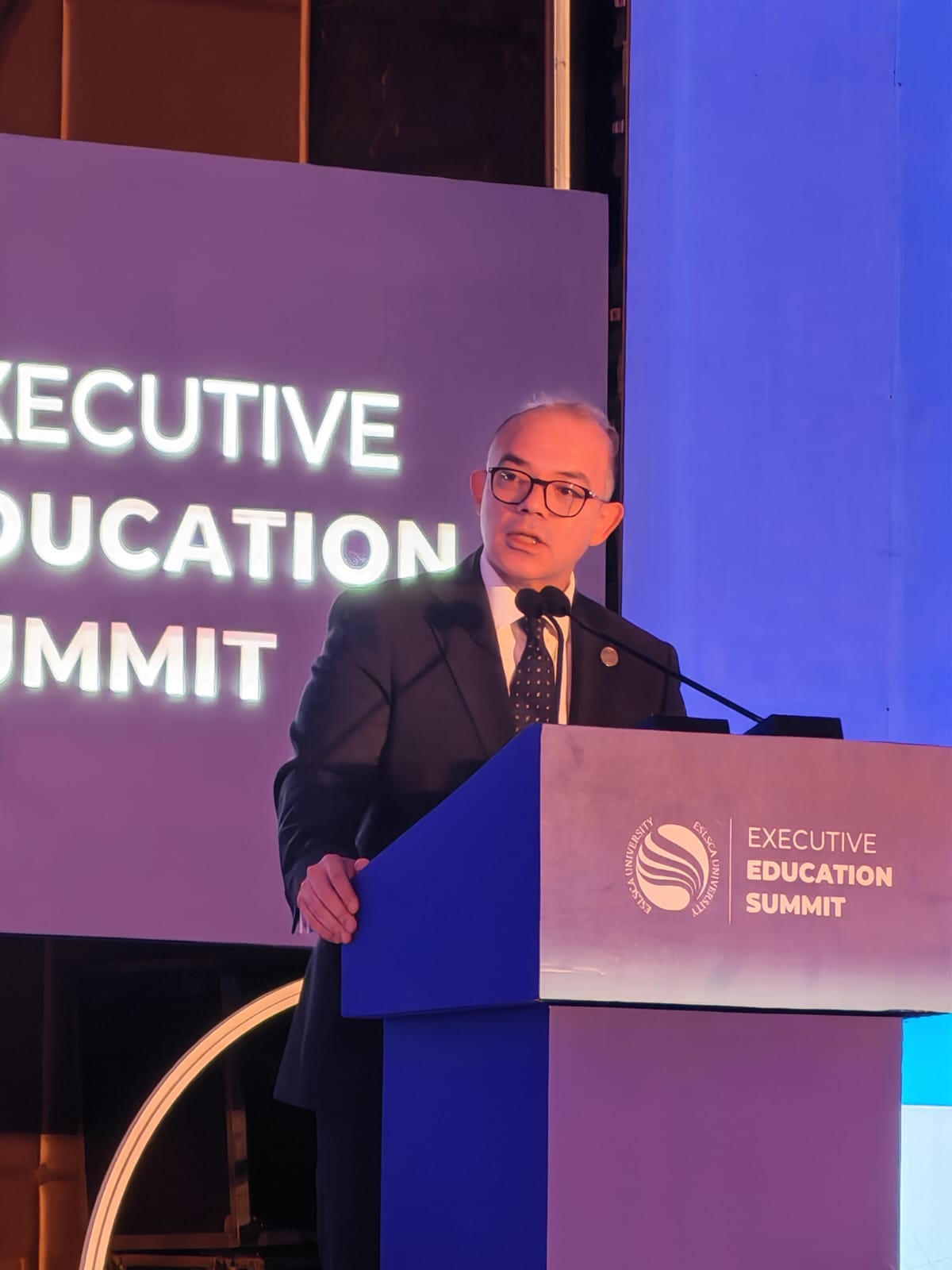
Farid delivered the address on behalf of the authority and
the Ministry of Finance. He stated that Egypt’s economic and developmental
reform process cannot be completed without effective investment in human
capital. He explained that continuous professional education is the cornerstone
that enables the transformation of ambitious policies into tangible results and
helps institutions maintain resilience and competitiveness amid changing
challenges.
He added that the current stage requires aligning executive
education with the ongoing reforms in Egypt’s economy. He stressed that any
educational system that fails to keep pace with these changes will produce
education that is disconnected from reality.
He noted that the past period witnessed the issuance of key
regulatory decisions. He explained that these include the first-ever governance
framework for insurance companies and the decision on key professional roles.
He added that the decision sets clear requirements for core positions,
including mandatory hours of continuous learning and professional development
for all employees.
He stated that the decision to register accountants and
auditors with the Financial Regulatory Authority’s registry obliges
professionals to complete a minimum annual requirement and an additional
three-year specialized training cycle. He said that these requirements ensure
readiness to meet regulatory standards and implement them efficiently.
Dr. Farid called on universities and executive education
centres, including ESLSCA, to continuously monitor regulatory developments and
update their programs to match market needs. He emphasized that investment in
human capital is the primary tool for ensuring policy implementation and
achieving institutional objectives.
He highlighted that improving women’s representation on
company boards is a core pillar of inclusive governance. He said that the
market has seen tangible progress.
He noted that the percentage of companies with women on
their boards increased from 14 percent in 2020 to 27 percent. He added that the
number of female board members rose from 400 to 1,140. He explained that this
improvement is the result of regulatory interventions and structured leadership
development programs implemented by the authority in recent years.
Farid explained that the authority issued several decisions
to support this direction. He said that these include Decisions No. 123 of 2019
and No. 124 of 2019, which ensure gender diversity in the leadership structures
of listed companies and non-banking financial institutions.
He added that Decision No. 204 of 2020 explicitly prohibits
gender-based discrimination in financial services. He noted that Decision No.
205 of 2020 provides financial incentives to companies that actively promote
gender inclusion.
He explained that the decision package also includes Prime
Ministerial Decree No. 2479 of 2018, amended by Prime Ministerial Decree No.
3456 of 2022, which updates the executive regulations of the Capital Market
Law. He added that the amendments include provisions governing bond issuances
linked to women’s empowerment.
Dr. Farid noted that the authority is working to develop the
Women Empowerment mobile application. He stated that the application will link
qualified women candidates to board opportunities in the non-banking financial
sector.
He added that the authority launched specialized training
programs to equip aspiring female leaders with core governance and leadership
skills needed for board membership.
He also addressed the challenges related to aligning
Generation Z and Generation Alpha with traditional work models. He explained
that these generations have different expectations regarding workplace culture,
motivation, and belonging.
He stressed that leadership teams must redefine engagement
tools and rebuild loyalty within institutions. He added that this must be done
without relying on outdated concepts that assume young professionals should
accept long-term investment in experience in exchange for difficult work
conditions, whether related to working hours or compensation. He emphasized the
importance of developing innovative practices to attract and retain young
talent.
He stressed that building flexible and innovative work
environments within financial institutions is a strategic necessity. He
explained that such environments help attract young talent and invest their
capabilities in ways that strengthen institutional competitiveness and
sustainability.
In conclusion, Dr. Mohamed Farid stated that continuous
education, women’s empowerment, and investment in human capital are practical
implementation tools rather than slogans. He affirmed that these pillars enable
institutions to turn strategies and policies into measurable actions and
enhance their resilience and competitiveness in the future.