
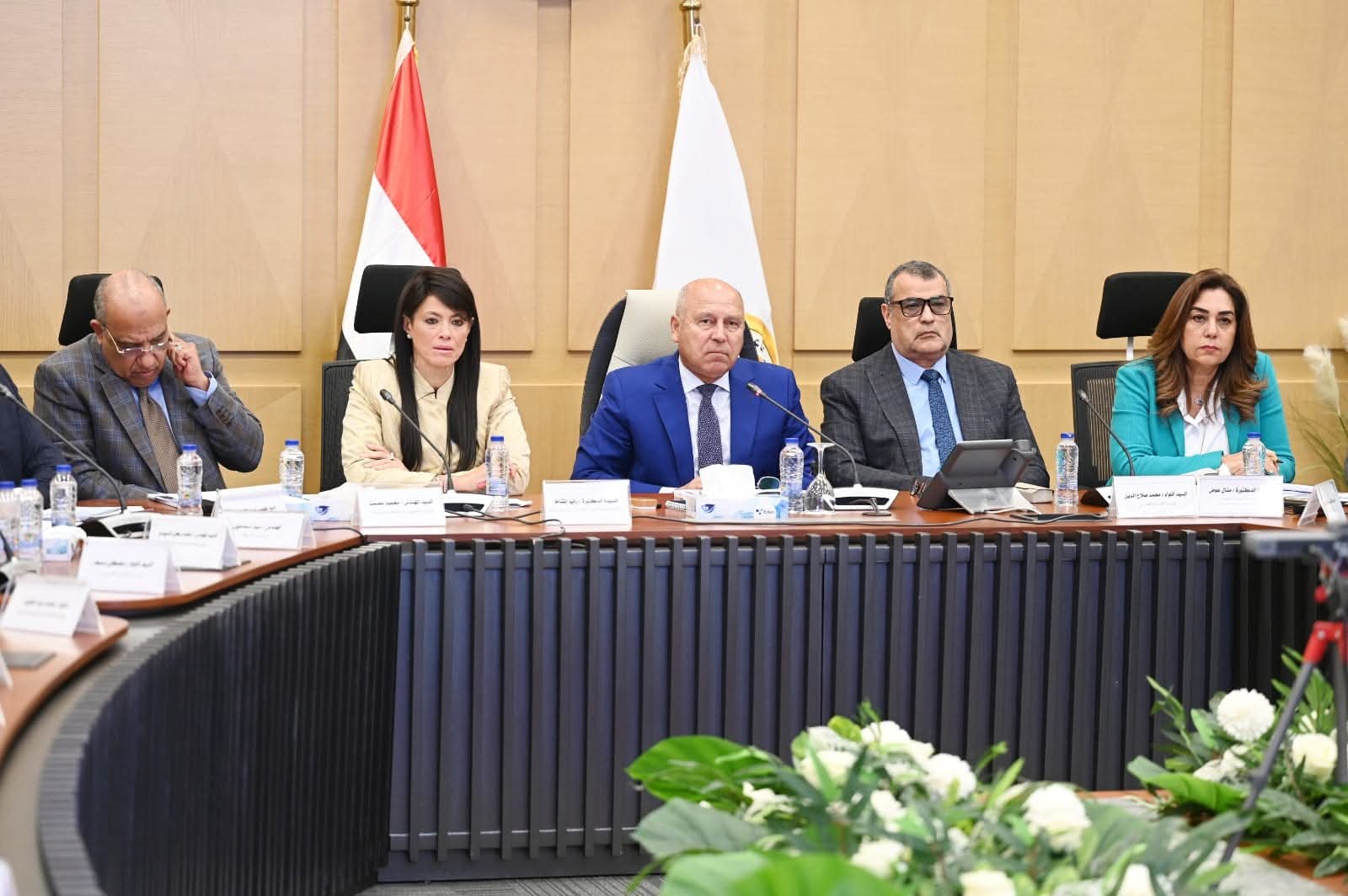
The meeting was attended by Minister of Planning, Economic Development and International Cooperation Dr. Rania Al-Mashat, Minister of State for Military Production Major General Mohamed Salah El-Din, Minister of Electricity and Renewable Energy Engineer Mahmoud Esmat, Minister of Public Business Sector Mohamed Shimi, and Minister of Local Development and Acting Minister of Environment Dr. Manal Awad.
Also attending (via video conference) were Minister of
Investment and Foreign Trade Engineer Hassan El-Khatib and Minister of
Petroleum and Mineral Resources Engineer Karim Badawi, along with Minister of
Housing, Utilities and Urban Communities Engineer Sherif El-Sherbiny,
Federation of Egyptian Industries (FEI) Chairman Engineer Mohamed El Sewedy,
and Industrial Development Authority (IDA) Chairwoman Nahed Youssef. SCZone
Chairman Waleid Gamal El-Din participated via video conference.
The group reviewed and approved energy requests for seven
out of eight companies operating within the Suez Canal Economic Zone (SCZone).
The approved projects span diverse fields, including solar panel glass and
automotive glass, non-woven fabrics and polyester yarn, oil, gas, and renewable
energy projects, a chemical complex for producing chemically produced sodium
sulfate, solid caustic soda, liquid chlorine, and hydrochloric acid, and an
integrated industrial complex for metal industry value chains that will produce
components supporting the automotive industry.
Al-Wazir affirmed that any major industrial investment
seeking to operate in Egypt must have its energy needs vetted by the
Ministerial Group. This process ensures the availability of required energy and
confirms the investment aligns with state-targeted sectors, establishing a
clear policy for industrial energy management.
The group also approved Single Approval (Fast-Track License)
requests for three companies: Mak Transport Manufacturing in the New October
Industrial Zone, Daily Egypt Industrial for a factory producing all types of
office supplies and school equipment in Southwest 10th of Ramadan City, and Medlog
for the project to establish, operate, and maintain the Dry Port and Logistics
Center in 10th of Ramadan City under a Public-Private Partnership (PPP) system.
Al-Wazir emphasized that these projects, once operational,
will significantly contribute to local industry deepening, meeting domestic
market needs, and boosting exports.
During the meeting, the group reviewed a complaint from
Hightech Novofl Optics regarding obstacles to manufacturing fiber optic cables,
specifically citing customs duties on production inputs while finished imports
are exempted, and market dumping by foreign goods.
Al-Wazir directed immediate coordination with the Ministries
of Investment and Foreign Trade and Finance to examine the complaint and issue
recommendations. He also mandated all government agencies to rigorously enforce
the Law on Preferring Local Products in Government Purchases to reduce import
dependency and bolster domestic industry.
Dr. Manal Awad, Minister of Local Development and Acting
Minister of Environment, presented the Ministry of Environment's plan to
localize the production of alternative fuels, such as Refuse-Derived Fuel
(RDF), biomass from agricultural waste, and industrial sludge.
She reported that Egypt has invested heavily in recycling
plants and safe sanitary landfills. There are currently 35 recycling plants
producing 1.4 million tons of RDF annually. Efforts are underway to increase
capacity to process Egypt's 25 million tons of annual municipal waste. The goal
is to provide this alternative fuel to energy-intensive industries, notably
cement plants. Nineteen out of 24 cement factories have already implemented
environmental remediation to increase their use of alternative fuels.
Al-Wazir instructed the Industrial Development Authority
(IDA) to coordinate with the Environment Ministry and the Federation of
Egyptian Industries (FEI) to study and select the most appropriate alternative
fuels for cement kilns, stressing the need to improve the quality and caloric
content of domestically produced RDF.
Awad concluded that the ministry plans to achieve a 60% recycling rate by the end of 2026, which will secure alternative fuels for factories and organic fertilizer for agriculture.