
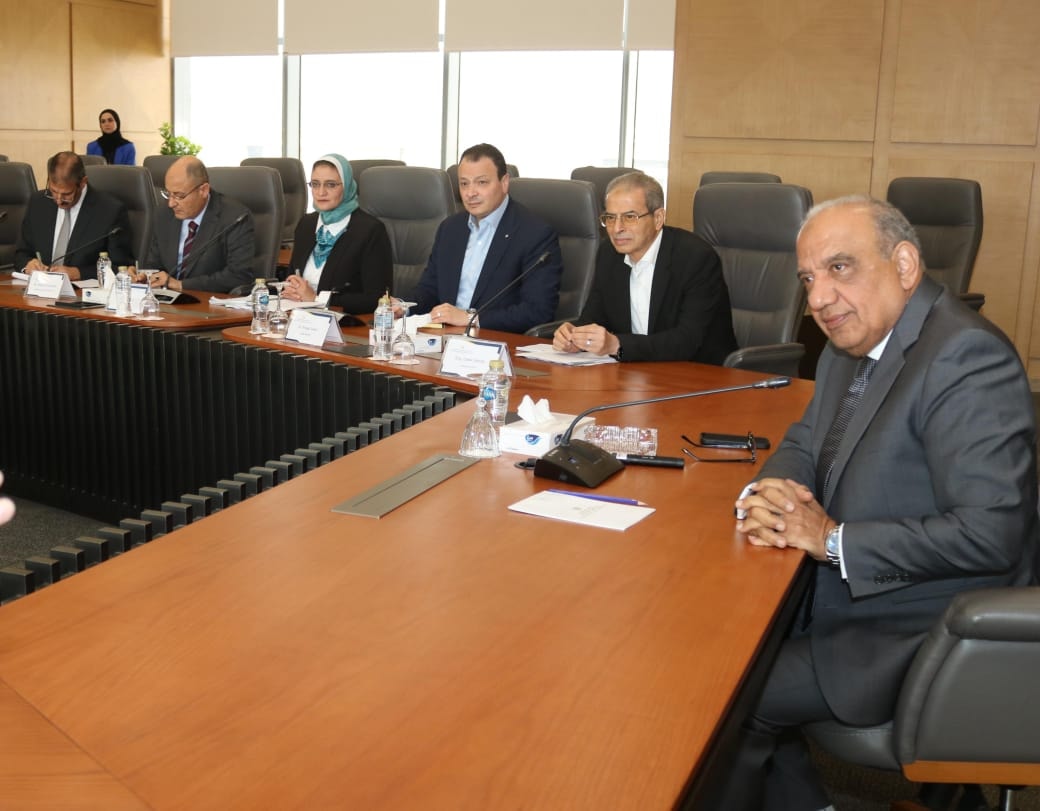
Discussions focused on joint projects, consultancy services
for renewable energy, energy strategy, the energy mix, and increasing reliance
on renewable sources. Cooperation on supporting and developing the unified
grid, securing financing for renewable power projects, planning optimal
electricity generation expansion, and exploring energy storage technologies was
also addressed.
Future projects discussed include strengthening the grid,
adding transmission lines and substations, integrating new renewable
capacities, and transforming the conventional grid into a smart grid. The meeting
also covered long-term investment plans, digital transformation, the ongoing
separation of the Egyptian Electricity Transmission Company, and the private
sector’s leadership in solar, wind, and regional interconnection projects to
position Egypt as a regional energy hub linking Africa, Asia, and Europe.
Esmat praised the cooperation with WB, highlighting Egypt’s
strategic efforts to connect energy markets across Africa, Europe, and Asia. He
noted ongoing interconnection projects with Sudan, Libya, Jordan, Saudi Arabia,
Greece, and Italy, aiming for regional energy integration, grid stability, and
economic benefits.
The Minister emphasized that the separation of the Egyptian
Electricity Transmission Company follows clear economic standards under Electricity
Law 87 of 2015, supervised by the Electricity Regulatory Authority. He outlined
initiatives to attract local and foreign investment in new and renewable
energy, environmental sustainability efforts, and Egypt’s national green
hydrogen strategy, targeting 5–8% of the global tradable green hydrogen market
by 2040. The National Green Hydrogen Council has been established to unify
efforts, set policies, and propose legislation for advancing the green hydrogen
industry.
Esmat highlighted the importance of joint knowledge
exchange, innovation in renewable energy technologies, financial efficiency,
and loss reduction programs. He reaffirmed Egypt’s national energy strategy,
aiming for renewable energy to exceed 42% of the energy mix by 2030 and 65% by
2040, maximizing resource utilization, reducing fossil fuel dependency, and
limiting carbon emissions.