
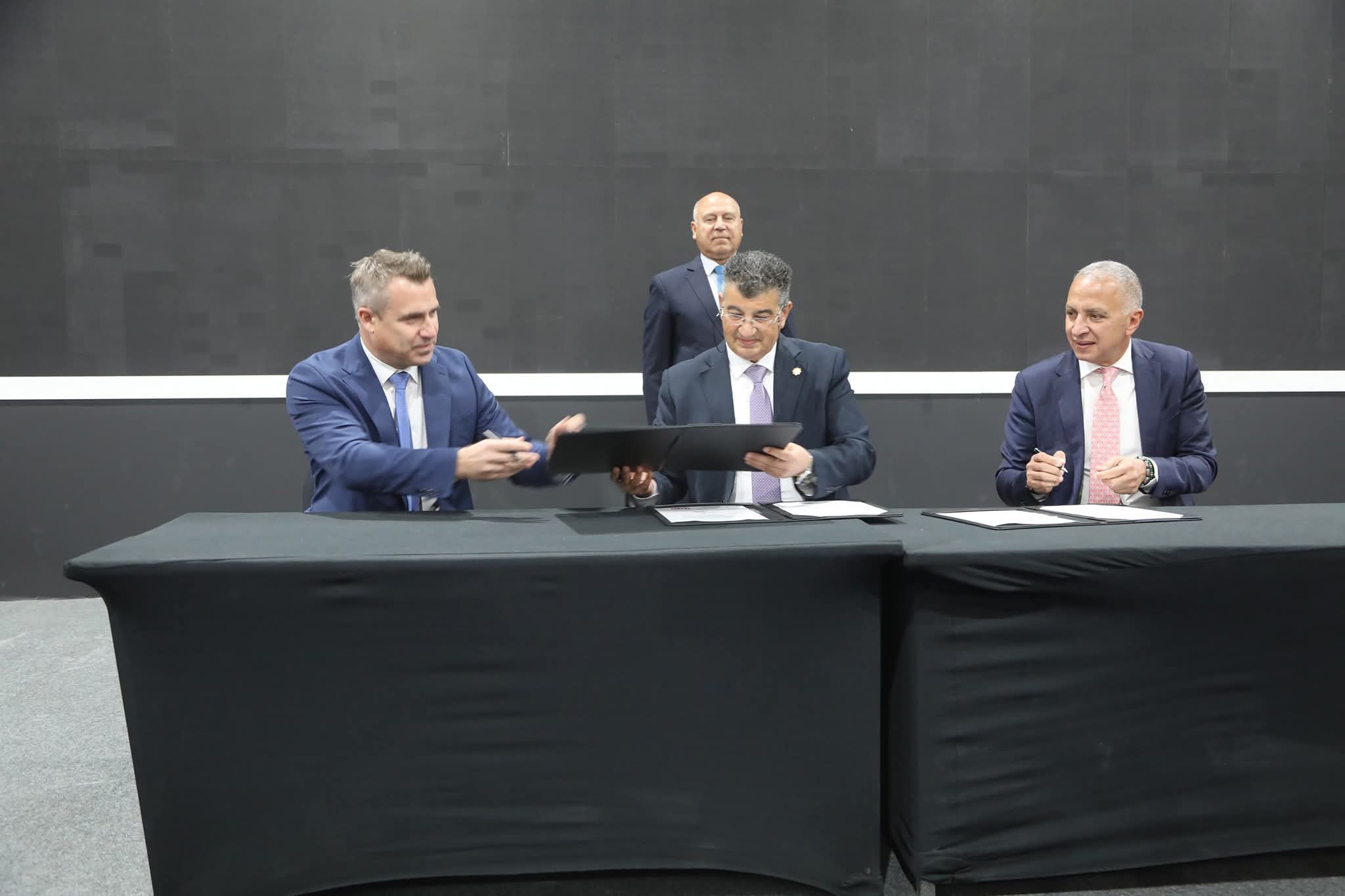
Dr. Tarek Goweily, Chairman of the National Authority for
Tunnels, Niko Warbanoff, CEO of Deutsche Bahn International Operations, and
Ahmed El-Sewedy, Chairman of Elsewedy Electric, signed the agreement.
Al Wazir emphasized that the signing is part of the Ministry
of Transport’s comprehensive plan to collaborate with leading international
companies in management and operations, leveraging their expertise,
particularly Deutsche Bahn, a world leader that operates all railway lines in
Germany and numerous lines abroad. He added that managing the network’s three
lines under a single operator will reduce operational conflicts through a new
revenue-sharing management model.
The agreement stipulates that Egyptian workers will
constitute at least 95% of the company’s workforce, ensuring knowledge transfer
to Egyptian employees. The plan includes training engineers and technicians to
independently operate and manage the high-speed electric train system in the
future. It also covers annual training of Egyptian train drivers in Germany to
operate the high-speed electric trains.
Al Wazir noted that the project implements President Abdel
Fattah El-Sisi’s directives to expand environmentally friendly electric rail
projects. The National Authority for Tunnels is currently implementing three
high-speed electric train lines totaling 2,000 km (passengers & cargo).
These lines are faster, more comfortable, and safer than conventional trains,
with higher transport capacity. They support economic development, serve
industrial and tourism sectors, enhance regional infrastructure, and contribute
to creating new urban communities while serving existing population centers.