
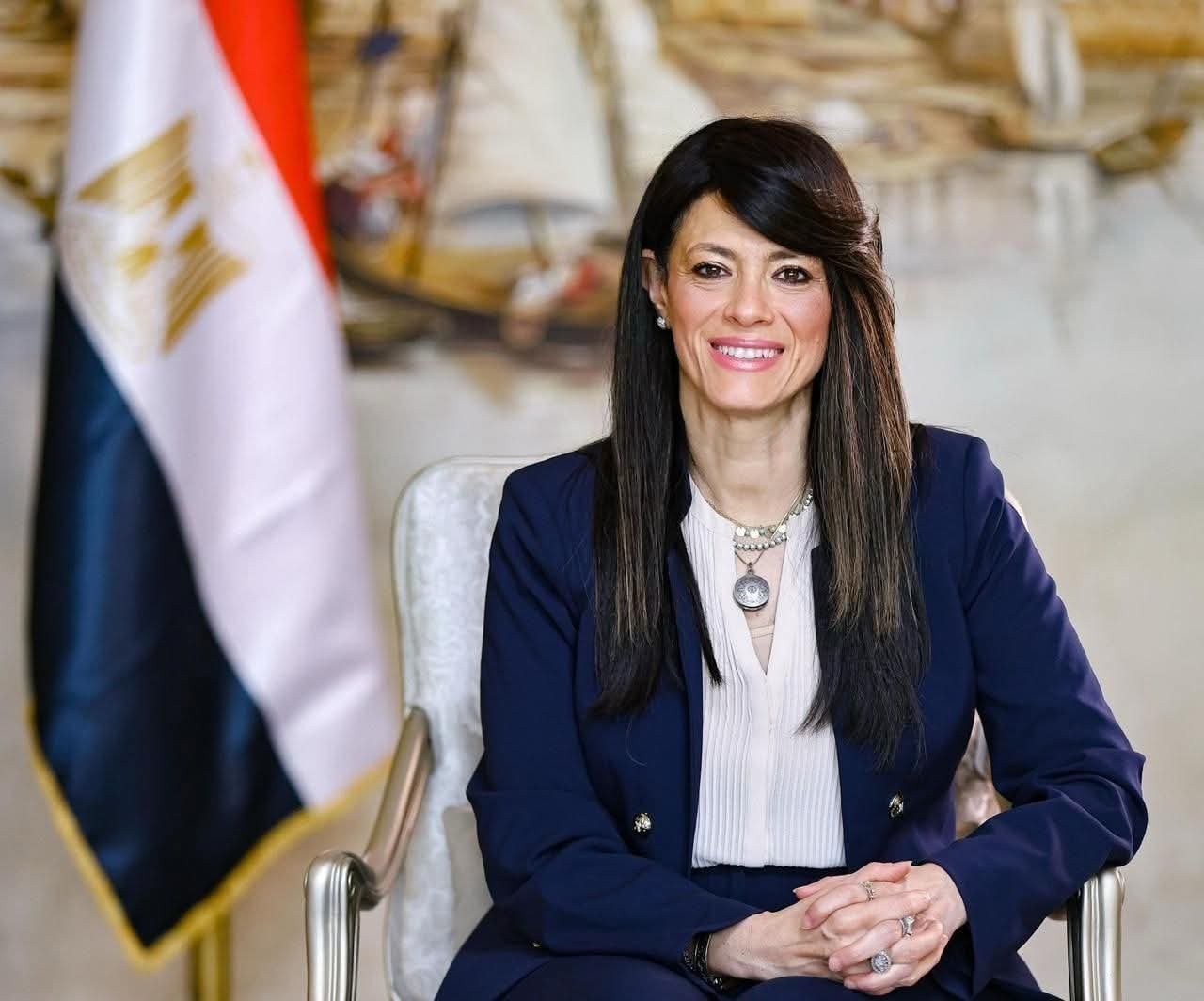
Al-Mashat made these remarks during her interview with
journalist Richard Quest on CNN International during her recent visit to
London. She pointed out that GEM is the largest museum dedicated to a single
civilization and houses the complete collection of King Tutankhamun. She added
that the museum supports the state’s vision of attracting 30 million tourists
by 2030, particularly given Egypt’s developed infrastructure and airports that
connect coastal tourist areas with the country’s archaeological sites.
She also highlighted GEM’s significant employment multiplier
effect. The tourism sector is among the highest in generating indirect jobs,
with each direct job creating two to three additional opportunities, reflecting
its critical role in Egypt’s labor market.
Dr. Al-Mashat discussed Egypt’s development journey, noting
the substantial investments in infrastructure over recent years, which lay the
groundwork for growth across sectors such as tourism, industry, and exports.
She emphasized that these developments have made the economy more attractive to
investors, particularly in renewable energy and industries like pharmaceuticals
and textiles. Egypt maintains trade agreements with more than 70 countries and
a free trade agreement with Africa. The government has also implemented
measures to facilitate investment and improve the business environment,
providing significant opportunities to boost exports and international trade.
The minister stressed that these achievements reflect the
diversity of the Egyptian economy, supported by a solid industrial base,
ongoing growth in digital transformation, communications, and information
technology sectors, and the boom in tourism. She noted that these factors
contributed to a growth rate of 4.4% in the last fiscal year and 5% in the last
quarter, despite the continued contraction of the Suez Canal sector due to
regional tensions.
Regarding regional developments, she said that during her
last interview in February, the region faced severe challenges. She added that
Egypt now has a peace agreement led by President Abdel Fattah El-Sisi, in
partnership with the United States, Qatar, and Turkey. This agreement is
expected to restore 12% of global trade passing through the Suez Canal,
positively impacting the regional and global economy. She emphasized that past
crises have strengthened Egypt’s resilience through continuous policies and
reforms, and that the government remains committed to enhancing policy
predictability and boosting economic flexibility.
Al-Mashat concluded by affirming that the Egyptian economy
has overcome successive crises due to its resilience, and that the government
continues its reform efforts to ensure clarity and predictability in economic
policies.