
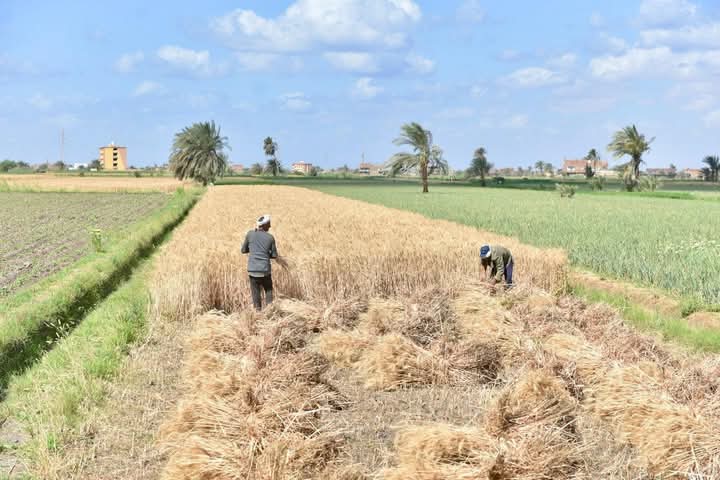
The coordination aims to integrate support for farmers ahead of the upcoming agricultural season, focusing significantly on increasing the productivity of strategic crops, especially wheat.
The meeting was chaired by Dr. Alaa Azzouz, Head of the
Agricultural Extension Sector, and coordinated with Dr. Adel Abdelazim, Head of
the Agricultural Research Center.
The Ministry plans to expand the establishment of demonstration
fields to exceed 25,000 during the new season. These fields will serve as
practical models for transferring modern farming practices to farmers.
Attendees stressed the need to unify technical messages and
focus on water-saving methods and modern agricultural mechanization. Specific
practices emphasized include: applying the planting on ridges method in the
Valley and Delta to reduce costs, increase productivity, and improve crop
quality, adhering to the wheat varietal map across governorates to ensure suitable
varieties are planted, and providing high-quality, certified seeds of
recommended varieties to farmers affordably and on time.
Discussions also covered developing agricultural engineers'
skills to enable them to effectively supervise demonstration fields, manage
field schools, and transfer modern technologies. They tackled a two-pronged
approach to technical support: activating Agricultural Extension Centers and
integrated service complexes under the Decent Life (Hayah Karima) initiative,
and using digital platforms and social media to issue periodic newsletters and
immediate climate warnings to farmers.
Leaders from the following entities participated Agricultural
Extension sector, Field Crops Research Institute, Agricultural Extension and
Rural Development Research Institute, Central Administration for Agricultural
Extension, Executive Agency for Land Improvement Projects, Agricultural
Development Program, Executive Agency for Comprehensive Development Projects, Land
Reclamation Sector, and General Authority for Agricultural Reform
Participants concluded by emphasizing the need for full coordination and continuous follow-up to achieve the strategic goal of national food security.