
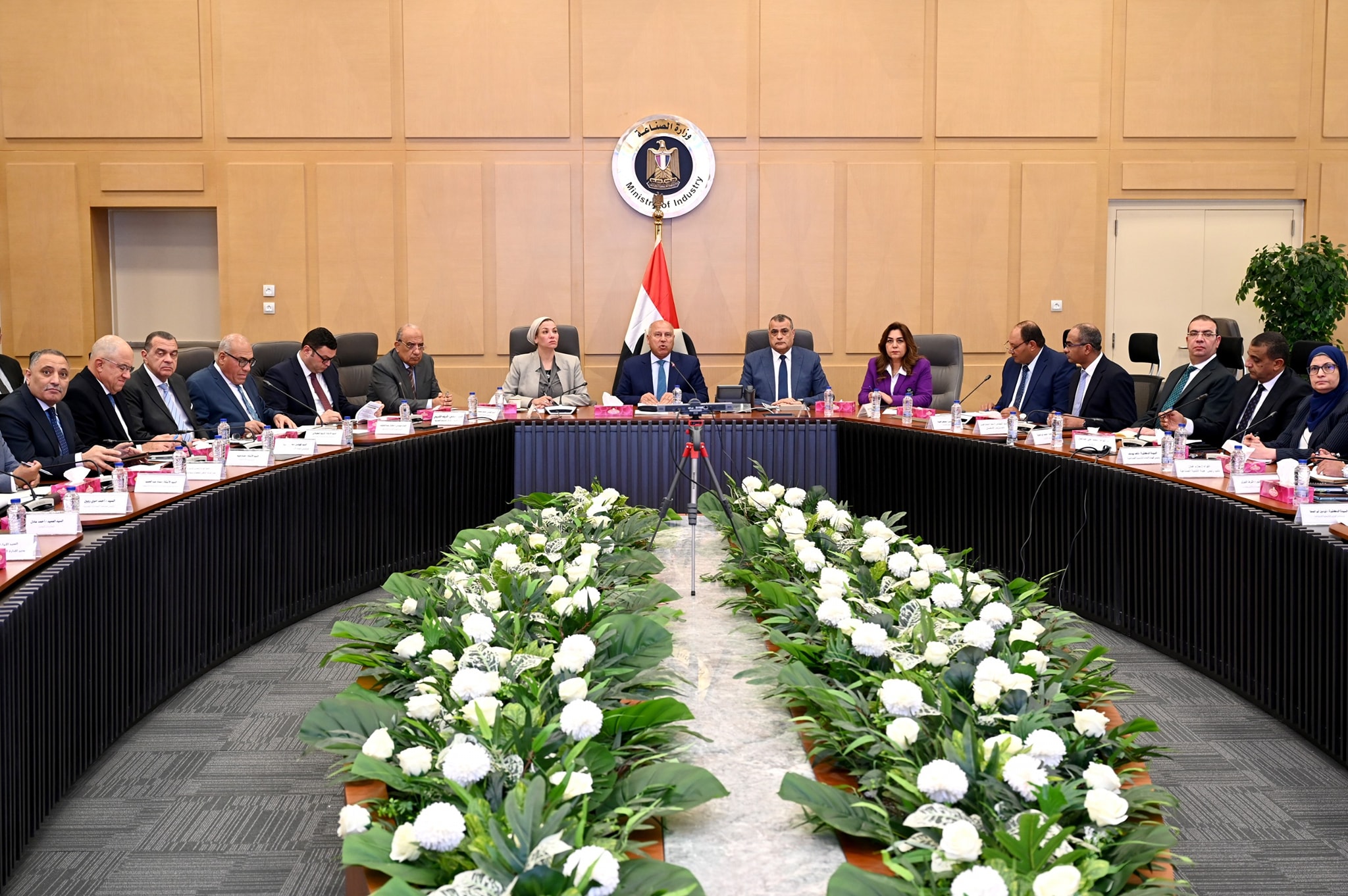
The meeting focused on maximizing the use of sugarcane bagasse, exploring its conversion into production inputs or ethanol production as a cleaner alternative to burning it as fuel in sugar factories. The Ministry of Supply and Internal Trade outlined plans to integrate bagasse into industries like particleboard, paper, and fiberboard.
Minister El-Wazir directed the General Authority for
Industrial Development to collaborate with the Ministry of Supply and the
Egyptian Federation of Industries to incentivize private sector investment in
this area, utilizing modern technologies to reduce pollution from bagasse
burning and maximize its economic benefits, while also decreasing raw material
imports for the paper, wood, and fiberboard sectors.
The progress of a Prime Ministerial committee, involving the
Ministries of Industry, Environment, Local Development, and Agriculture, on
localizing the feed industry using agricultural and animal waste was also
reviewed. The Ministry of Environment, in collaboration with the Ministry of
Agriculture, presented efforts to improve agricultural waste collection and
transportation to factories for integrated use, including MDF production from
palm fronds.
Environment Minister Dr. Yasmine Fouad underscored the
commitment to advancing the utilization of agricultural residues and animal
waste. She highlighted the Ministry's National Strategy for Agricultural
Residues, including its implementation plan and mapping of waste distribution
across governorates, noting Egypt's estimated 40-45 million tons of annual
agricultural waste suitable for animal feed and organic fertilizer production.
Local Development Minister Dr. Manal Awad emphasized the
potential of biogas and compost units for processing agricultural and animal
waste. She also mentioned the government's focus on maximizing slaughterhouse
waste utilization, with biogas units established and animal manure being used
for fertilizer and gas production.
The meeting also explored increasing PVC production by the Holding Company for Petrochemicals to meet local factory demands. Current annual production stands at 80,000 tons, with a potential increase to 120,000 tons contingent on the availability of ethane gas, the primary raw material for PVC.