
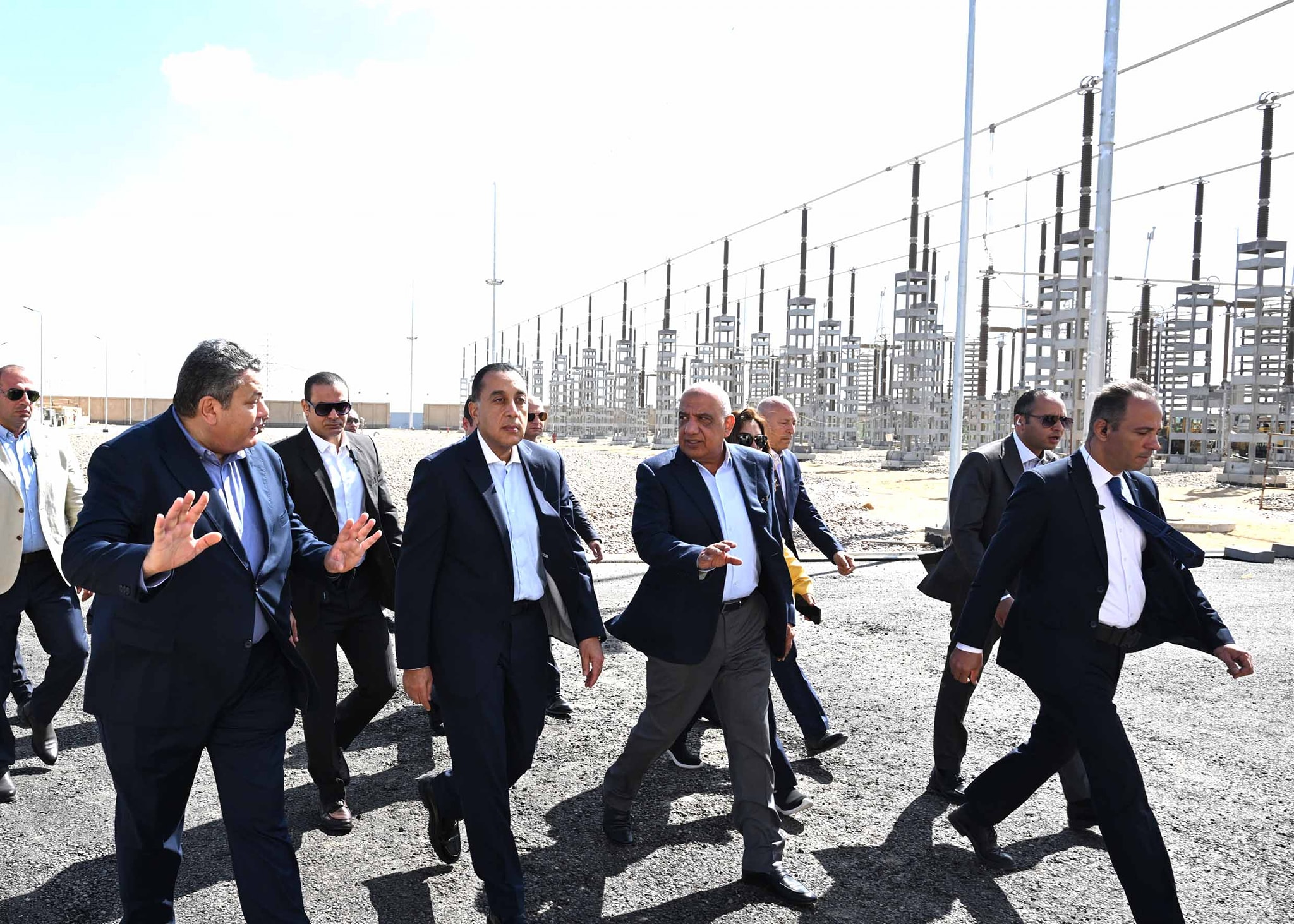
The Badr station is the first of its kind in the Middle East in terms of size and operating technology for grid interconnection lines.
The prime minister said the project receives direct
attention from President Abdel Fattah al-Sisi for its importance as a model of
Arab energy cooperation, its role in boosting grid efficiency and stability,
and its ability to utilise available generation capacity during peak load
times.
Minister of Electricity and Renewable Energy Mohamed Shaker
highlighted the project’s goal of creating an "electrical bridge"
between the nations, working towards a fully integrated network. This will
enable efficient and flexible energy exchange, paving the way for a common Arab
electricity market.
Shaker added that the 3,000-megawatt project capitalises on
the difference in peak load times between the two networks, which maximises
generation utilisation, reduces fuel consumption, and ensures economic
operation. The link between the two largest power grids in the region is also
intended to be a nucleus for a future electricity interconnection between the
continents of Africa, Asia, and Europe.
Officials confirmed the completion of key components,
including the Badr converter station, the Taba 2 switching station, the 320-kilometre
Badr/Taba 2 500kV overhead line, and the marine and land cable installations.
Following the inspection tour, Madbouly chaired a meeting
with ministers and representatives of the implementing consortium. The prime
minister praised the companies' efforts, directing them to expedite work on the
second phase of the project, aiming for both phases to be ready for operation
by April 2026.
The $1.8 billion, 3,000 MW interconnection project
involves three major high-voltage converter stations—one in Madinah East, one
in Tabuk, and the third in Badr City. These stations are connected by
approximately 1,350 kilometres of overhead lines and submarine cables.
The consortium noted it has logged approximately 11.6 million working hours on the project so far. Madbouly commended the efficiency of Egyptian workers and stressed the importance of establishing technical schools to train youth for the skills required for such massive projects, suggesting the trained workforce could be deployed for similar international projects.