
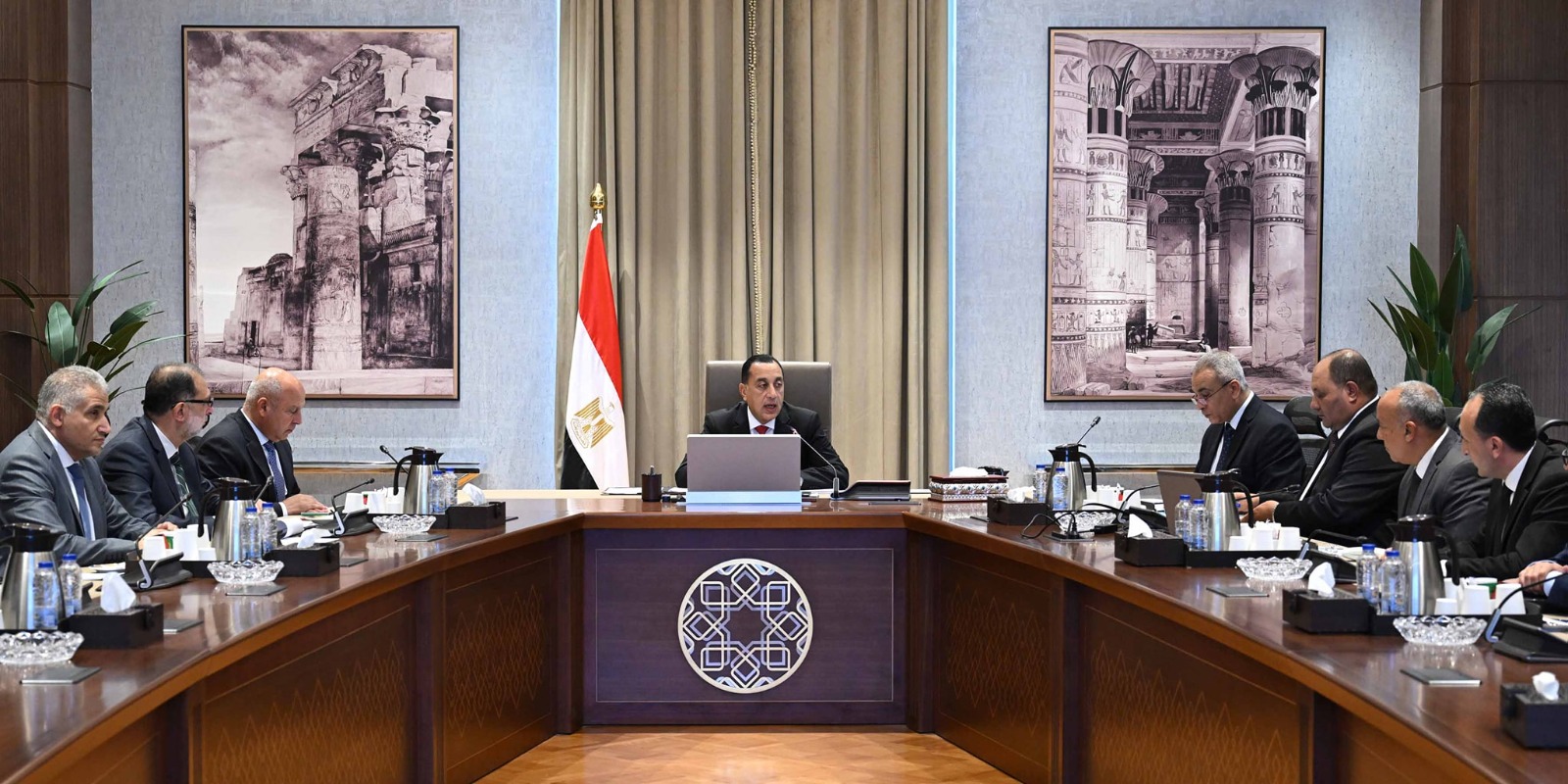
The meeting was attended by Lieutenant General Kamel
Al-Wazir, Deputy Prime Minister for Industrial Development and Minister of
Industry and Transport. Also present were Dr. Moustafa El-Sayyad, Deputy Minister of Agriculture and
Land Reclamation; Dr. Tarek El-Houby, Chairman of the National Food Safety
Authority; Major General Haitham Abdel-Salam, Representative of the Egypt
Future for Sustainable Development Agency; Mohamed Saleh, Head of the
Irrigation Authority; and Amani Al-Wasal, Head of the Agreements Sector at the
Ministry of Investment and Foreign Trade. Several officials from relevant
authorities also attended.
Dr. Madbouly emphasized the importance of maintaining a
steady supply of red meat in markets across the country. He said the available
quantities must meet the needs and requirements of citizens. He pointed to the
government’s continuous efforts to monitor the supply of red meat in the
market. He also stressed the importance of diversifying the international sources
of meat imports and increasing supply levels to help achieve price stability.
He highlighted the government’s interest in facilitating
procedures for transporting imported live animals. He called for expanding the
establishment of quarantines and slaughterhouses, especially in border areas.
He also stressed the need to provide proper veterinary care to preserve animal
health.
Al-Wazir said ships are ready to transport the required live
animals. He explained that work is currently underway to reduce transportation
costs in coordination with various government agencies. He noted that these
efforts will help achieve a balance in meat prices. He also mentioned that
coordination is ongoing with a number of friendly African countries to
strengthen cooperation in this sector.
El-Sayyad reviewed the livestock development plan. He said
the plan aims to increase red meat production to meet national demand and
stabilize market prices. He explained that the plan consists of two parts: an
urgent implementation plan and a long-term strategy.
He stated that the urgent plan includes updating the
livestock inventory and database. It also involves expanding the national breed
improvement project and enhancing veterinary care to maintain animal health.
He added that the long-term plan focuses on crossbreeding
local and imported breeds to produce a genetically improved Egyptian breed that
adapts well to local conditions. It also includes establishing a factory for
drying locally produced milk to reduce imports of diluted milk. He said the
plan further involves setting up border quarantines and slaughterhouses for
immediate processing of livestock arriving from neighboring African countries.
The ministry also aims to expand local production of feed and feed alternatives
to reduce imports.
El-Sayyad added that an advanced artificial insemination
center will be established in Sohag Governorate to support livestock
development in Upper Egypt.
He confirmed that the 2024 livestock census has been
completed, recording a total of 8.6 million heads. He said the expected local
production for 2025 has been determined, and import requirements have been
updated accordingly. He also pointed out that the Ministry of Agriculture has
diversified import sources and studied major African countries producing red
meat, especially those geographically and regionally close to Egypt.