
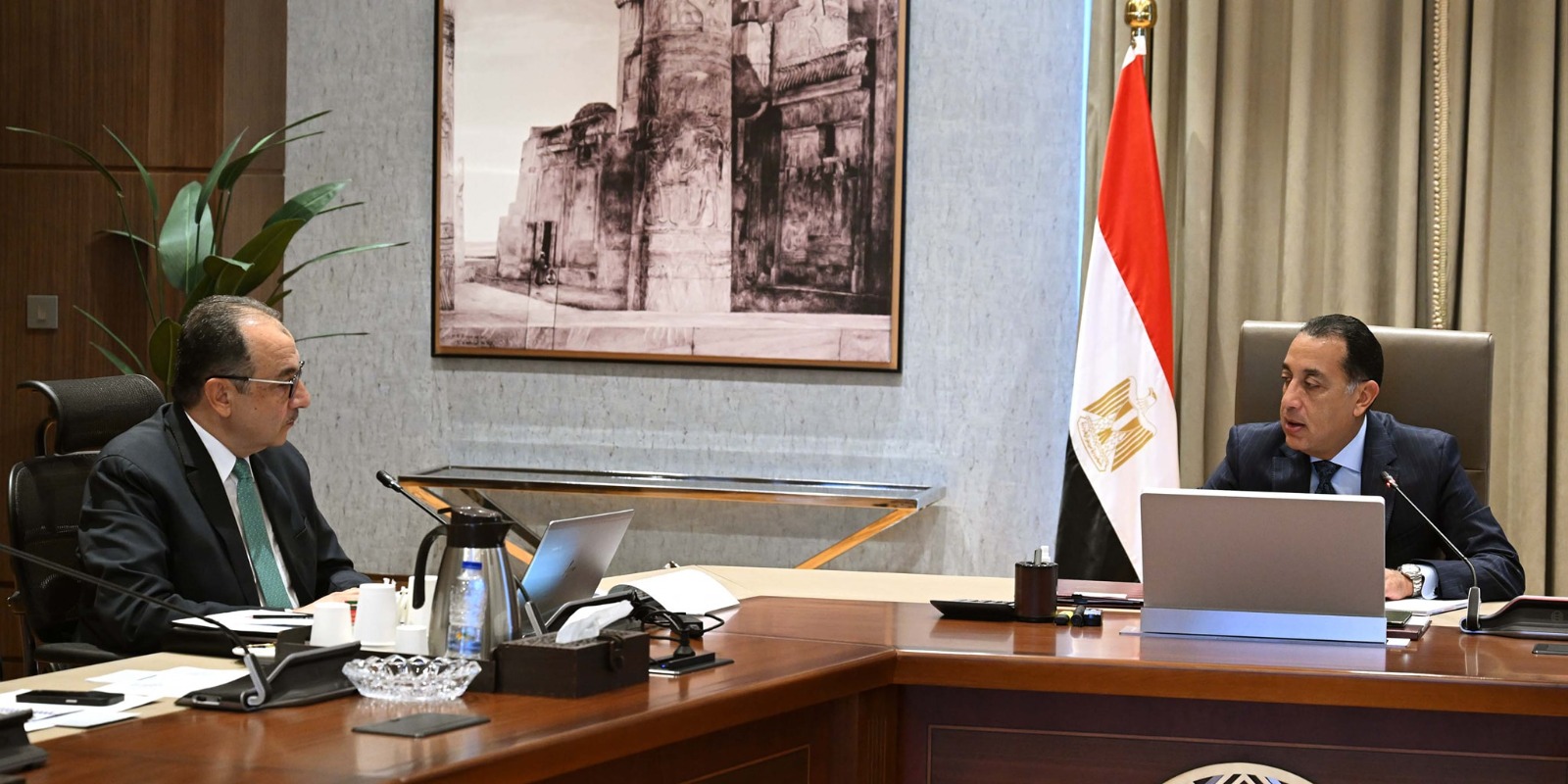
Madbouly stressed the importance of developing the sector, noting the government has invested billions of pounds in the facilities. He said the government's intention is to enter into partnerships with the private sector to ensure expert management and improve performance.
The plan, which follows directives from President Abdel
Fattah al-Sisi, aims to continue developing public business sector companies,
improve management, and boost asset returns, particularly through private
sector partnership and technological advancement. Madbouly called for clear
targets and a specific vision for each company.
The prime minister confirmed that President Sisi’s
instructions include implementing sound governance to guarantee top-level
management for the newly developed firms. He directed officials to promote the
upgraded facilities for private sector management under a strict governance
framework, which would help preserve and grow these investments while adhering
to international standards for quality, sustainability and continuous
development.
The official Cabinet spokesperson, Mohamed El Homossany,
confirmed the meeting also addressed progress on the factory development
projects and related cooperation with the private sector.
Public Business Sector Minister Mohamed Shimi explained that
the National Project for the Development of the Spinning and Weaving Industry
aims to maximize the added value of Egyptian cotton, restore Egypt's global
leadership in the textile industry, and enhance the competitiveness of national
products globally. The project includes a comprehensive modernization of
infrastructure, factories and machinery, introducing the latest global
technologies in partnership with the private sector, and improving worker
efficiency through continuous training.
Shimi reviewed the executive status of the development
projects, stating the first phase is complete and operational, with work
underway to finish the second and third phases.
He reported a continuous increase in the total quantities of
yarn produced and sold as a result of the development efforts. As an example,
the Minister cited the Misr El Mahalla Company, where produced quantity rose
from 117 tons in the 2022-2023 fiscal year to 3,373 tons in 2023-2024, and then
to 6,288 tons in 2024-2025. Shimi also outlined efforts to secure operational
raw materials for the factories.
Regarding private sector involvement, Shimi affirmed it is a
strategic partner in sustainable development, and encouraging local and foreign
investment is a priority. He noted that the Ministry's companies have wide
investment opportunities, and are offering attractive solutions and facilities
to investors.
The Minister cited numerous successful private sector
partnerships in various projects, highlighting the government's openness to
local and foreign partners, its commitment to attracting new investments to the
Egyptian economy, and its dedication to giving the private sector the
opportunity to drive economic growth.
Shimi said the Ministry has held many meetings with
international investors from countries including South Korea, China and Turkey,
who are interested in Egypt's textile sector. He added that all available
investment opportunities and the ongoing development work have been presented
to them.
He concluded that cooperation with leading companies aims to manage and operate the factories at maximum capacity, leveraging their expertise in soundly governed management. These partnerships also target the utilization of idle assets, foreign currency provision, job creation, and boosting production for export.