
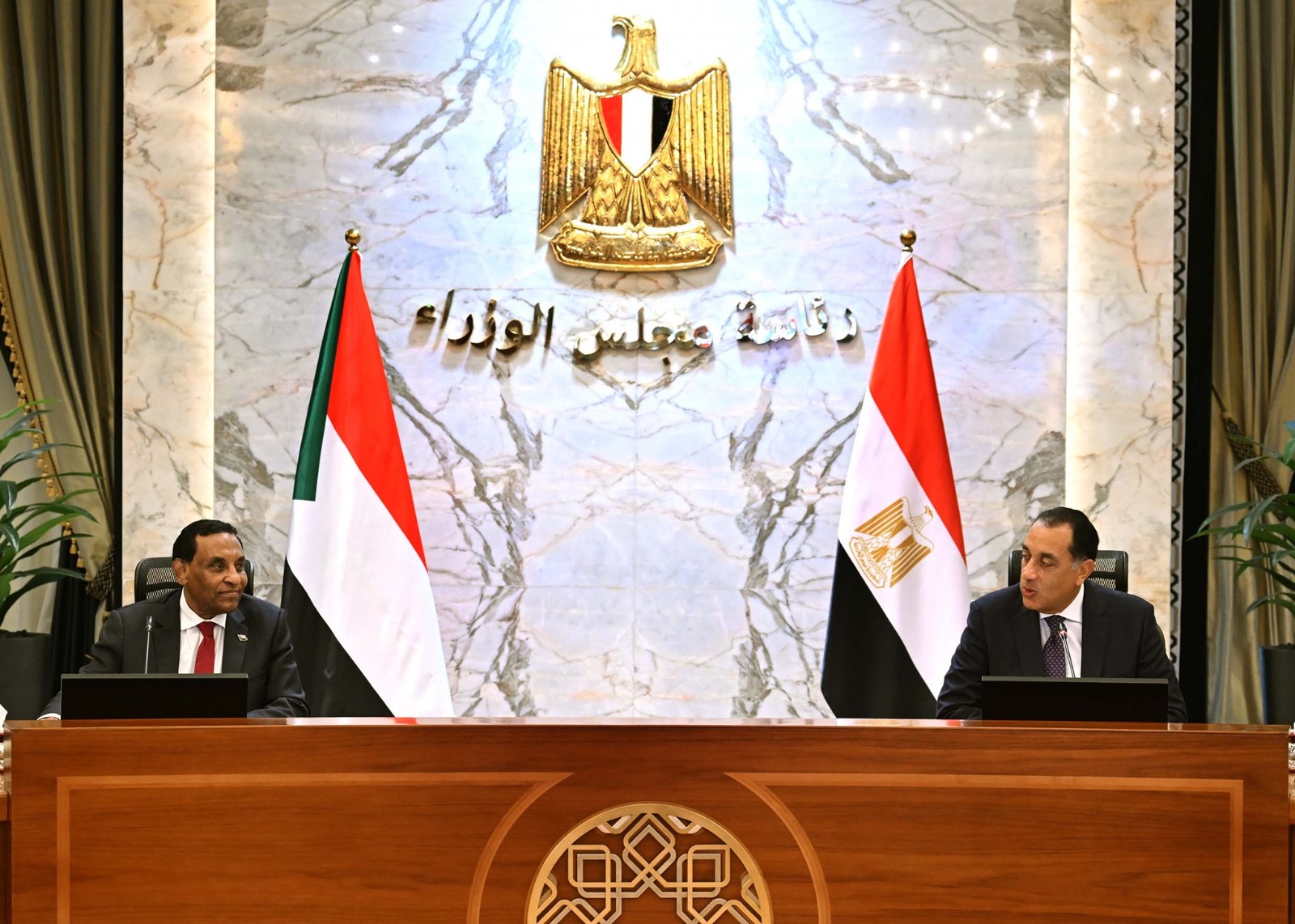
The talks followed a visit by Sudanese Transitional Prime Minister Kamel El-Tayeb Idris to Cairo, where he met with his Egyptian counterpart Dr. Moustafa Madbouly.
The two leaders held an official session of talks focused on
future cooperation, while ministers from both sides held bilateral meetings to
hash out detailed plans.
The communiqué said Egypt reiterated its full support for
Sudan's government and efforts to preserve its national institutions. Cairo
also rejected any threat to Sudan's unity and territorial integrity and backed
the Sudanese people's aspirations for reconstruction and development.
For its part, Khartoum expressed its desire to strengthen
the relationship with Cairo, with both sides agreeing to consider forming new
joint committees to oversee cooperation.
The two countries also praised significant progress in
sectoral cooperation, especially in transport, and commended steps taken on
railway and electricity interconnection projects.
Health sector talks covered Sudan's desire to enhance
cooperation in disease control, increase Egyptian medical convoys, and support
Sudanese health workers. Both sides also agreed to finalize a memorandum of
understanding on the registration of Egyptian medicines in Sudan.
Other agreements included bolstering cooperation in higher
education, scientific research, and technology, with a focus on university and
postgraduate levels. They also agreed to launch specialized training programs
to qualify Sudanese professionals for the reconstruction phase.
Discussions also touched on regional security, with both
sides affirming the need for sustained coordination on issues related to the
Red Sea region.
The two countries reiterated their rejection of Ethiopia's unilateral approach on the Blue Nile, saying it was inconsistent with international law and the spirit of cooperation. They stressed their continued coordination through the 1959-established Joint Permanent Technical Body for Nile Water to formulate a unified position. They also agreed on the need to use the Nile Basin Initiative's consultative mechanism to settle disputes and enhance cooperation, thereby preserving the interests of the two downstream nations.