
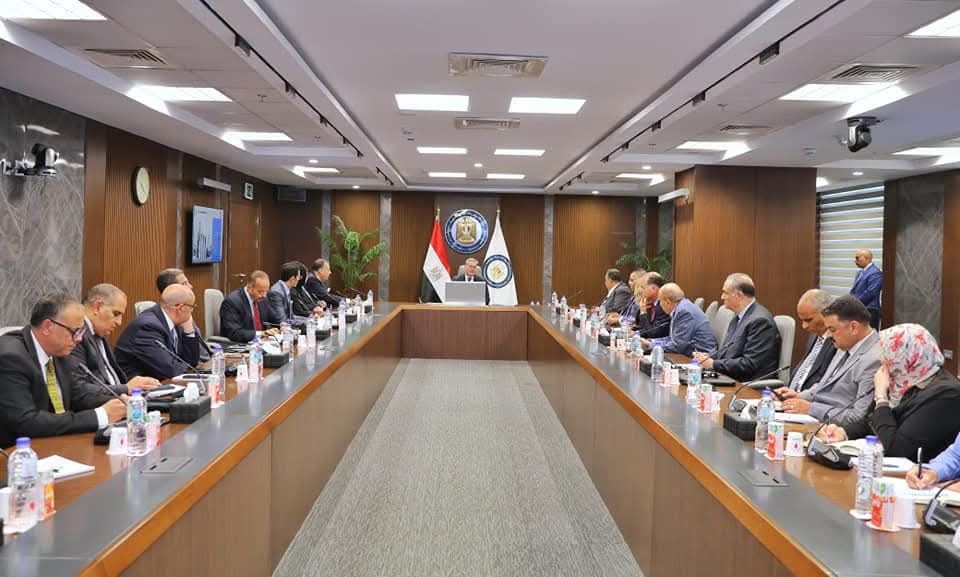
Badawi underscored the importance of these dialogues in
presenting the public with accurate information regarding the challenges facing
the oil, gas, and mining sectors. He also highlighted their role in reviewing
implemented solutions and assessing progress in addressing these issues over
the past year.
During his discussion, Badawi delved into the challenges the
oil and gas sector has encountered in recent years. He highlighted how the
Ministry's incentive measures and its commitment to settling partners' dues
have been crucial in restoring investor confidence and encouraging new
investments. This approach has positively impacted production cycles,
successfully halting the decline in production rates for the first time in
several years, stabilizing them, and contributing to a reduction in the
country's fuel import bill. He emphasized that encouraging investment to boost
domestic oil and gas production and addressing related hurdles are top priorities
for both the political leadership and the government.
The Minister also outlined the Ministry's strategic vision
and future plans. Key pillars include increasing overall production and
maximizing economic benefits from existing infrastructure, including refineries
and petrochemical plants. Additionally, Badawi underscored efforts to advance
the mining sector to enhance its contribution to the national GDP.
Badawi highlighted ongoing coordination with the Ministry of
Electricity and Renewable Energy to create an optimal energy mix, aiming for
increased reliance on renewable and green energy sources. This initiative also
strongly emphasizes preserving human safety and the environment. He also
detailed plans to solidify Egypt's role as a regional hub for energy trade and
circulation. This will be achieved by leveraging the nation's advanced energy
infrastructure, which includes gas liquefaction and export complexes, storage
facilities, and extensive energy transmission networks and pipelines. He underscored
Egypt's investment in regional cooperation for this objective, citing the
landmark agreement with Cyprus—signed in the presence of both countries'
presidents—to link Cypriot gas field production with Egyptian infrastructure.
The Minister further explained the successful execution of a
proactive plan to secure the domestic market's natural gas supply system. This
involved diversifying supply sources, utilizing multiple alternatives, boosting
local production, and receiving gas via pipelines. The strategy also included
developing advanced infrastructure for importing liquefied natural gas (LNG)
through regasification vessels at the Sumed and Sonker ports in Ain Sokhna.
Badawi affirmed that these measures have significantly contributed
to the flexibility and sustainability of Egypt's energy supply system. This
resilience enables the sector to effectively navigate any challenges or
unforeseen variables, ensuring the efficient and sustainable fulfillment of
vital sector needs, particularly for electricity and industry.
The Minister also reviewed the substantial progress made in cultivating an attractive investment climate within the mining sector. He highlighted ongoing efforts to economically exploit mineral resources, aiming to generate real added value for the state. Key initiatives include transforming the Mineral Resources Authority into an economic entity and modernizing gold and metal exploitation systems to boost competitiveness and investor appeal. Additionally, Badawi noted the development and unification of the licensing system to encourage investment and streamline procedures.