
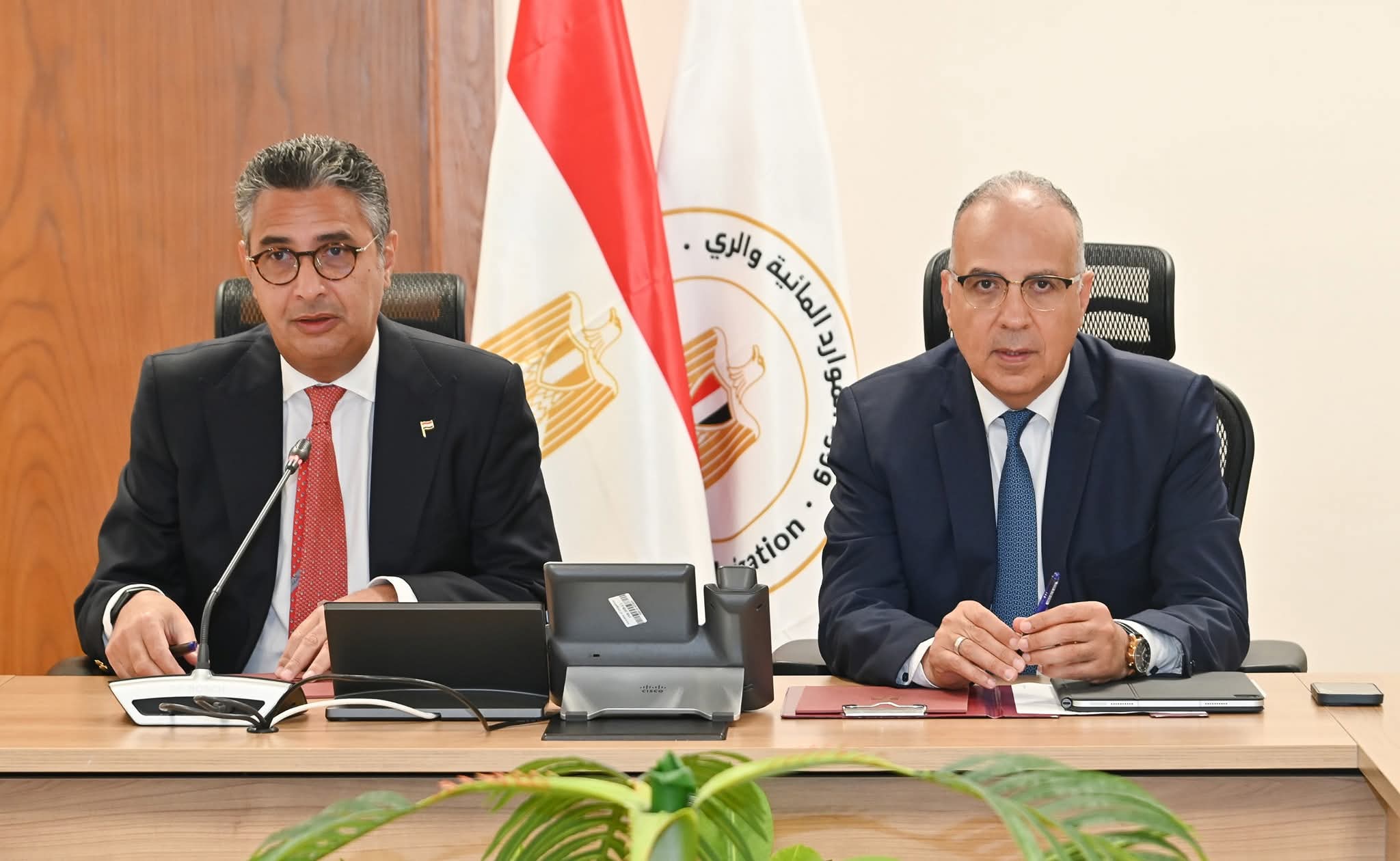
The meeting, held at the Ministry of Water Resources and
Irrigation headquarters in the New Administrative Capital, was attended by
senior officials from both ministries.
Swilam thanked Farouk for the outstanding cooperation
between the two ministries on issues of common interest, emphasizing its
positive impact on protecting water resources from pollution and supporting
national industries to bolster the national economy.
Farouk, for his part, affirmed his commitment to continued
communication between the ministries, underscoring its benefit to the public
interest and national economy, while preserving natural resources, particularly
water, from waste and pollution.
During the meeting, officials reviewed current and future
measures for managing waste from sugar factories. They also discussed optimal
technical solutions that meet environmental standards and protect water
resources from pollution, through implementing environmental rehabilitation
plans for these factories. The goal is to ensure that wastewater from the nine
sugar factories (Edfu, Kom Ombo, Armant, Qous, Nag Hammadi, Deshna, Abu Qurqas,
Girga, and Hawamdiya) complies with environmental standards.
Both ministers stressed the importance of modernizing
factories to achieve environmental compliance and adopt closed-loop water
recycling technologies to reduce water consumption and minimize environmental
impact on water resources. They also highlighted the need for continued
cooperation among all relevant ministries and entities to safeguard waterways
from all forms of pollution, in accordance with Law No. 147 of 2021 on Water
Resources and Irrigation, and Law No. 48 of 1982 (amended by Law No. 103 of
2015) on protecting the Nile River and waterways from pollution.
The ministers directed the swift preparation of short-term and long-term plans for factory development and environmental rehabilitation. These plans will rely on a specialized consultancy, coordinating with development partners if needed, to identify the best scenario for managing sugar factory waste. They will also explore the use of cooling tower technology in sugar factories, increasing the capacity and efficiency of treatment units, and modifying water recycling within factories to reduce water consumption and waste.