
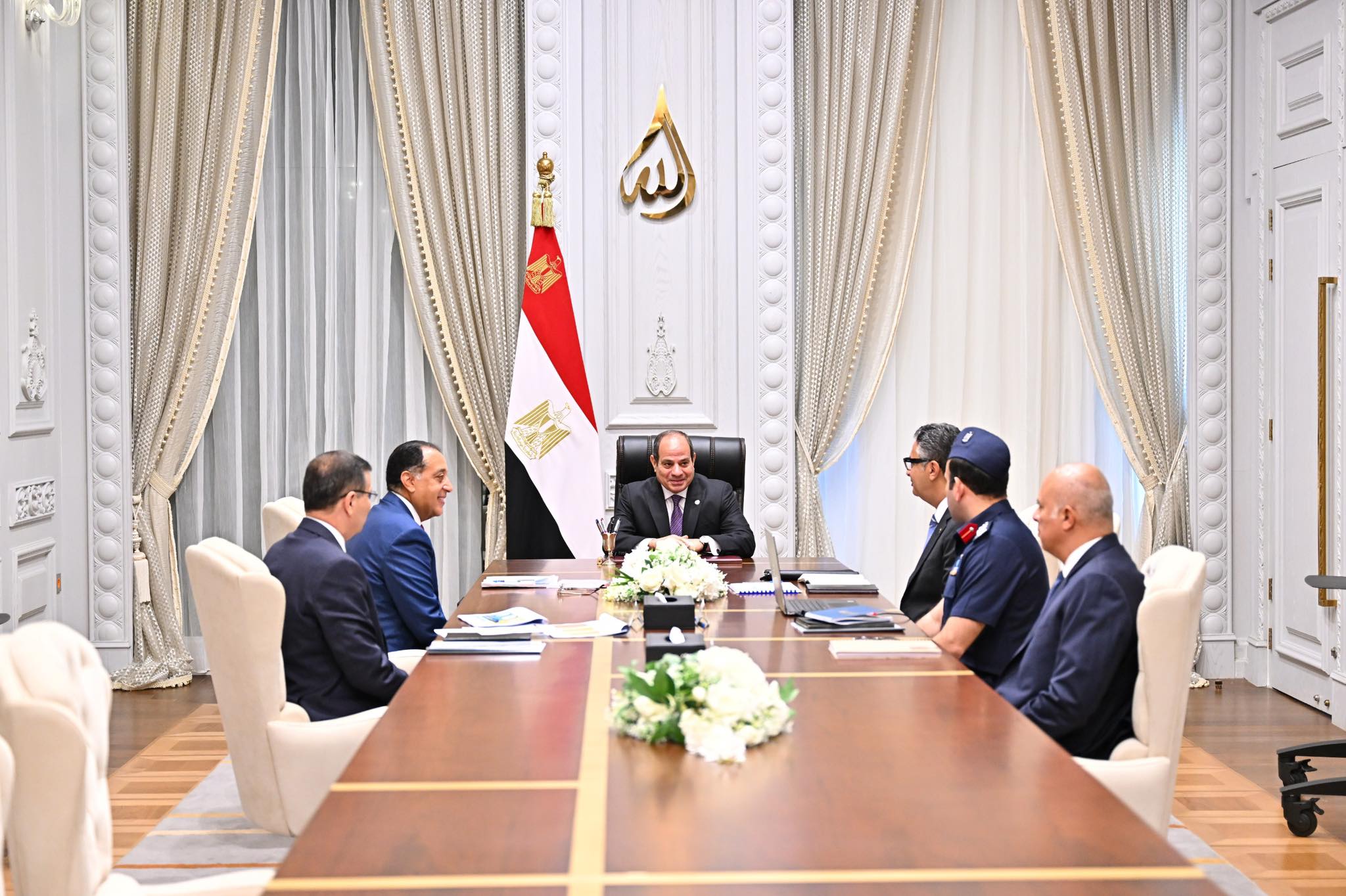
Presidential spokesperson Ambassador Mohamed El-Shenawy
stated that the meeting highlighted robust strategic reserves of wheat, sugar,
oil, meat, and poultry, ensuring Egypt's food security remains "stable and
reassuring."
Discussions included recent contracts for strategic
commodities: 3.4 million tonnes of wheat, 192,000 tonnes of crude oils, 4,000
tonnes of frozen poultry, and 6,000 tonnes of frozen meat. El-Shenawy noted
Egypt's push to diversify wheat import sources to guarantee supply and mitigate
crises.
Sisi underscored the need for full coordination among state
agencies involved in food security to ensure policy alignment. This includes
collaboration with the Future of Egypt project to identify strategic crop
cultivation areas in the New Delta, aiming to maximize planted areas and boost
self-sufficiency.
The meeting also addressed the smooth operation of bakeries,
mills, and markets, alongside updates on "one-day markets." The first
phase launched in November 2024 with 200 markets, followed by a second phase in
May 2025 with over 200 additional markets.
Efforts to forge partnerships with the private sector and attract
foreign investment in retail and commercial chains were discussed. Progress on
new commercial chains in Obour City, Nasr City, and Qalyoub was reviewed. The
Ministry of Supply is also preparing to launch "Carry On," a
government commercial chain and the first unified brand in partnership with the
private sector.
The officials reviewed efforts to develop internal trade and
refine government subsidy databases to ensure aid reaches eligible recipients.
The meeting delved into the commodity exchange's executive
status, with the state aiming to activate it as a market stabilizer and price
control mechanism. This initiative seeks to enhance food security, ensure
essential goods' availability at fair prices, balance producer and consumer
interests, and support the agricultural and industrial sectors.
Exporters and importers have begun registering with the
commodity exchange, which will serve as the sole platform for imports and
exports. A draft law to regulate the exchange is underway, drawing on
international best practices.
Furthermore, discussions covered state policies for
cultivating and supplying strategic goods, digital transformation in
agriculture, and spending rationalization. The fertilizer sector, particularly
nitrates and urea, was also examined, with an emphasis on "gradual and
balanced reform measures" to protect farmers and ensure food security.
The meeting concluded with a focus on improving agricultural lands, implementing mechanization, and increasing red meat and dairy production. Sisi stressed the importance of improving local animal breeds to boost their productivity