
The report aims to provide an accurate analytical insight into the opportunities and challenges facing SMEs and entrepreneurs in Egypt, alongside recommendations based on international standards and best practices from successful countries, tailored for the Egyptian context.
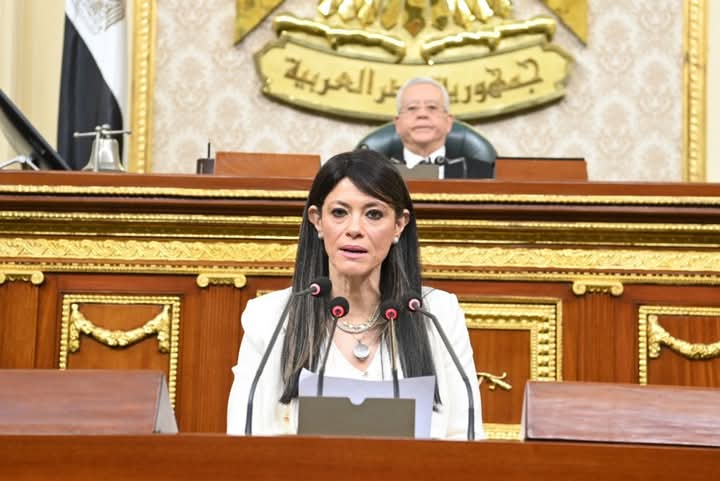
Dr. Rania Al-Mashat, Minister of Planning and Economic
Development and International Cooperation, highlighted the significant
potential of Egypt's entrepreneurship, startup, and micro, small, and
medium-sized enterprise (MSME) sector. She noted the report reflects the
government's drive to transition to a competitive, innovation- and
knowledge-based economy. Al-Mashat emphasized the importance of OECD
cooperation through diagnostic reports that showcase Egypt's economic
capabilities and provide recommendations for economic development.
Al-Mashat lauded the continued constructive cooperation
within the Egypt-OECD Country Programme, which has been extended until 2025. This
program is a crucial pillar of joint efforts, integrating international
expertise into Egypt's national development strategy, including "Egypt
Vision 2030" and the national structural reform program. It encompasses 35
projects across five key axes, designed collaboratively to align with Egypt's
policy coherence and national reform agenda.
She also pointed to the role of the Ministerial Group for
Entrepreneurship, which coordinates with national bodies to foster innovation
and entrepreneurship and support startups. This includes addressing challenges
facing the sector. Al-Mashat revealed that a Startup Charter has been finalized
for imminent launch, alongside a package of anticipated facilities for the
sector.
Bassel Rahmy, CEO of the Micro, Small & Medium
Enterprise Development Agency (MSMEDA), stated the report is part of the Egypt
Country Programme, overseen by the Ministry of Planning and Economic
Development and International Cooperation, and coordinated with MSMEDA and the
OECD. The project focuses on reviewing SME and entrepreneurship policy
frameworks, particularly financial and technological services and digital
transformation, in consultation with relevant stakeholders.
The report provides a detailed analysis of current
enterprise performance and national initiatives, identifies sectoral gaps, and
offers recommendations for developing the enterprise and entrepreneurship
sector according to international best practices. It underscores the sector's
importance, representing 90 percent of Egypt's economic activities.
Rahmy explained that MSMEDA, in collaboration with the
Ministry of Planning and Economic Development and International Cooperation,
aims to update the National Strategy for MSMEs and Entrepreneurship. This
update will activate the report's recommendations, implementing them in
coordination with local and international development partners.
The report noted that Egypt, as the most populous country in
the Middle East and North Africa (over 110 million people), possesses a vast
market and significant entrepreneurial potential. Despite global challenges,
the Egyptian economy has been among the fastest-growing in the region over the
past five years.
"Egypt Vision 2030" prioritizes the development of
SMEs and innovative startups and enhancing the private sector's role, aligning
with global trends towards knowledge-based, innovation-driven, and
entrepreneurial economies, the report clarified.
The report highlighted the substantial potential of Egypt's
SME sector, which accounts for over 90 percent of economic activity, primarily
in trade and services. While there's a high number of general startups, the
report identified a gap needing to be addressed by promoting innovation,
increasing productivity, and formalizing informal businesses.
Despite significant investments in education, scientific
research, and a boom in venture capital, the report noted lingering challenges
for small enterprises. It emphasized the need for continued efforts to
streamline procedures, improve the business climate, and enhance competition.
The report underscored the establishment of the Ministerial
Group for Entrepreneurship, which coordinates government efforts to support
startups, facilitate international market access, and link innovative solutions
to sectoral challenges. It also recognized MSMEDA's coordinating role among
government agencies in developing the sector.
The report stressed the importance of promoting
decentralized policies that consider geographical differences between
governorates by designing tailored local programs. It praised Egypt's digital
transformation progress and recommended a national strategy for digitizing
small enterprises, including tax incentives and encouragement for digital
adoption.
In fintech, the report called for a tiered licensing system
for fintech companies, expanding digital payments, and integrating digital
financing tools into general enterprise policies.
Key recommendations included: developing a comprehensive
annual database on SME and entrepreneurship performance; adopting an "SME
Impact Test" for new legislation; reviewing and simplifying existing laws;
establishing an independent mechanism to monitor the SME law's implementation
and prepare annual reports; providing tax incentives for venture capital;
developing a women's entrepreneurship strategy with MSMEDA and the National
Council for Women; enhancing incubator efficiency through national
accreditation standards; and strengthening the Credit Guarantee Company (CGC)
by increasing its capital to expand guarantees for micro-enterprises.
It is worth noting that Egypt recently assumed co-chairmanship of the OECD's MENA-OECD Initiative on Governance and Competitiveness for Development for 2026-2030, alongside Italy and Turkey. Earlier this month, Al-Mashat met with OECD Secretary-General Mathias Cormann in Paris to discuss bolstering cooperation and monitoring the Country Programme's implementation.