
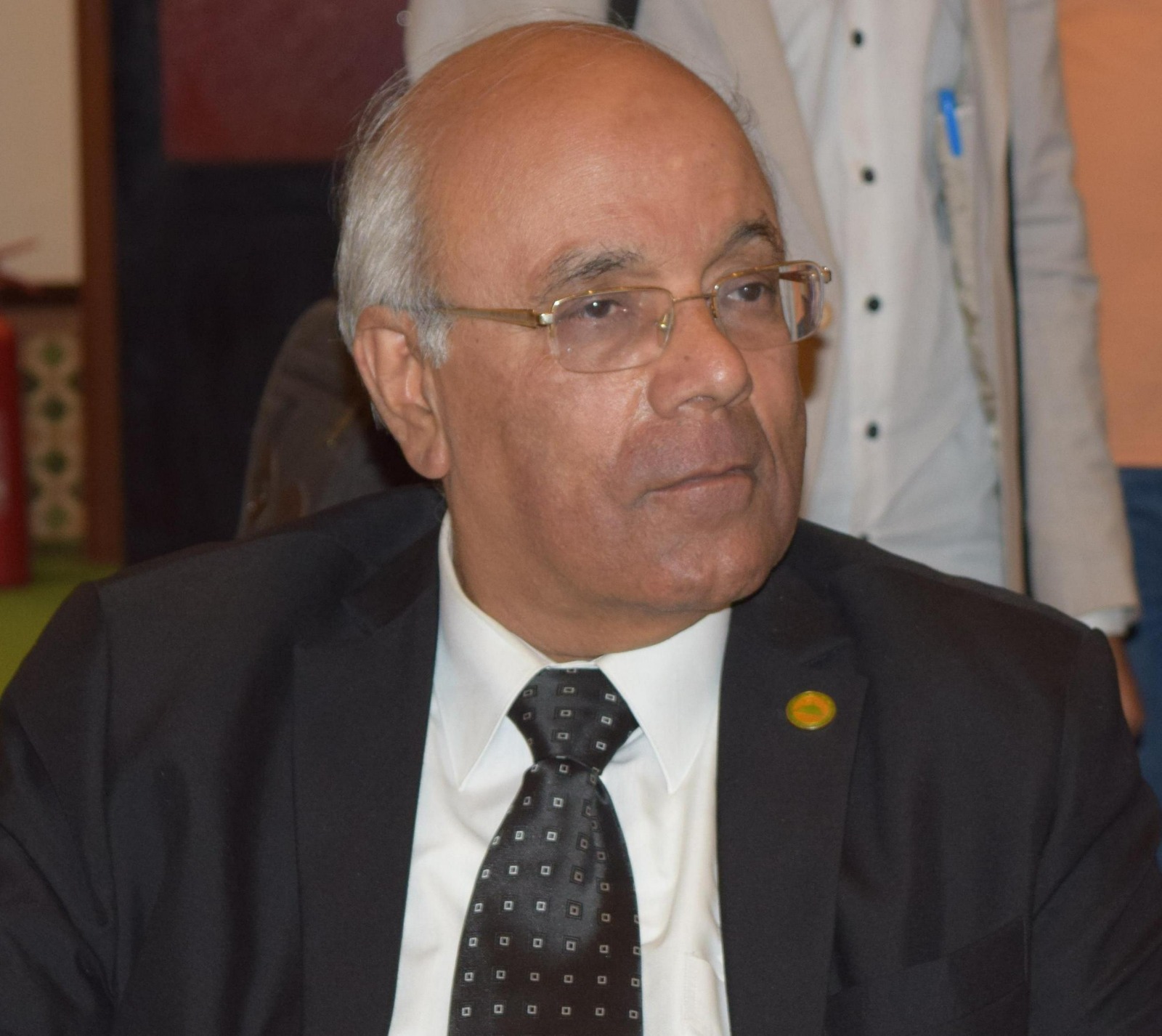
El-Fayoumi explained that the sector has recently transformed from a dilapidated, valueless sector into an important sector that supports the national economy. He pointed to the government's success in implementing a new roadmap to save Egypt's spinning and weaving industry from collapse, in line with the vision of President Abdel Fattah El-Sisi.
Mohamed
Shimi, Minister of the Public Business Sector, and Hassan El-Khatib, Minister
of Investment and Foreign Trade, discussed enhancing joint cooperation between
the two ministries in promoting promising investment opportunities in public
business sector companies, particularly in the spinning and weaving sector,
which is currently undergoing the largest comprehensive development process in
its history as part of the state's plan to advance national industry.
El-Fayoumi
pointed out that in the early 1990s, with the start of the privatization
program, this sector experienced a state of collapse, coinciding with a decline
in the productivity and business volume of the approximately 32 public
spinning, weaving, and cotton companies. This prompted the Sisi government to
act quickly to rescue this vital sector, restore it to its former glory, and
increase its contribution to Egypt's national income.
He explained that the spinning and weaving industry plays a significant role in strengthening the national economy, as it represents approximately 30% of Egypt's industrial strength and was previously a leader.
He stressed that the government recently announced investments directed to developing this vital sector, amounting to EGP 60 billion. He also stressed that previous experience has proven that the private sector is more efficient in managing and operating companies, which reinforces the importance of expanding these partnerships to develop productive sectors.