
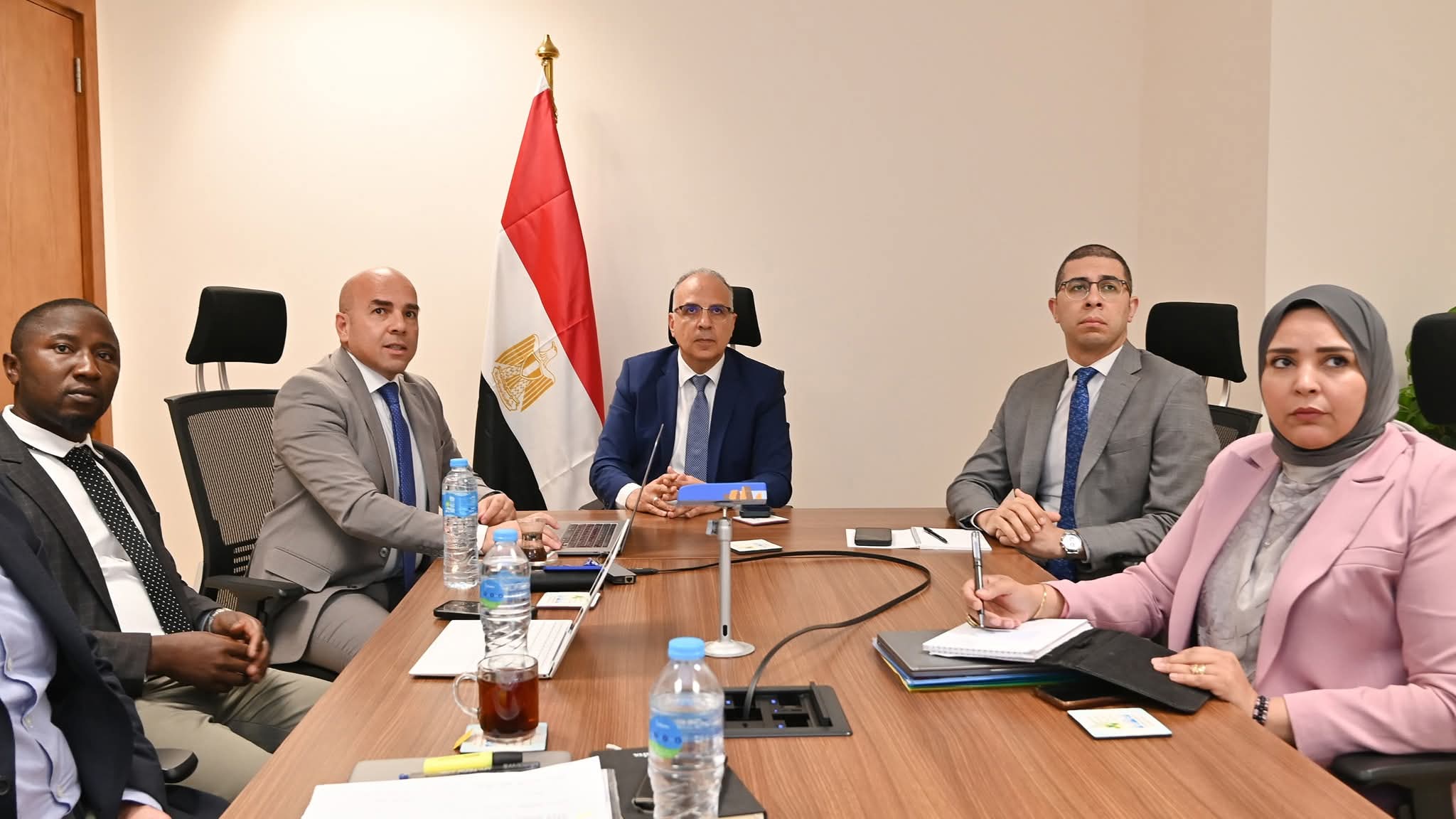
Sewilam underscored the urgent need to "produce more food from less water," emphasizing that desalination is a vital tool for tackling future water scarcity and ensuring national food security. He stressed that foundational work for this transformation must begin immediately, with success measured by the water footprint.
The Minister highlighted the pivotal role of scientific
research in finding ways to reduce desalination costs, making it economically
feasible for large-scale food production. He praised universities and research
centers, particularly AUC's expertise in cultivating drought-resistant and
salt-tolerant crops, for their role in preparing future desalination projects.
Sewilam also called for applied research into utilizing the
highly saline water (brine) produced during desalination. Potential uses
include extracting minerals and salts, or cultivating brine shrimp (Artemia)
and various algae that thrive in high-salinity environments.
He cited successful examples of desalination for intensive food production in Morocco, Spain, and Australia as models Egypt could adapt.