
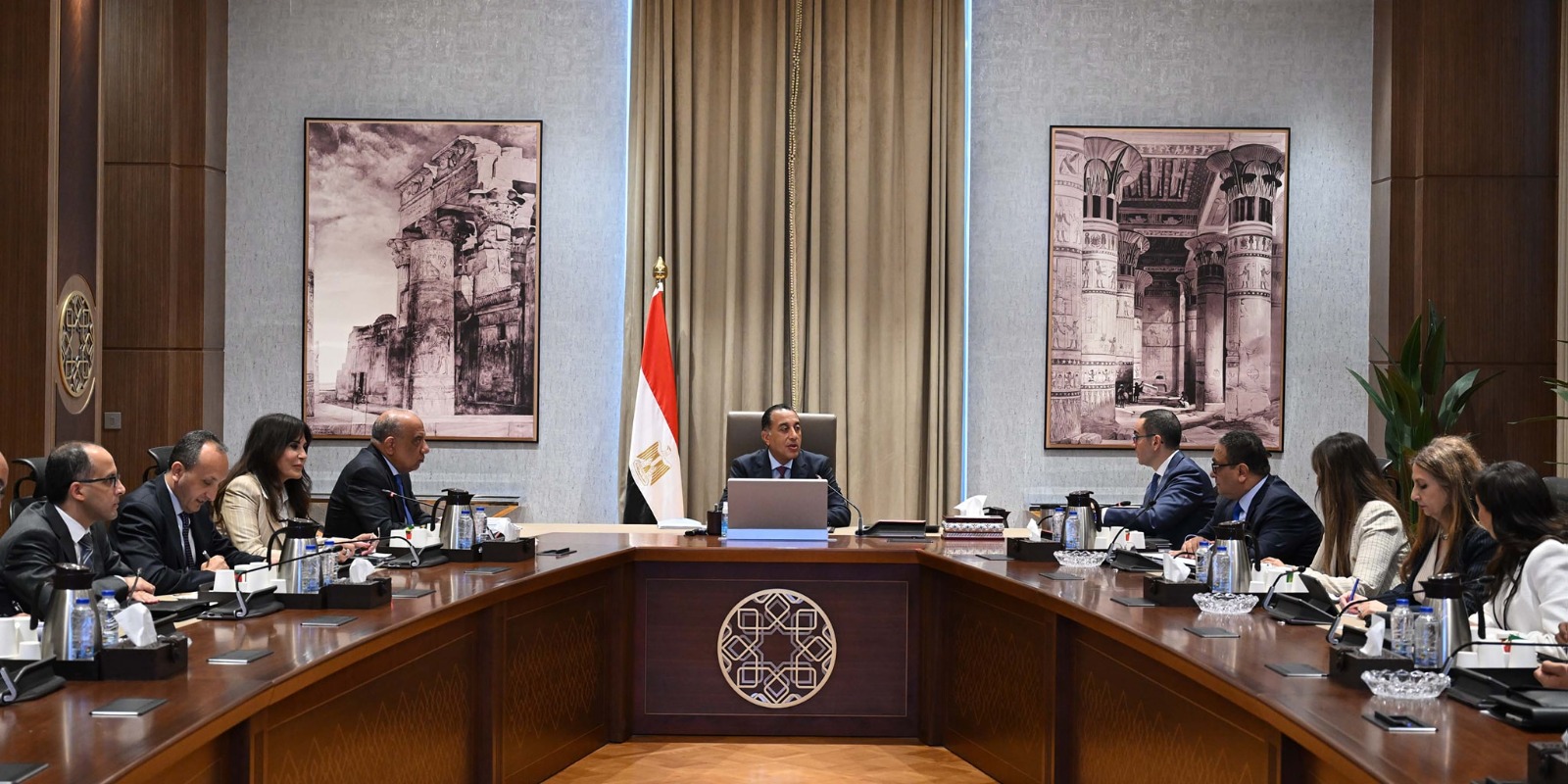
The Prime Minister opened the meeting by emphasizing the government's ongoing commitment to fostering a favorable investment climate. He highlighted efforts to enhance the private sector's role as a key partner in various development processes. This is being achieved through further structural and legislative reforms, alongside providing more facilities and incentives to attract additional investments to promising sectors, especially the energy sector.
Madbouly noted that the Egyptian state is taking numerous
steps to make the economy more competitive and globally open. These include
implementing realistic monetary policies that have positively impacted various
economic indicators, fostering stability and strengthening confidence in
Egypt's investment environment.
Additionally, the government is implementing investment-stimulating
fiscal policies. These involve: governing and regulating fees, reducing non-tax
financial burdens, digitalizing various services provided to investors, and unifying
collection entities.
Engineer Mahmoud Esmat presented the outlines of the electricity sector's investment plan, explaining that it includes five main axes: investment in electricity generation: This includes investment in solar panels, hydro and wind power, storage units, batteries, and generators. The second is investment in transmission and distribution networks: This involves expanding and developing networks in partnership with the private sector. The third is investment in electrical components: This covers transformers, high and low-voltage circuit breakers, electrical insulators, and high and medium-voltage power lines. The fourth is investment in industry and applications: This includes green hydrogen electricity grids and energy-saving LED lamps, and the fifth axis is investments in nuclear energy which aims to enhance the diversification of Egypt's electricity production sources.
He also reviewed the targeted plan for the total electricity produced from wind and photovoltaic energy by 2030, as well as the targets for wind and photovoltaic energy. He indicated that the investment plan further encompasses electricity interconnection projects with several countries, notably Italy and Greece. He noted that approvals have been obtained for network operation in both countries, as well as approval from the European Union.
Esmat also presented several investment opportunities in the
electricity sector over the next ten years, particularly concerning the
manufacturing of storage batteries and solar panels. He emphasized that there
are also investment opportunities in maintenance projects and reducing network
losses, among others.
Engineer Hassan El-Khatib highlighted the Ministry of Investment's efforts to promote and market Egypt's abundant investment opportunities across various promising sectors. This involves cooperation and coordination between relevant ministries to prepare an integrated file with a list of targeted investment projects in specific sectors.
He will then promote these opportunities through global
campaigns aimed at attracting direct investment. This process will include
securing all necessary approvals and licenses to expedite project
implementation, thereby maximizing the benefits from these promising opportunities.
At the meeting's conclusion, the Prime Minister affirmed that coordination will continue between the working groups in the Ministries of Electricity and Investment. Their goal is to prepare a package of available investment opportunities for inclusion on the investment map.