
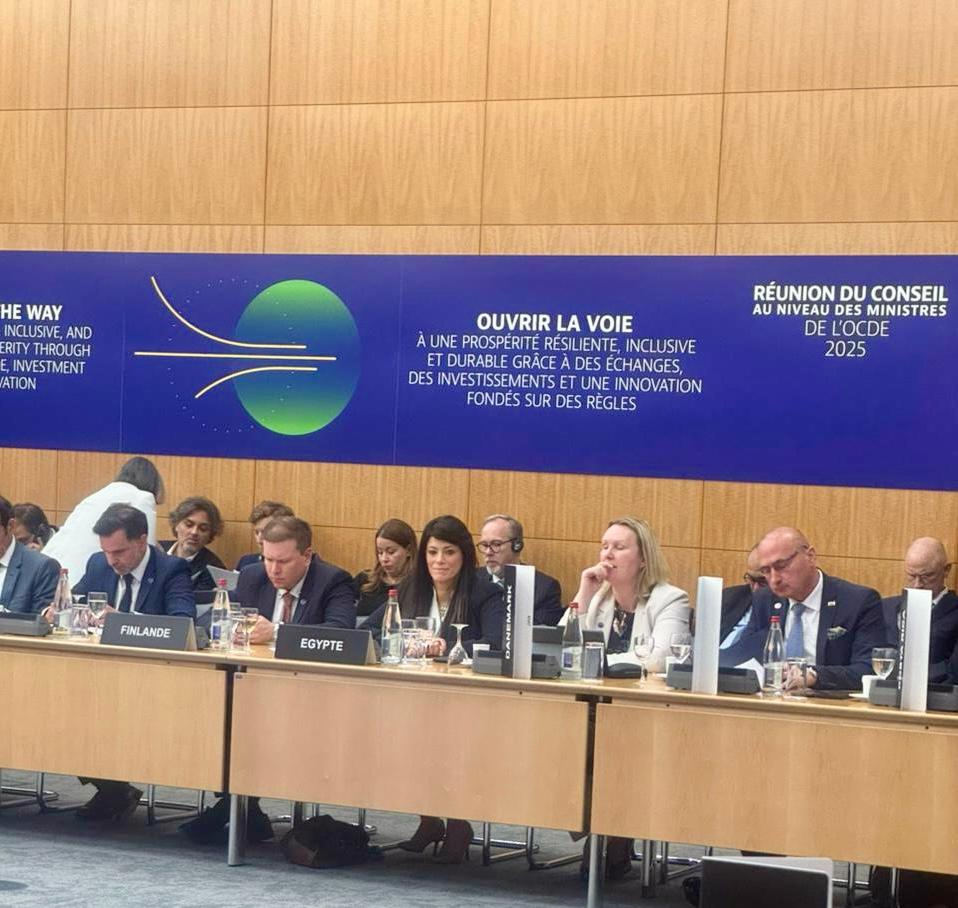
Dr. Al-Mashat commended the panel's theme, which is central to expanding economic foundations and deepening resilience, competitiveness, and prosperity. She emphasized that the need to build resilient, inclusive, and sustainable economies has become more urgent than ever, and that trade, investment, and innovation remain essential pillars for achieving this goal, given the rapidly changing global landscape characterized by increasing geopolitical complexities, accelerating digital transformation, and worsening climate risks.
She highlighted Egypt's experience in enhancing economic stability and resilience through structural reforms, the impact of its partnership with the Organization for Economic Cooperation and Development (OECD), and its contributions to regional knowledge exchange, both in the Middle East and North Africa and across the African continent.
She added that Egypt's economic reform strategy is based on the National Structural Reform Program, which includes three interconnected axes: enhancing macroeconomic stability, improving competitiveness and the business environment, and advancing the transition to a green economy.
Al-Mashat explained that the second axis of the program focuses on enhancing the competitiveness of the real economy and activating the role of the private sector by supporting productive sectors such as industry, agriculture, and information technology, with a focus on tradable and exportable sectors. This contributes to increasing export capacity and enhancing integration into global value chains. The non-oil manufacturing sector recorded 18% growth in the second quarter of fiscal year 2024/2025, reflecting the success of these reforms in achieving structural transformation and enhancing economic resilience.
She added that the "National Economic Narrative" has been completed. This comprehensive development vision aligns the government's work program with Egypt Vision 2030, empowering the private sector, improving the business environment, supporting competitive sectors, and investing in human capital. This will achieve comprehensive and sustainable growth and a resilient economy, while maintaining macroeconomic stability.
She emphasized that these national efforts complement institutional reforms, including enhancing transparency in public debt management, improving public investment governance, and expanding social protection systems to support the most vulnerable during economic transitions. The economic resilience strategy is also strengthened through targeted investments in infrastructure, logistics, and digital trade facilitation. These reforms have contributed to the growth of non-oil exports and increased diversity in export markets.
The Minister highlighted the importance of the country program between Egypt and the OECD, particularly with regard to the first axis, "Inclusive and Sustainable Economic Growth," where several projects are being implemented to support the implementation of these reforms. Most notable among these are the project to enhance the capacity of Egyptian authorities to monitor business dynamics through the development of statistical analysis and linking data to international business standards; the project to support productivity improvements, particularly in the industrial sector; and the project to strengthen the national statistical system by aligning industry, trade, and value chain data with international standards, thus enhancing policy effectiveness and global comparability.
She stressed that Egypt, having recently assumed the co-chairmanship of the OECD's Middle East and North Africa Initiative, is expanding these efforts regionally, with a clear vision for the next phase focused on resilience, regional interconnectedness, and sustainable and inclusive transformation. Egypt is working to enhance regulatory coherence, facilitate trade, and encourage policy innovation, while supporting shared learning and evidence-based policy formulation to drive economic transformation in the region.
Al-Mashat indicated that Egypt seeks to modernize its customs system by implementing a unified risk management system, expanding the use of electronic certificates of origin, and implementing procedures consistent with international quality standards. This will contribute to a faster and more reliable flow of trade and strengthen Egypt's position in regional and international supply chains.
She stressed that Egypt's experience demonstrates that building resilience through diversification and development has become a necessary path that requires strategic policy coordination, a genuine activation of the private sector's role, and effective international cooperation. She added that both the National Structural Reform Program and the National Economic Development Narrative reflect a forward-looking vision for comprehensive and sustainable growth. She noted that through cooperation with development partners, including the OECD, efforts are being made to formulate a resilient, open, and qualified economic model capable of facing future challenges.