
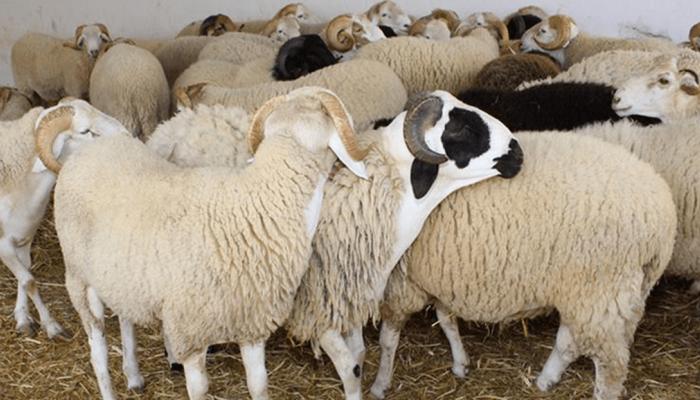
The Ministry aims to offer over 12,000 head of live local sacrificial animals (cattle, buffalo, sheep, and goats) at prices up to 20% lower than market rates. These animals will be available through farms affiliated with seven key entities within the Ministry across all governorates. These entities include the production and land reclamation sectors, the Central Administration for Agricultural Research and Experiment Stations, the Central Administration for Agricultural Cooperation, the General Cooperative Society for Livestock Development and its products, the General Authority for Agrarian Reform, and the General Society for Agrarian Reform. Citizens can reserve and pick up animals directly from the departments and farms associated with these entities.
Dr. Alaa Farouk, the Minister of Agriculture and Land
Reclamation, further announced that substantial quantities of local meat and various
food products, including dairy, poultry, eggs, vegetables, fruits, and legumes,
will be supplied to the Ministry's numerous outlets across all governorates. To
meet the increased demand for meat during Eid al-Adha, Farouk also stated that 149,380
tons of frozen meat were recently imported. Additionally, 158,035 head of live
calves, 46,613 head of camels, and 16,579 head of sheep have been imported for
immediate slaughter and distribution to markets and outlets at reduced prices.
The Minister of Agriculture has ordered all Ministry
sectors, agriculture directorates, veterinary medicine departments, and
agrarian reform offices across the governorates to be on maximum alert to
assist citizens. To ensure balanced meat availability nationwide, distribution
networks are being expanded beyond Cairo and Alexandria to include provincial
capitals and rural areas, with coordination from the private sector.
Furthermore, Farouk emphasized that the Livestock
Development Sector and the General Organization for Veterinary Services must intensify
oversight of sacrificial animal and meat markets to safeguard product safety
and public health. This includes educating citizens on how to select healthy
sacrificial animals and promoting the use of free government abattoirs during
Eid days to maintain environmental hygiene and ensure meat quality.
The Minister of Agriculture confirmed that central
laboratories (pesticide residues, animal health) and agricultural quarantine at
ports and airports will remain operational to support Egyptian agricultural
exports. Work will also continue at screening and seed production stations in
preparation for the new agricultural season.
To ensure uninterrupted services, the continuous operation
of central operations rooms in the governorates was emphasized. These rooms are
crucial for receiving and addressing complaints promptly from citizens,
farmers, and breeders.
Farouk instructed the Agricultural Services and Follow-up Sector, the agriculture directorates, and the Land Protection Agency to continuously monitor fields. This ongoing oversight aims to prevent encroachment on agricultural lands by promptly removing any violations. Additionally, these entities are responsible for monitoring crop conditions and providing technical support to farmers.