
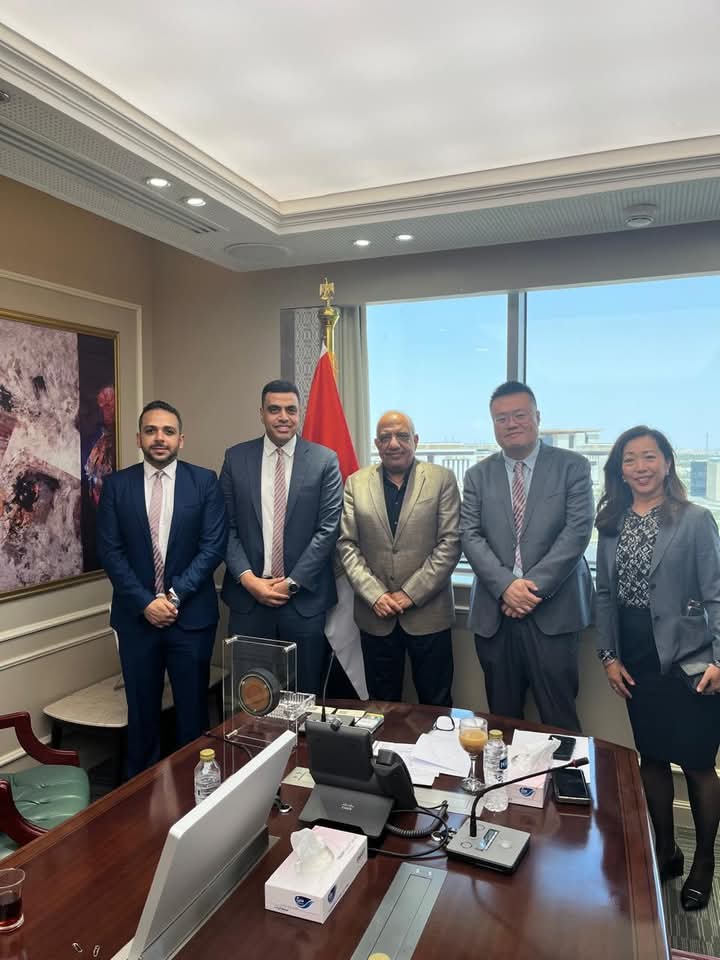
The two sides discussed ways of cooperation and partnership to localize the manufacturing of electrical equipment for wind and solar energy, and to localize the technology for manufacturing energy storage batteries, in addition to other electrical equipment.
The meeting addressed the activities of the Chinese group,
the manufacturing technologies possessed by its subsidiaries, and the volume of
its equipment supplies for renewable energy and energy storage projects in
Egypt during the past period. The possibility of transferring and localizing
these technologies was also discussed in light of the state's plan to generate
electricity from solar and wind energy, the energy strategy aimed at increasing
reliance on renewable energies, and benefiting from Egyptian trade agreements
and exemptions for export to regional markets.
Dr. Esmat affirmed the state's support for localizing the
manufacturing of renewable energy equipment within a comprehensive vision to
support industry and technology localization, and the energy strategy that aims
to reach a contribution of renewable energy of more than 42% by 2030 and 65% by
2040. He pointed to the efforts to rebuild the infrastructure and strengthen
the necessary and encouraging legislative frameworks for the private sector to
invest and implement projects in various fields, especially the renewable
energy sector, stressing the implementation of a governmental strategy to
transfer and localize modern technology, particularly in the manufacturing of
electrical equipment.
He added that the Ministry has a work program to make Egypt
a regional energy hub, linking energy markets in Africa, Europe, and the Middle
East, benefiting from the strategic location and basic infrastructure projects.
He pointed to the existing electricity interconnection projects with
neighboring countries such as Sudan, Libya, and Jordan, as well as the ongoing
project with Saudi Arabia, which is targeted for operation this year, in
addition to the shared vision for electricity interconnection with European
Union countries.
He concluded by referring to the electricity interconnection projects with Greece and Italy as among the most important projects aimed at achieving regional energy integration and the transmission of clean electricity across borders, which contributes to meeting countries' needs for sustainable energy and the stability of electrical grids, emphasizing the strengthening of cooperation with brotherly African countries to achieve energy integration, transfer technical expertise, and support renewable energy projects on the continent.