
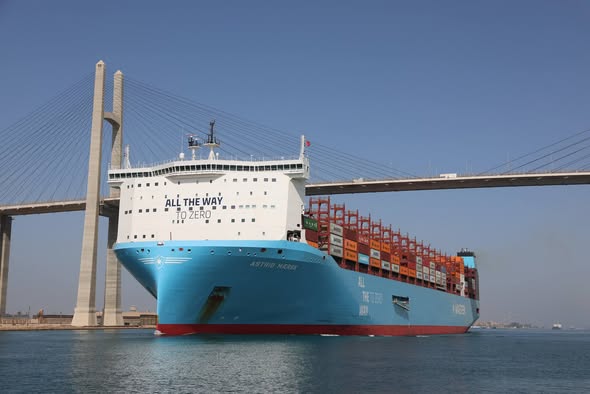
The vessel, which runs on green methanol, transited the canal as part of the "Northbound Convoy" en route to Oman. Before entering the canal, it offloaded cargo at East Port Said and refueled with sustainable methanol, highlighting Egypt’s growing role in green maritime logistics.
At 350 meters long and 54 meters wide, the Astrid Maersk
carries a total tonnage of 185,000 tons. It is the largest Maersk vessel to
cross the canal in two years. This transit marks the first journey under the
"ME-11" service which is part of the Gemini Cooperation between
Maersk and Hapag-Lloyd. The alliance recently announced it would reroute this
specific service through the Suez Canal in both directions, abandoning the
longer Cape of Good Hope route.
This is the third Maersk ship to transit under a new
strategic agreement, following the Maersk Sebarok in December and the Maersk
Denver in January.
SCA Chairman Admiral Osama Rabie hailed the move as a return
to the right track, calling the Suez Canal the most sustainable route for
East-West trade. He noted that the authority's flexible marketing policies are
yielding results.
"The Suez Canal has begun to reap the first fruits of
its efforts to restore major shipping lines," Admiral Rabie said, citing
direct communication with global clients.
In 2024-2025, flexible marketing incentives attracted 784
ships, totaling 36.6 million net tons and generating $170.4 million in revenue.
The Astrid Maersk benefited from a 15% discount on transit
fees, a policy introduced for container ships exceeding 130,000 tons. This
specific incentive has successfully recovered 64 ships since May.
On Tuesday, a total of 36 ships transited the canal in both directions, carrying a combined total tonnage of 2 million tons.