
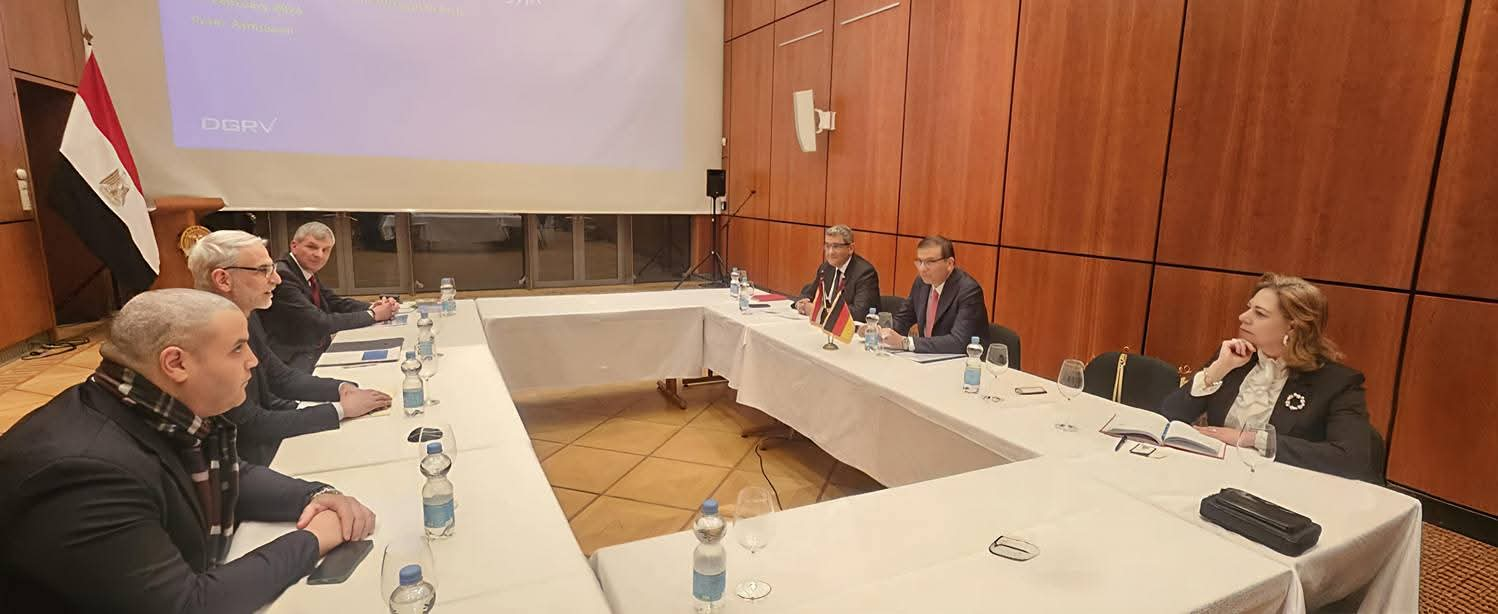
The meeting took place on the sidelines of the "Fruit Logistica" international trade fair. It included the Egyptian Ambassador to Berlin, members of the German-Arab Chamber of Industry and Commerce, and representatives from the Egyptian private sector.
Minister Farouk examined successful German cooperative
models dating back to 1956, which are characterized by full farmer ownership of
assets, including irrigation networks. He emphasized the need for a strategic
partnership between Egyptian agricultural associations and the private sector to
replicate this financial and administrative independence.
The Minister outlined a vision to shift the role of local
cooperatives from mere fertilizer distributors to technical advisory centers.
This transformation aims to improve internal oversight and update legal frameworks
to reduce bureaucracy, implement strict crop standards to help small farmers
reach international markets, connect cooperatives to value-added processing and
innovation hubs, and minimize post-harvest losses and provide financing
umbrellas for small-scale projects.
"Developing cooperatives in Egypt will directly contribute to restoring farmers' confidence and reducing crop waste," Farouk stated, adding that the new model would require farmers to commit to supply quotas and international quality standards in exchange for technical support.