
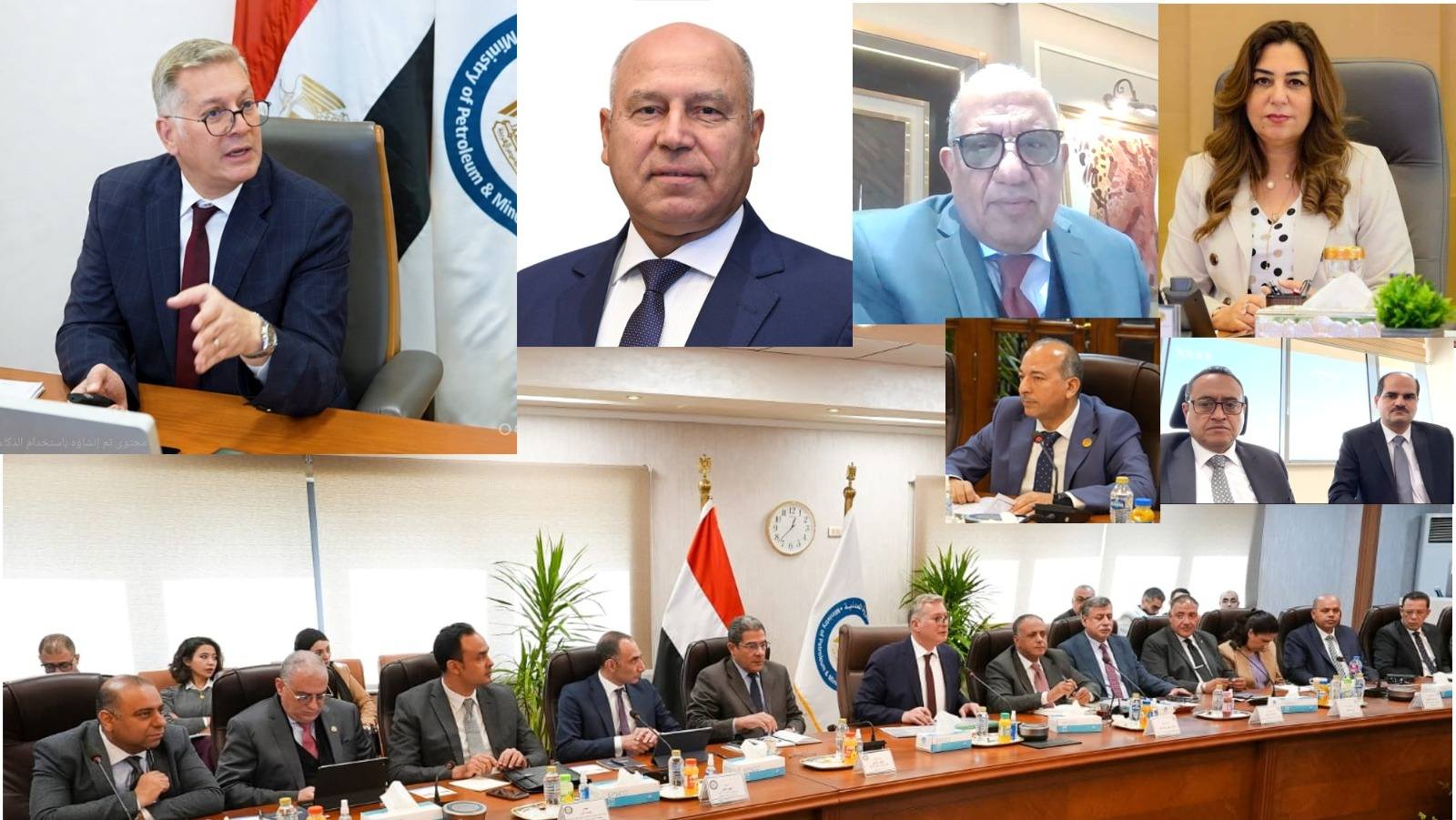
The meetings were attended via video conference by Lieutenant General Kamel Al-Wazir, Deputy Prime Minister for Industrial Development and Minister of Industry and Transport; Dr. Mahmoud Esmat, Minister of Electricity and Renewable Energy; and Dr. Manal Awad, Minister of Local Development.
The minister emphasized the importance of investing in the
development and upgrading of crude oil and petroleum product pipeline
infrastructure. He also stressed attracting additional investments to support
the network.
He explained that the petroleum pipeline network serves as
the link between production sites and refineries, ultimately reaching the end
consumer. This ensures the availability of petroleum products with the highest
standards of quality, efficiency, and speed to meet citizens’ needs.
Badawi highlighted the necessity of adhering to operational
efficiency, quality, safety, and security standards in transporting petroleum
products. Investment in occupational safety, health, and protection measures
remains a top priority for the ministry.
The minister stressed continuous monitoring and oversight of
operational efficiency and quality at all stages of petroleum product
transport. He also emphasized adherence to timelines for ongoing development
and efficiency improvement projects.
He directed that pipeline network development plans be
integrated with strategies to meet petroleum product demand over the next five
years. Plans must also align with refinery upgrades, which are receiving
additional crude supplies to operate at full capacity. This approach aims to
reduce import costs and ensure the network is fully prepared to meet petroleum
needs.
During the Cairo Oil Refining Company general assembly, the
minister underlined the need to monitor the quality of petroleum products
resulting from refining and manufacturing processes, due to their direct impact
on consumers. He also highlighted the importance of marketing the company’s
premium products internationally to maximize returns.
Badawi confirmed the continuation of projects to upgrade
existing refineries and their production units. He instructed Cairo Oil
Refining Company to prepare a five-year plan to increase production rates,
improve operational efficiency, and maximize the utilization of available
capacities to meet domestic petroleum consumption.
Engineer Salah Abdel Karim, CEO of the Egyptian General
Petroleum Corporation (EGPC), reviewed the successful implementation of the
SCADA system for monitoring petroleum pipelines. The system allows rapid and
precise identification of encroachments and theft attempts, significantly
reducing such incidents compared to previous years.
Engineer Haggag Kilani, Chairman of PPC, outlined efforts to
implement a package of projects valued at over EGP 16 billion. These projects
aim to develop, replace, renovate, and improve the efficiency of crude and
petroleum product pipelines nationwide. They also contribute to strengthening
Egypt’s role as a regional energy hub.
Chemist Tarek Abdel Latif, Chairman of Cairo Oil Refining
Company, reviewed the production role of the company’s units in supplying
petroleum products and enhancing their efficiency. He explained that the
company operates large manufacturing workshops equipped with state-of-the-art
machinery, supporting the petroleum refining industry and promoting local
manufacturing.
Abdel Latif also highlighted the company’s current
contribution to the boiler development project at Alexandria Petroleum Company,
with the first phase approaching trial operation within days.
He noted that the planned value of local manufacturing
projects is expected to reach approximately EGP 679 million in the next fiscal
year. The company maximizes returns through the development and distribution of
a proprietary product used in air shows.
The company president added that total energy savings from
efficiency projects reached 258 megawatt-hours. This was achieved through
expanded use of solar energy in administrative buildings and replacing
traditional lighting systems with modern energy-efficient solutions.