
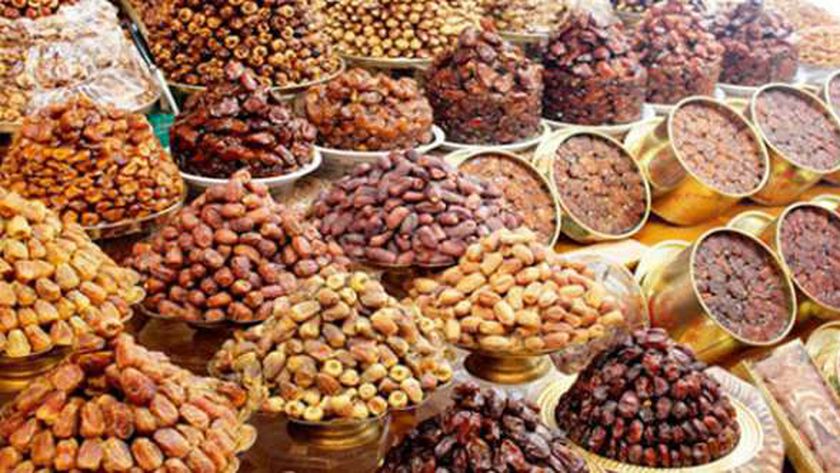
The center said in a statement published on its official social media platforms that it clarified the facts regarding these claims. It noted that, after contacting the Ministry of Agriculture and Land Reclamation, the ministry confirmed that the reports have no basis in fact, stressing that Israeli origin is not an approved source for importing palm products into Egypt, most notably dates.
The Ministry of Agriculture stressed that Egypt only imports
fresh dates in limited quantities from approved origins for varieties that are
not widely cultivated domestically. The ministry added that dry and semi dry
dates are imported outside local production seasons, mainly to meet the raw
material needs of the processing industry.
The ministry pointed out that Egypt ranks first globally in
date production, with output exceeding two million tons and around 24 million
palm trees. It added that, within the framework of national projects, the
Ministry of Agriculture has succeeded in increasing export volumes and is
continuing efforts to open new markets for Egyptian date exports.
The Ministry of Agriculture reviewed data on Egypt’s date
imports during 2025. The data showed that Saudi Arabia topped the list with
21,494 tons, followed by Iraq with 5,522 tons, Libya with 1,583 tons, Jordan
with 620 tons, Syria with 204 tons, Sudan with 15 tons, and the UAE with 1,721
tons, bringing the total to 29,439 tons.
The ministry confirmed that these reports aim to launch a
systematic campaign against Egyptian agricultural exports, particularly ahead
of major international exhibitions such as Fruit Logistica 2026 in Berlin. It
noted that this comes after Egypt succeeded in exporting more than 9.5 million
tons for the first time, stressing that the Ministry of Agriculture continues
to work on enhancing the smooth flow of Egyptian agricultural exports to
markets worldwide.