
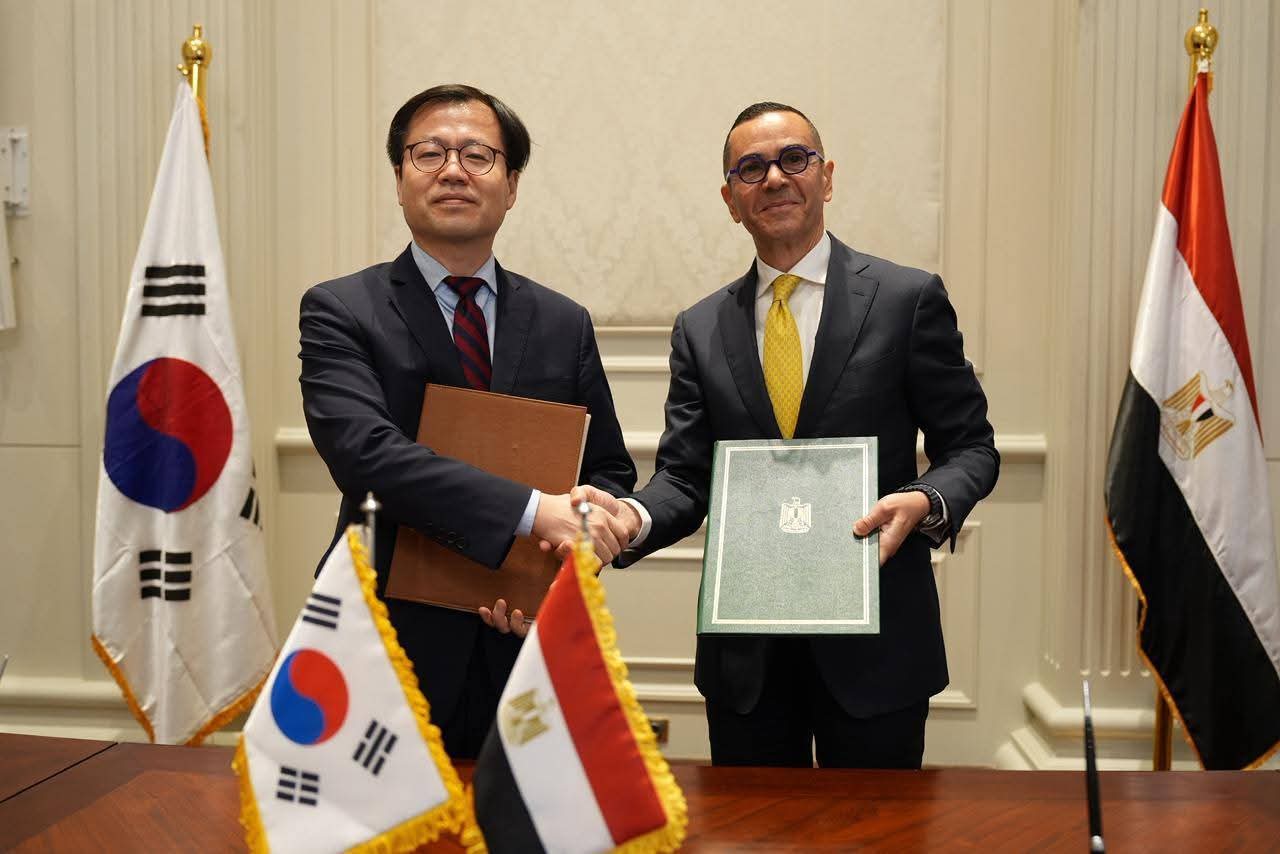
Investment and Foreign Trade Minister Engineer Hassan El-Khatib and his South Korean counterpart, Johan Joo, finalized the statement following a successful feasibility study. The proposed Comprehensive Economic Partnership Agreement (CEPA) aims to eliminate tariffs and foster high-tech industrial cooperation.
"This agreement represents a strategic opportunity to
deepen economic cooperation," Khatib said, noting that Cairo has already
secured cabinet approval to begin formal talks in line with World Trade
Organization rules.
Cairo is positioning itself as a regional gateway for South
Korean firms. Khatib highlighted the Suez Canal Economic Zone as a strategic
platform for Korean manufacturers to access markets in Africa and the Middle
East.
Priority sectors for joint investment include: High-tech:
Semiconductors, smart technology, and telecommunications; Heavy Industry:
Automotive manufacturing, transport, and infrastructure; Energy: Renewable
energy projects and green transition; and Manufacturing: Pharmaceuticals,
garments, and construction materials like marble and ceramics.
Minister Joo described Egypt as a "pivotal state"
and a promising market despite global economic challenges. He emphasized that
the partnership would secure supply chains and leverage Egypt’s strategic
geography.
The head of Egypt’s General Authority for Investment (GAFI),
Mohamed El-Gawsaky, added that his agency is proactively clearing hurdles for
Korean investors, particularly in the automotive and energy sectors.
The move builds on a momentum established during a November summit between the two nations' leaders, signaling a shift toward long-term industrial integration rather than simple trade exchange.