
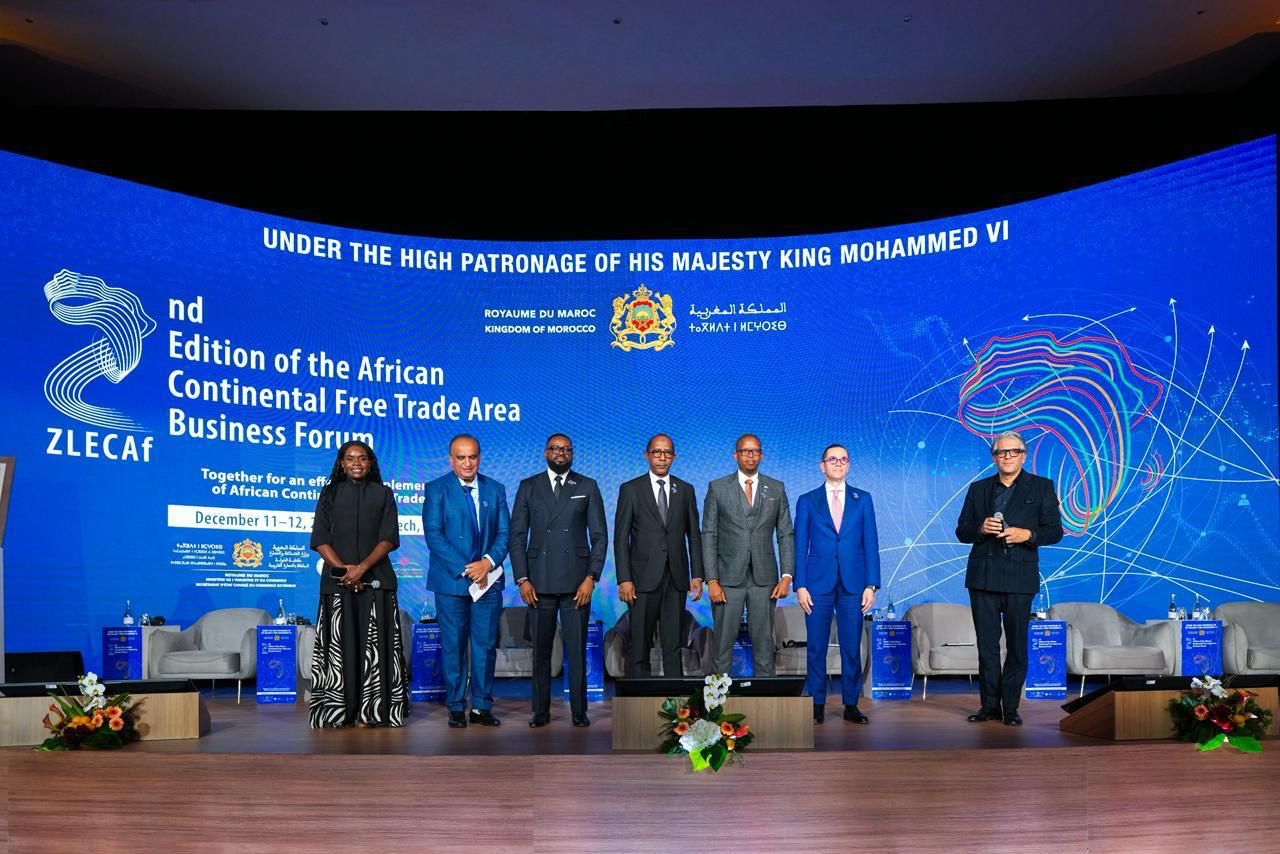
In his address, El-Khatib outlined Egypt’s vision and
priorities for the next phase to strengthen economic integration across the
continent, emphasizing the importance of the forum in supporting continental
efforts to implement the agreement on the ground.
He highlighted that Africa has faced significant economic
and developmental challenges in recent years, but these challenges have also
revealed broad opportunities for growth. He stressed that seizing these
opportunities requires moving from the negotiation phase to actual
implementation of the agreement, resulting in tangible outcomes in trade,
production, and job creation within the continent.
El-Khatib noted that the 17th meeting of the Council of
Trade Ministers, hosted in Cairo, represented a pivotal step. The meeting
reaffirmed two fundamental principles: ensuring that no African country is left
behind and achieving integration in a way that balances the capacities of both
more developed and less developed nations.
He explained that the meeting achieved significant technical
progress, including important breakthroughs in rules of origin for the textiles
and apparel sector and the automotive sector, which are key drivers for
building competitive regional value chains. He also highlighted the completion
of the intellectual property rights annex, a crucial step toward a modern
regulatory framework that supports innovation and strengthens the business
environment across the continent.
The minister pointed out that the supplementary ministerial
meeting held on October 20, 2025, contributed to accelerating the agreement’s
implementation. Additional pathways were completed, and practical measures were
introduced to support the full operationalization of tariff schedules,
facilitating the movement of goods within the continent and enhancing economic
integration in line with Agenda 2063 objectives.
El-Khatib emphasized that the AfCFTA represents a massive
economic framework encompassing over 1.4 billion people and a combined GDP
exceeding $3.4 trillion. He stressed that the true value of this framework is
realized when these capacities translate into tangible results in production,
trade, and investment.
He underlined the importance of pursuing priority measures,
starting with strengthening African supply chains through the gradual
liberalization of tariffs. This approach supports productive linkages between
African countries and enhances the presence of African products in continental
markets.
El-Khatib also highlighted the crucial role of the private
sector, noting its ability to translate the agreement’s commitments into
investments, industrial projects, services, and new job opportunities. He
emphasized that the participation of business representatives in the forum
reflects genuine readiness for collaboration between governments and the
private sector.
The minister stressed the need to enhance payment and
financial settlement systems across Africa, noting that the Pan-African Payment
and Settlement System (PAPSS) has become a key mechanism supporting
intra-African trade by enabling transactions in local currencies, reducing
costs, and increasing efficiency. This empowers small and medium-sized
enterprises (SMEs) to operate more effectively within the unified continental
market.
He further emphasized the need to improve the investment and
trade environment through infrastructure development, modernization of
logistics services, simplification of procedures, and establishment of clear
regulatory frameworks that support production and trade.
El-Khatib described the forum as an important platform for
dialogue, exchanging perspectives, and identifying practical steps to build a
unified African market, with a focus on aligning the needs of the private
sector with the development priorities of African countries.
He noted that current intra-African trade accounts for only
15% of the continent’s total trade, emphasizing that effective implementation
of the agreement can significantly increase this percentage, fostering growth,
attracting investment, and creating broader opportunities for youth and women.
The minister also highlighted that the forum provides a
vital platform for deepening dialogue between policymakers and the private
sector, exploring new partnership opportunities, and launching practical
initiatives to support the next phase of agreement implementation.
He concluded by urging all participants to deepen
cooperation during the forum and pursue new pathways that accelerate AfCFTA
implementation while expanding industrial and commercial integration across the
continent.
El-Khatib also called on the business community to leverage
the event to develop partnerships, finalize agreements, and implement
initiatives that support Africa’s growing trade and investment landscape,
stressing that Marrakesh 2025 represents a landmark step toward a more
integrated, productive, and prosperous continent.