
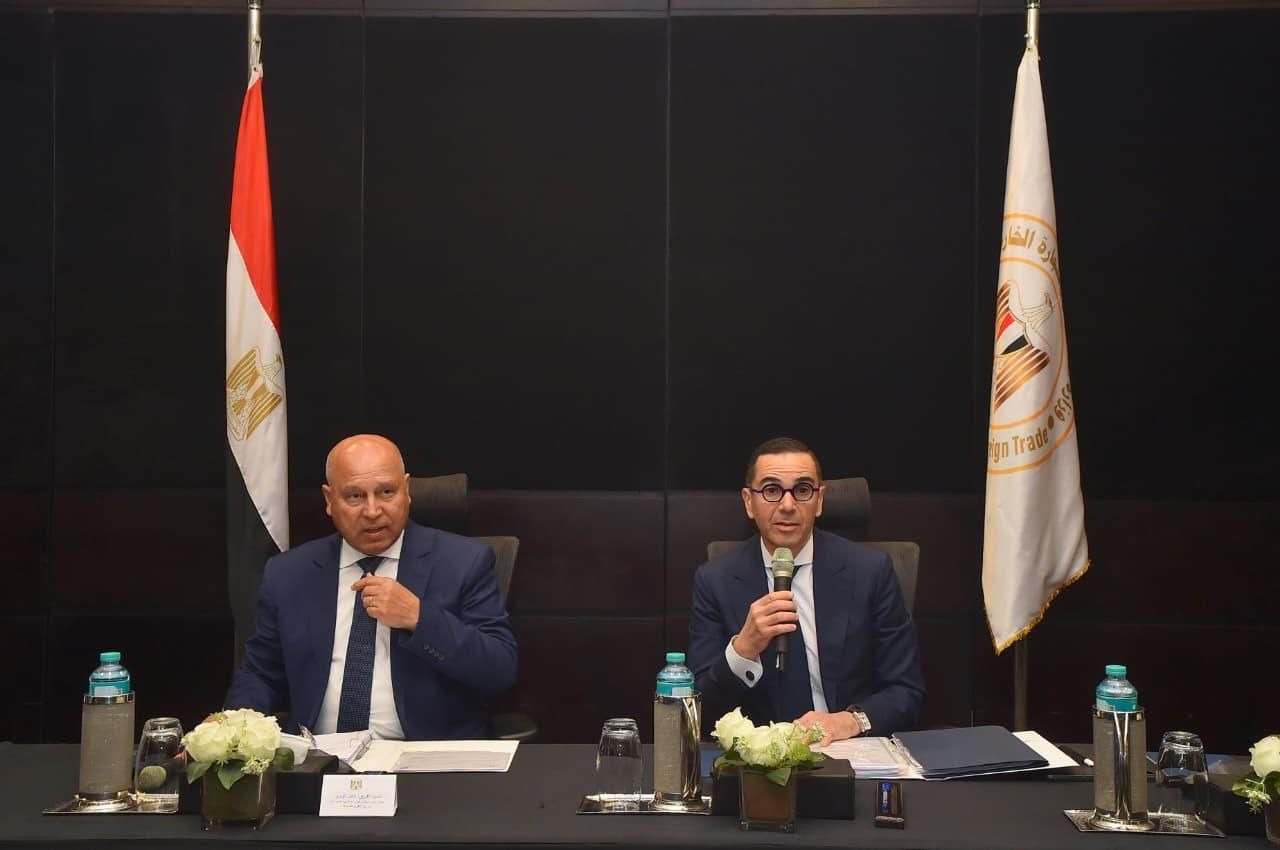
The meeting included Engineers Tarek Tawfik, Hani Berzi, and
Ahmed Fikri Abdel Wahab, members of the Fund’s Board, Dr. Osama Al-Gohary,
Assistant to the Prime Minister and Head of the Information and Decision
Support Center, as well as senior officials from the Ministries of Investment,
Foreign Trade, and Finance.
El Khatib emphasized continuous coordination with Minister
of Finance Ahmed Kouchouk and relevant government agencies to implement the
program, within the government’s integrated strategy to support exports,
maximize returns, and assist exporters.
The 2025–2026 program has a total budget of EGP 45 billion,
including EGP 38 billion for various export sectors and a flexible EGP 7
billion for specialized initiatives. The support covers workforce training,
quality and sustainability certifications, modernization of machinery and
equipment, shipping—including air freight—promotion of Egyptian-branded
products, expansion in regional and international markets, shipping cost
subsidies, development of Upper Egypt and border areas, and registration on
online commercial platforms to facilitate SME access to global markets.
The Minister reviewed proposals to enhance the program’s
effectiveness and expand its medium-term impact, including incentives based on
economic complexity to target high-tech, high-value products, introduction of
new products, launch of an integrated electronic foreign trade platform,
development of human capital, attraction of major international investors for
export purposes, and investment in export-supporting infrastructure.
He also highlighted the importance of developing policies
that support both goods and services exports, noting that improving quality,
accreditation, and adherence to international standards is crucial to
increasing the efficiency and added value of Egyptian exports.
He confirmed that Egypt’s positive trade performance
reflects a sustainable approach to addressing the historical trade deficit,
with recent industrial and commercial efforts aiming to increase exports and
reduce the deficit gap, potentially achieving the lowest levels in the past
decade.
The Minister reviewed ongoing efforts to improve customs
clearance, aiming to reduce the average release time to two days, compared to
the current average of 5.8 days. Joint reforms with the Ministry of Finance
include 29 measures to improve trade flow across ports and outlets.
The meeting also presented a two-year project to train 500
young graduates as qualified exporters, with a total budget of EGP 7 million
from the Export Development Fund. The program prepares participants to work as
export specialists within companies or establish new export ventures, focusing
on export procedures, documentation, international marketing, market analysis,
and compliance with global standards. It will be implemented in collaboration
with the Foreign Trade Training Center.
El Khatib confirmed that a unified national electronic
platform for exporters is being launched as a central initiative of the
Ministry. The platform aims to enhance competitiveness, enable access to new
markets, and support the target of reaching $145 billion in exports by 2030. It
will provide integrated digital services including shipping, certification,
market data updates, and linkage with government trade systems.
The meeting concluded with a reaffirmation of continued
coordination among government agencies to ensure best practices in program
implementation, strengthen productive sectors, and achieve sustainable growth
in Egyptian exports in the coming years.