
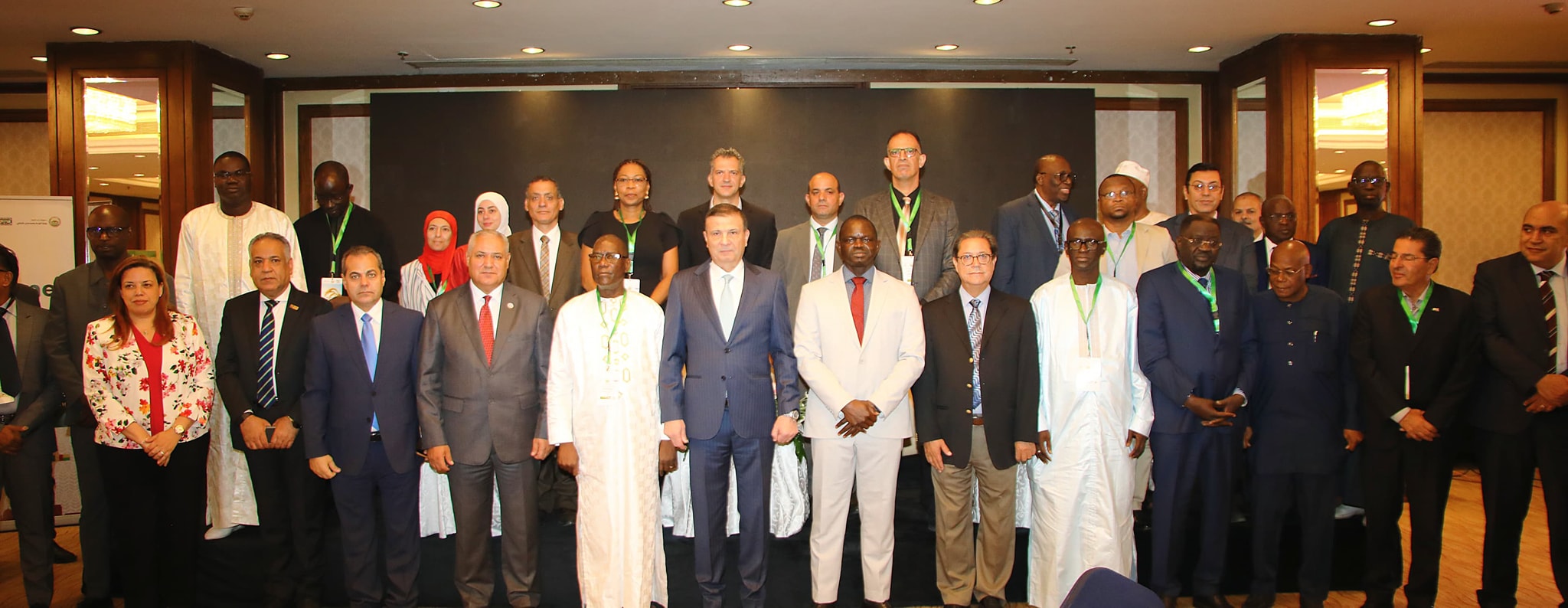
Farouk emphasized the importance of the forum, which allowed
many African countries to learn from Egypt’s successful experience in rice
cultivation. He highlighted Egypt’s commitment to supporting all sister African
nations. This, he said, reflects the directives of the political leadership to
enhance cooperation with African countries.
The minister underlined that continental cooperation is the
key to achieving food security. He stressed that Egypt is sharing its expertise
to serve the African continent and promote integration for sustainable
development. He pointed out that Africa has enormous potential and vast natural
resources that must be fully utilized.
Farouk noted that the forum produced several important
recommendations. These included strengthening cooperation among African
countries in agricultural technology transfer and capacity building. The
discussions also called for better integration between agricultural research
and extension services, linking them more closely to farmers. He added that
improving the seed system and ensuring the availability of high-quality,
genetically pure varieties were among the key priorities.
He also stressed the importance of developing appropriate
financing mechanisms for small farmers and ensuring fair input prices. The
forum recommended promoting contract farming and supporting public–private
partnerships across the value chain. It also endorsed the creation of an
African expert network to coordinate efforts in developing the rice sector and
monitor progress. Participants agreed to adopt a continental roadmap for
achieving rice self-sufficiency in line with the African Union’s agricultural
strategy.
Ministers and representatives from participating countries
affirmed that achieving rice self-sufficiency in Africa is a shared strategic
goal. They emphasized that this goal requires strong cooperation and
integration at the continental level. They also agreed that food security is a
collective responsibility that places African farmers at the heart of agricultural
development. The officials stressed the need to continue joint programs with
the Africa Rice Center and Egypt’s Agricultural Research Center to enhance food
security and achieve sustainable development across Africa.
The forum was attended by the Ministers of Agriculture from
Egypt and Guinea-Bissau, the Deputy Ministers of Agriculture from Sierra Leone
and Liberia, and the Governors of Niger and Jigawa States in Nigeria.
Representatives from Senegal and Nigeria, the Agricultural Research Center, and
the Africa Rice Center team, led by Director General Dr. Baboucarr Manneh, also took part in the event.
Egypt presented its pioneering experience in rice
cultivation. The presentation included the development of high-yielding
varieties such as Sakha Super 300 and Giza 183. Modern irrigation systems were
also showcased, which have reduced water consumption by 30%. As a result, Egypt
achieved yields of 4–5 tons per feddan — among the highest globally.
On the sidelines of the forum, participants visited the Agricultural
Museum in Dokki at the invitation of Minister Alaa Farouk. They toured the
museum’s exhibitions, which document the evolution of Egypt’s agricultural
sector from ancient times to the modern era. The visit reaffirmed Egypt’s
historic leadership in this vital field.
The delegation also visited the Sakha Agricultural Research
Station. There, they observed Egypt’s advanced rice varieties and research
programs focused on improving productivity and developing high-yielding,
disease-resistant, and water-efficient strains. Participants toured the Rice
Training Center and the Seed Production and Screening Station to learn about
the stages of rice seed production. They also observed a simulation of rice
transplanting operations and the use of modern mechanization in planting and
harvesting.
Participants then visited leading agricultural machinery
companies in Tanta. The visits allowed them to learn about the latest
technologies in agricultural mechanization and post-harvest processing.
At the end of the forum, participants praised Egypt’s
exemplary model in balancing high productivity with efficient water use. They
stressed the importance of replicating this successful approach across Africa
through technical cooperation and knowledge exchange.
Farouk expressed his appreciation to all who contributed to
the success of the event. He thanked the Africa Rice Center, the Agricultural
Research Center, the Field Crops Research Institute, the Rice Research
Department, the Ministry’s External Agricultural Relations Department, and the
Arab Organization for Agricultural Development for their efforts and valuable
support.