
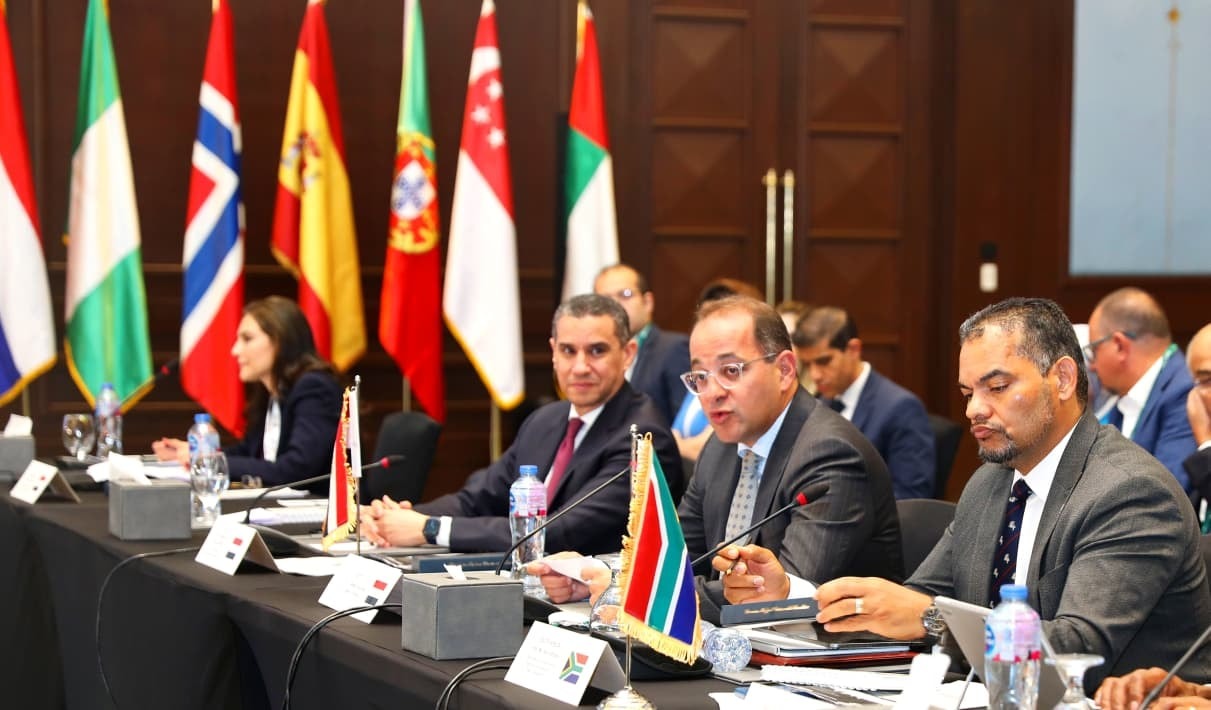
Kouchouk said Egypt is working to expand arable land, increase productivity, and provide food staples in sufficient quantities. He explained that the government funds various programs to support farmers, encouraging them to expand and increase the agricultural sector's competitiveness.
He noted that food subsidies are a key pillar of Egypt's
social protection strategy, pointing out that the country allocates some EGP
165 billion for subsidized goods, benefiting more than 60 million citizens.
The Minister added that the government has expanded the
"Takaful and Karama" program, which covers 5 million families and
links support to specific educational and health outcomes.
Kouchouk emphasized that national efforts require
integration with regional and international partnerships to achieve food
security for all. He said Egypt looks forward to a greater role for
international institutions in mobilizing resources to fund more sustainable
agricultural investment and address climate challenges.
He also stated that Egypt is working to provide more support
and space for private sector partners to contribute to sustainable development,
referencing the Global Alliance for Combating Hunger and Poverty within the G20
framework and the activation of global development partnerships.
Kouchouk said Egypt is committed to a strong partnership in
building fair, cohesive, and resilient food systems in the face of climate
change. He noted that the country is working with others for a more equitable,
sustainable, and responsive food future for developing and African nations. He
also explained that rising global food prices strain public finances and hinder
growth and development in developing and African countries.
He stressed the need to seriously address global financial system imbalances, the development funding gap, and climate challenges. He concluded by highlighting the importance of using technology and artificial intelligence applications to face contemporary crises and achieve food security.