
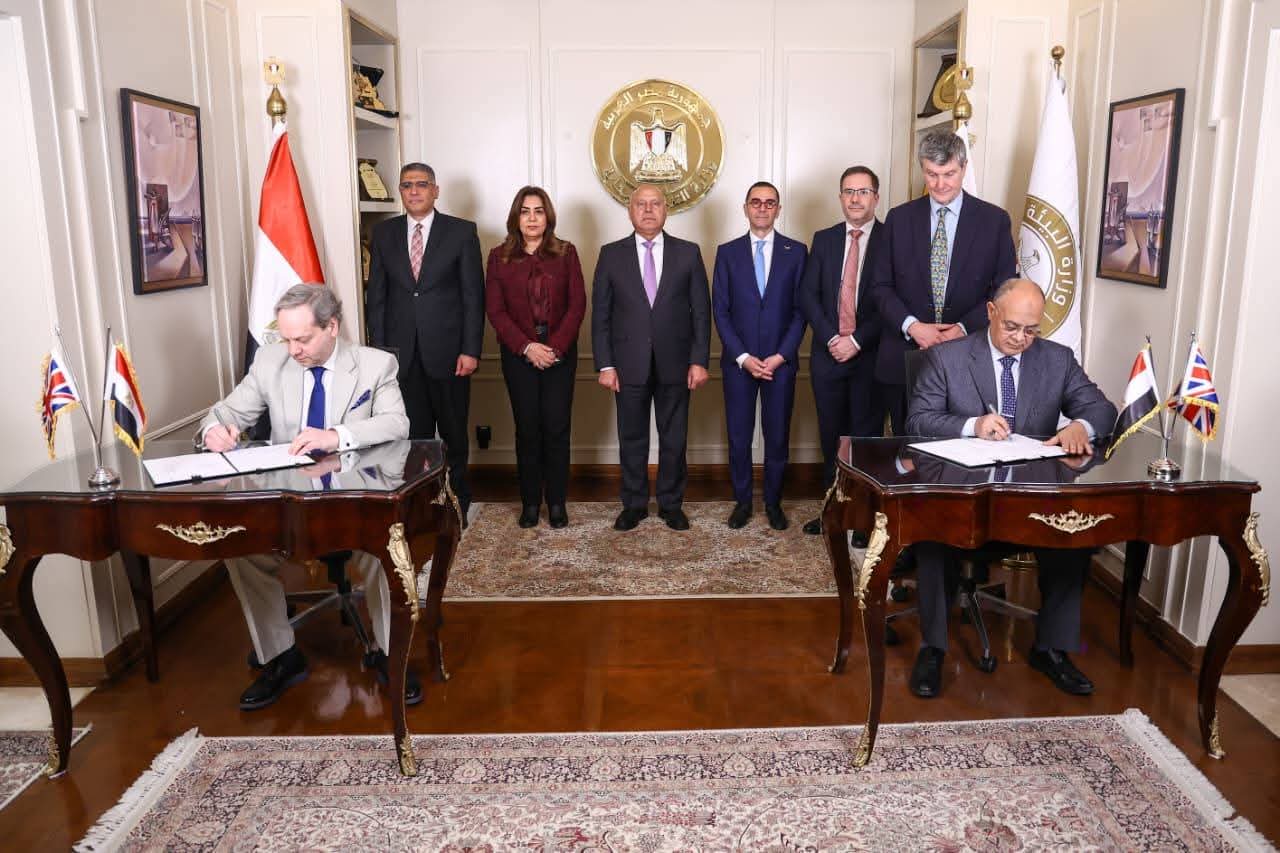
The signing ceremony was attended by Deputy Prime Minister for Industrial Development Engineer Kamel Al-Wazir, Local Development Minister and Acting Environment Minister Dr. Manal Awad, Investment Minister Engineer Hassan El-Khatib, Giza Governor Engineer Adel El-Naggar, and British Ambassador Mark Bryson-Richardson.
Under the agreement, the 714-feddan Shabramant dumpsite will
be transformed into a sophisticated bio-factory and sustainable public park.
The project will utilize advanced "Z4" biotechnological processes to
treat 30 million tons of accumulated waste, converting it into high-value
export products including biofuels, fertilizers, and synthetic graphite.
Minister Manal Awad stated that the project involves
rehabilitating the old disposal site to eliminate environmental hazards and
operating the newly built sanitary landfill. Polar Hydro will also manage and
operate two intermediate transfer stations in Kerdasa and Marioutiya.
"The project reflects the government's push for an
effective waste management system through full recycling and safe
disposal," Dr. Awad said, adding that the partnership aims to boost the
circular economy and achieve sustainable development goals.
Giza Governor Engineer Adel El-Naggar noted that the
initiative aligns with the state's transition toward a green economy. He
emphasized that the project will apply the latest technological systems to
handle all municipal solid waste generated across Giza’s districts and cities.
A representative from Polar Hydro highlighted the strategic importance of the international cooperation, noting that the project is expected to create 52,000 direct and indirect jobs. Funded by the British company, the project will operate as a private free zone to facilitate the localization of waste treatment technologies and the export of recovered materials.