
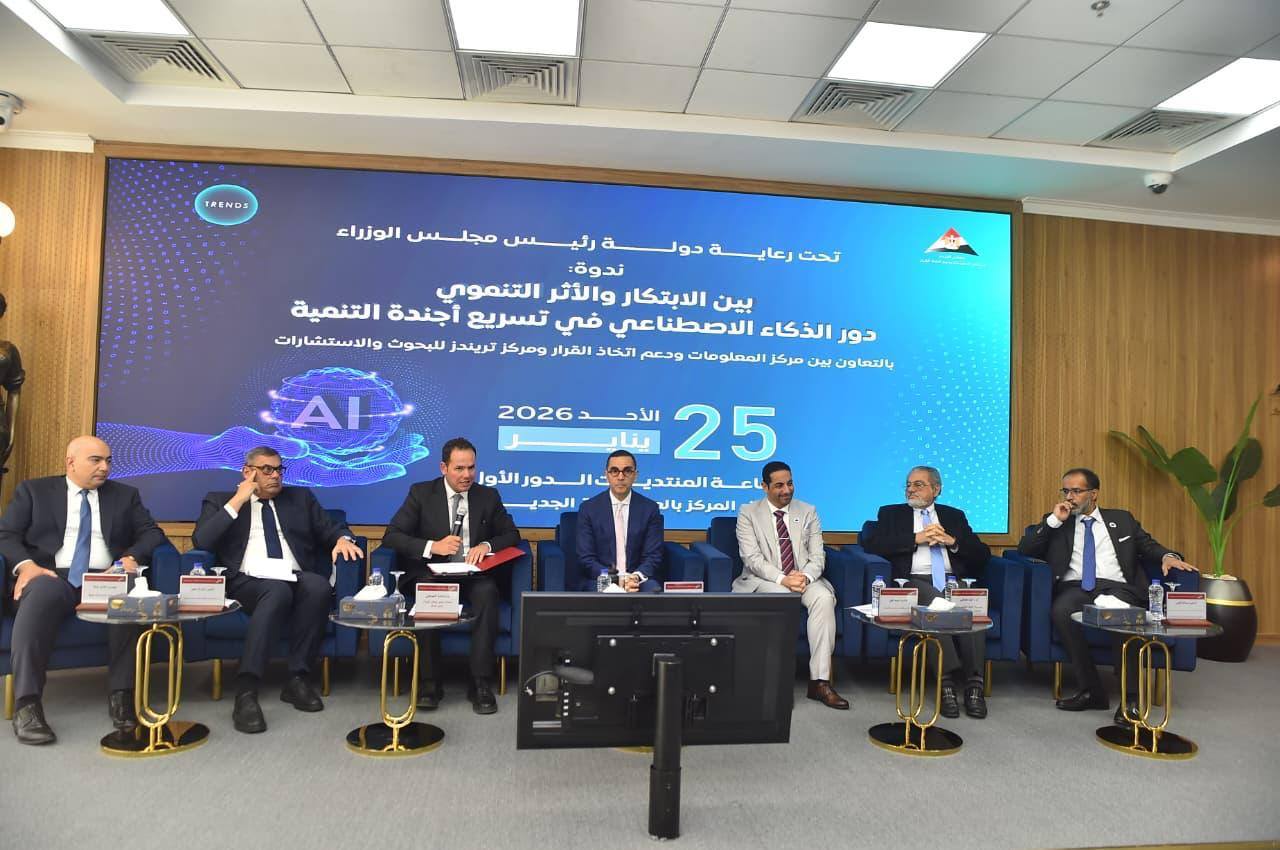
Addressing a group of officials and experts, El-Khatib stated that five pillars—energy, infrastructure, chips, models, and applications—determine a country's success in AI. He highlighted Egypt’s potential to generate between 700 and 1,000 gigawatts of solar power in the Western Desert, describing renewable energy as the "fundamental backbone" of AI systems.
"The world is witnessing a historical shift," El-Khatib
said. "Egypt possesses the energy, the infrastructure, the strategic
location, and the human talent to be a key player in this global technological
transformation."
The Minister detailed government efforts to streamline the
investment landscape through digitalization, noting that 41 government entities
have been transitioned to digital platforms. These reforms have reduced
business registration steps from 34 to just nine in some sectors and replaced
22 separate commercial registers with a single digital ID.
To bolster foreign trade, El-Khatib announced the launch of
the "Egypt Digital Trade Platform," designed to connect exporters
with importers and manage international agreements. The initiative aims to
raise the share of exports in the national GDP to at least 30 percent,
supporting a long-term target of $145 billion in annual exports.
El-Khatib also stressed the importance of infrastructure,
citing Egypt’s strategic role as a hub for data cables linking Asia and Europe.
He called for utilizing this advantage to establish sustainable data centers
powered by clean energy.
The Minister concluded by affirming Egypt’s goal to rank among the top 20 countries globally in digital competitiveness and investment. He underscored that the state is actively working to localize data centers and develop local smart applications in health, logistics, and energy to ensure Egypt remains a producer, rather than just a consumer, of modern technology.