
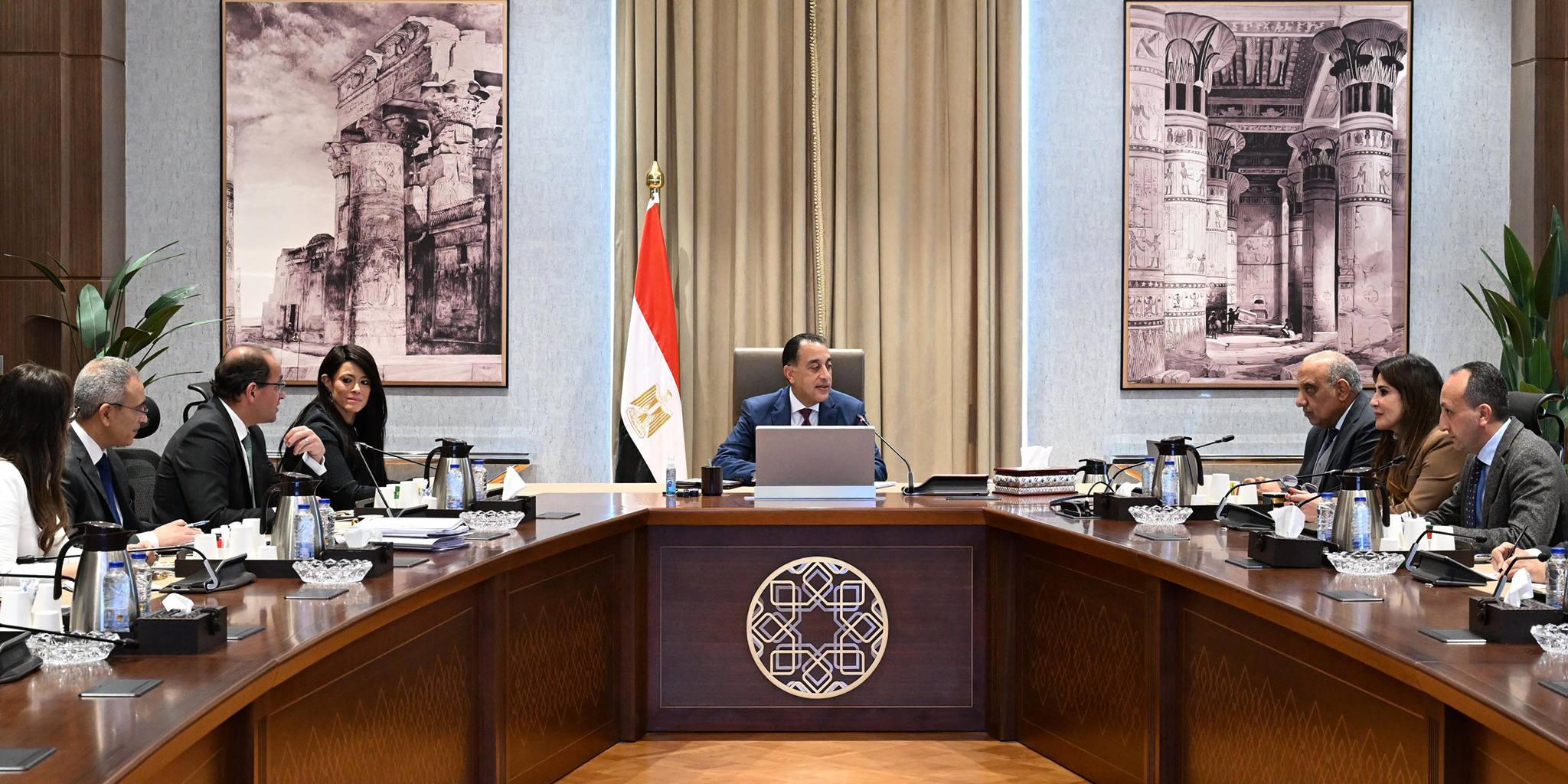
The meeting was attended by Dr. Rania Al-Mashat, Minister of Planning, Economic Development, and International Cooperation; Engineer Mahmoud Esmat, Minister of Electricity and Renewable Energy; and Ahmed Kouchouk, Minister of Finance.
At the start of the meeting, the Prime Minister emphasized
that the electricity and renewable energy sector is responsible for providing
power to all citizens across production and consumption sectors. This
contributes to achieving sustainable development goals and continuously
improving the quality of services offered to citizens. He added that the sector
ensures the necessary electricity supply for various development projects,
including agriculture, industry, trade, services, housing, and the development
of new urban communities and reclaimed areas. Accordingly, the government is
working to secure the required funding for new projects in this vital sector to
support the national grid and its infrastructure in accommodating additional
capacity generated by renewable energy.
Counselor Mohamed El‑Homsani, official spokesperson for
the Prime Minister’s Office, stated that the meeting highlighted several
electricity sector projects included in the 2025–2026 fiscal year plan. These
projects are being implemented through multiple programs aimed at maintaining
and improving electricity supply quality while ensuring sustainability. The
program seeks to achieve comprehensive electricity coverage for all urban
communities, residential areas, and economic activities, while enhancing
service quality to ensure continuity and maximize expected returns. It also
includes initiatives to improve electricity utility services, including
connection, transmission, and distribution.
El‑Homsani added that targeted
projects include completing the relocation and conversion of electricity
facilities conflicting with road projects, finalizing the national project to
convert overhead lines to underground cables, and programs to strengthen
Egypt’s regional role as an energy hub. These programs aim to diversify energy
sources and gradually transition to environmentally friendly renewable energy.
This involves increasing investments in solar and wind power, expanding land
areas allocated for renewable energy production, and enhancing the contribution
of renewable energy to the national grid’s total capacity. The plans also
include green hydrogen projects, supported by the necessary electrical
infrastructure in line with Egypt’s vision to become a regional energy hub, as
well as international electricity interconnection projects with neighboring
countries, primarily utilizing surplus locally generated renewable energy.
The meeting also addressed enhancing private sector
participation in electricity and renewable energy projects, with the
development plan encouraging active private sector involvement, particularly in
renewable energy initiatives.
El‑Homsani further explained that the
meeting discussed the Ministry of Electricity’s
outstanding debts to several government ministries and entities, mechanisms for
settling these debts, and potential financial reconciliations. This aims to
resolve financial entanglements, improve service quality across key sectors,
and strengthen their financial capacity to achieve operational goals
efficiently.
It is noteworthy that the Ministry of Planning, Economic
Development, and International Cooperation, through the NWFE program platform,
successfully mobilized funding in recent periods from local and foreign private
sectors. This has contributed to increasing foreign direct investment in the
renewable energy sector and strengthening Egypt’s position as a regional energy
hub. These funds have supported several projects that advance Egypt’s renewable
energy and green transition efforts, contributing to achieving the updated
national targets for increasing the renewable energy mix.