
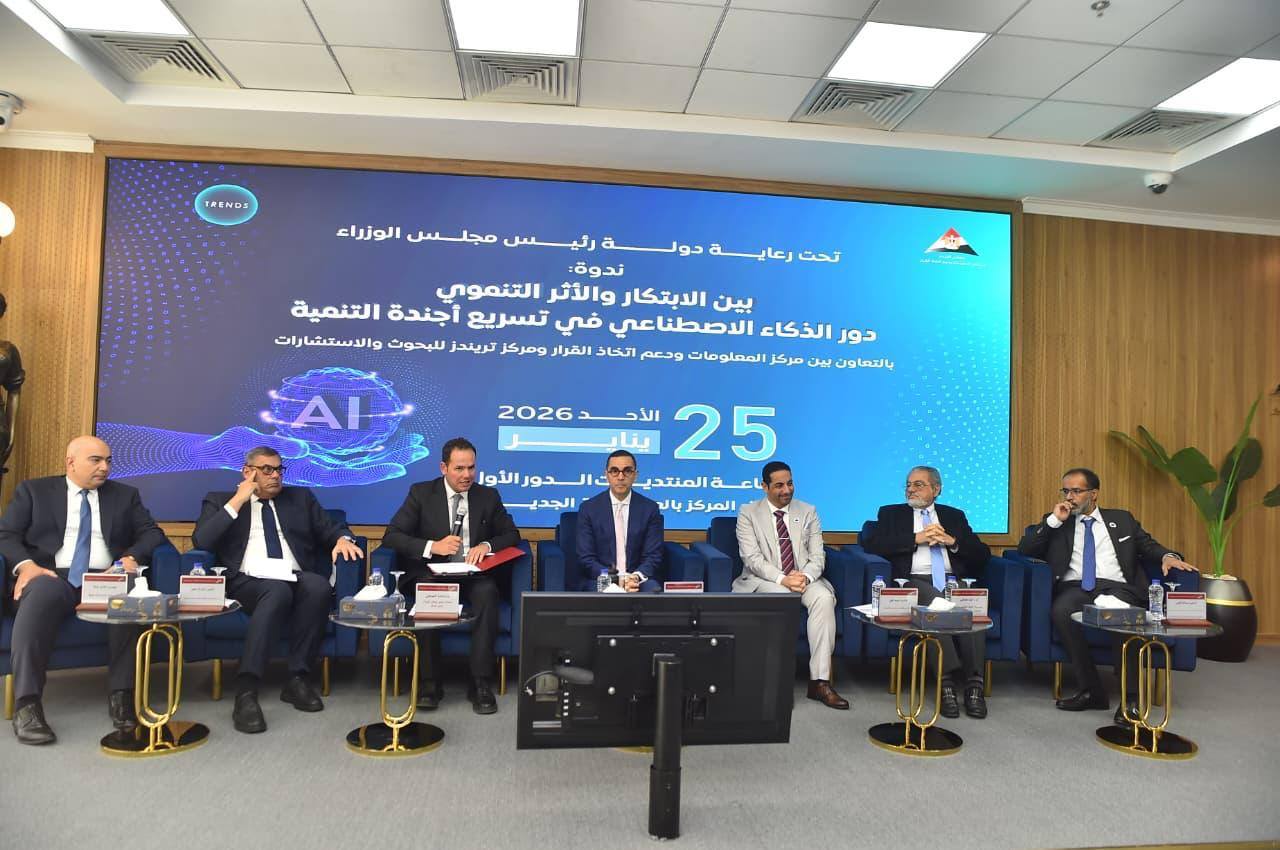
Speaking at a seminar titled "Between Innovation and Developmental Impact: The Role of AI in Accelerating the Development Agenda," El-Khatib noted that the global shift toward AI is a historic turning point. He identified five essential elements for AI sovereignty: energy, infrastructure, chips, models, and applications.
The Minister highlighted that energy, specifically renewable
energy, is the primary pillar for building AI systems. He revealed that Egypt
has the technical capacity to generate between 700 and 1,000 gigawatts of solar
power in the Western Desert.
"These capabilities place Egypt in a prime position to
play a leading role in the technological future, both locally and
regionally," El-Khatib said.
Regarding infrastructure, El-Khatib pointed to Egypt’s
strategic location, which connects Asia and Europe via data cables. He urged
the expansion of data centers powered by clean energy to ensure project
sustainability.
The Minister also outlined significant reforms to Egypt’s
digital investment climate:
Digital Transformation: 41 government agencies have been
converted into digital platforms to streamline investor procedures.
Simplified Licensing: 389 different licenses have been
digitized, and the number of steps to establish a company has been reduced from
34 to just nine in certain sectors.
Unified Records: Investors now use a single digital
commercial register instead of the 22 previously required.
To bolster the trade sector, Egypt is launching the
"Egypt Digital Trade Platform" to connect exporters with importers
and provide real-time market data.
The government aims to raise the total value of Egyptian
exports to $145 billion, with a goal of increasing the contribution of exports
to the GDP to at least 30 percent. Additionally, a "Platform for Economic
Entities" currently nearing completion will offer 460 digital services
across 41 agencies.
El-Khatib stressed the importance of transitioning Egypt
from a consumer to a producer of technology by developing local AI models and
applications in health, energy, and logistics. He praised Egypt’s human
capital, noting that specialized training for local talent is essential to sustaining
this digital transformation.
The seminar, organized by the Cabinet’s Information and Decision Support Center (IDSC), was attended by high-ranking officials, including the UAE’s Head of Cybersecurity, Dr. Hamad Al-Kuwaiti, and representatives from leading technology firms.