
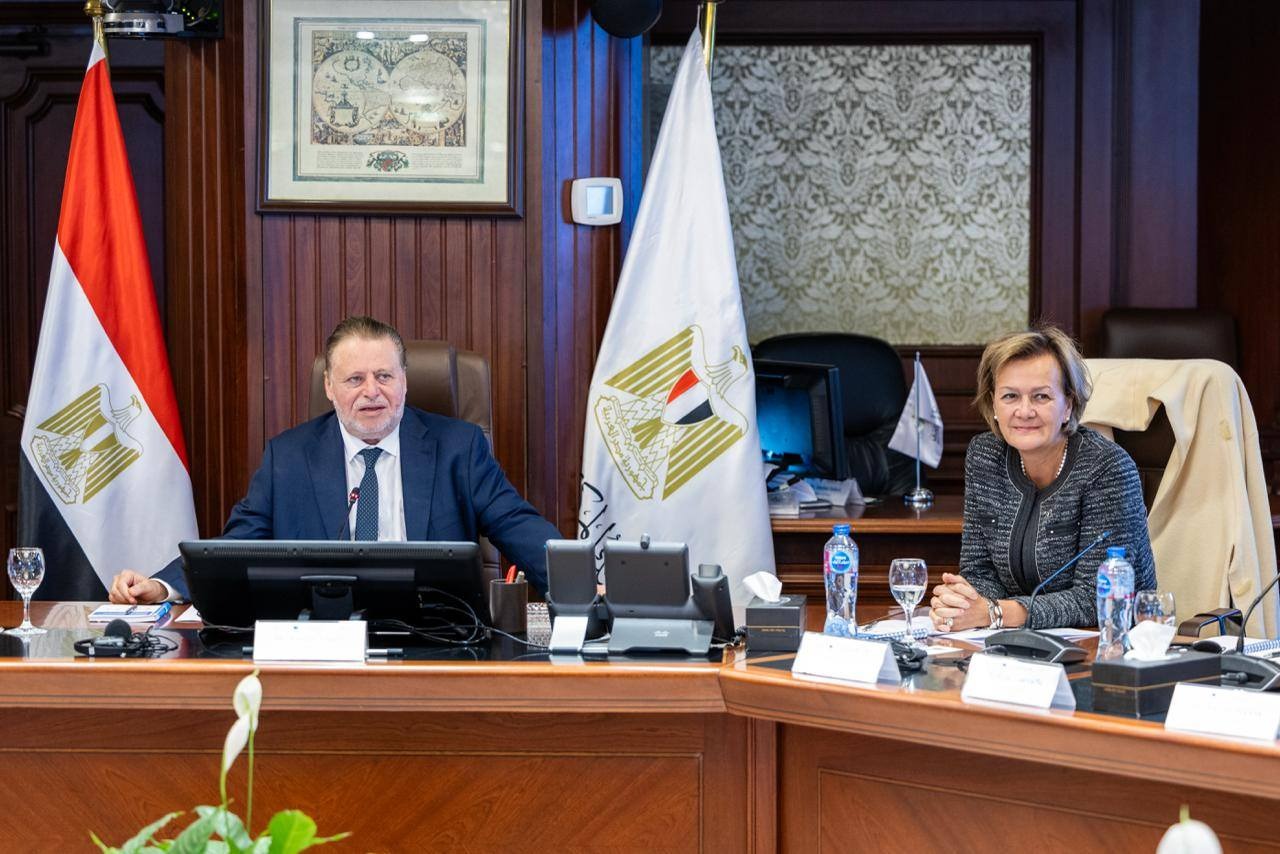
During the meeting, officials announced a two-year extension of the program, now running until December 2027. The initiative aims to strengthen macroeconomic and financial stability across Africa.
Abdullah stated that since its launch in December 2023, the
program has highlighted the importance of close cooperation between African and
European central banks. It has achieved multiple positive outcomes for African
central banks, including capacity development, knowledge exchange, and support
for reforms addressing global economic challenges. He added that the new phase
of the program will expand technical assistance and capacity-building support
while enhancing policies and mechanisms that promote financial stability,
transparency, and sustainable growth.
The program focuses on supporting financial reform and
resilience, stimulating trade, investment, and sustainable growth. It also
addresses critical topics such as climate change, digital transformation,
artificial intelligence, governance, and anti-money laundering.
The initiative is managed by the German and French central
banks in partnership with the European Central Bank (ECB), alongside the
national central banks of Belgium, Spain, Italy, Lithuania, Portugal, and
Slovakia.
Several African central banks benefit from the program,
including the Central Bank of Egypt, the National Bank of Angola, the Central
Bank of West African States (BCEAO), the Bank of Central African States (BEAC),
the Bank of Ghana, the Central Bank of Kenya, the Bank of Morocco, the Bank of
Mozambique, the Bank of Namibia, the South African Reserve Bank, the Bank of
Tanzania, and the Central Bank of Tunisia, covering a total of 24 African
countries.