
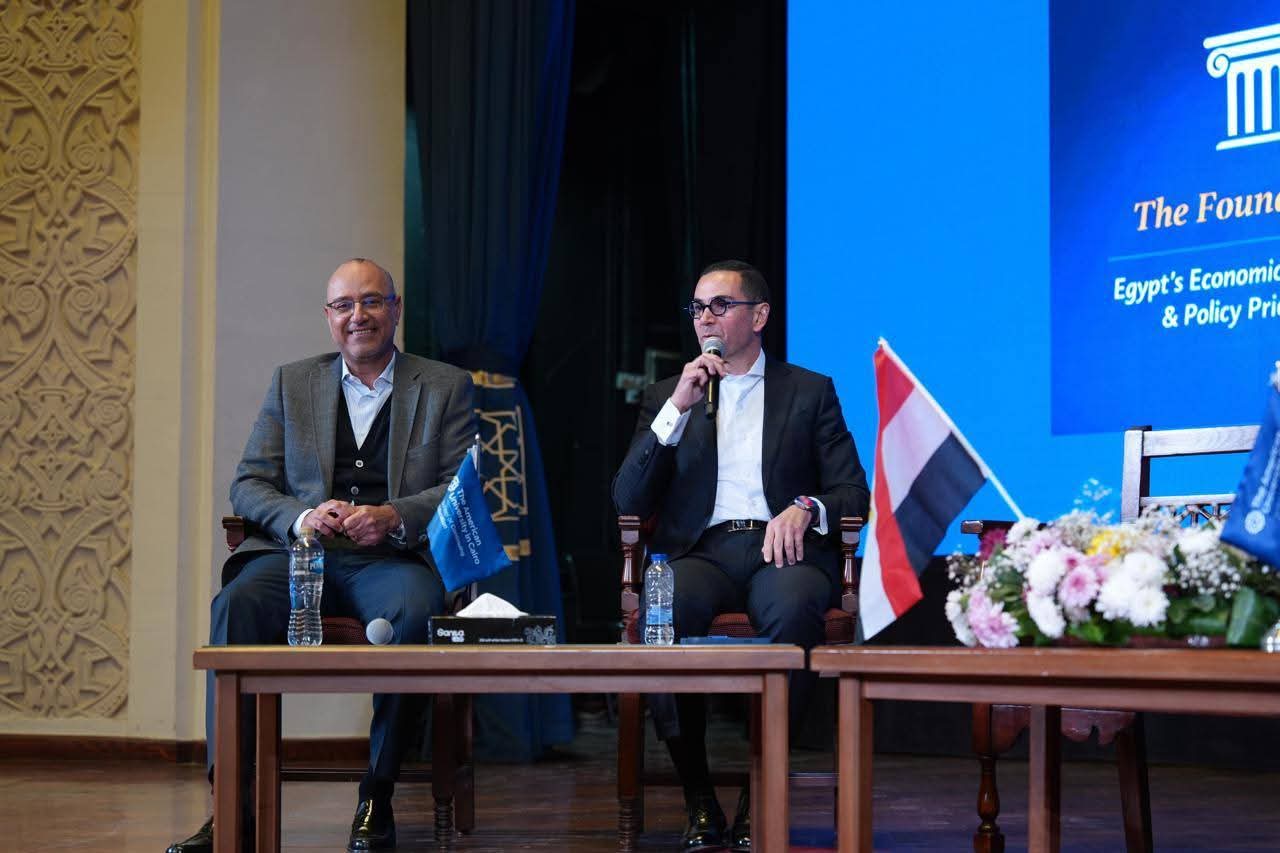
The session was attended by Sameh Hassan, Chief Executive Officer of Savola Group, Mohamed Samir, Chief Executive Officer of Halwani Bros Group, and Ayman Ismail, a prominent business leader and former Chief Executive Officer of Mountain View. The discussion was moderated by Nahla Gouda.
The Minister said the state is adopting a reform-oriented
approach based on clear and sustainable economic policies. He explained that
the current phase is witnessing unprecedented alignment between monetary,
fiscal, and trade policies, which strengthens the Egyptian economy’s ability to
respond to regional and international developments.
El-Khatib stressed that attracting investment is based on
the clarity and stability of policies. He explained that the current monetary
policy focuses on inflation targeting, which contributes to enhancing
competitiveness and building a strong production base.
The Minister reviewed the positive outcomes of the shift in
monetary policy. He said net foreign assets moved from negative levels to
between 15 and 20 billion dollars. He added that remittances from Egyptians
abroad rose to about 37 billion dollars, with expectations of further growth.
He also noted that foreign exchange reserves increased to 51 billion dollars,
reflecting a real and sustainable improvement.
El-Khatib said the current state approach focuses on
simplifying the tax system and easing burdens. He explained that the government
is implementing successive reform packages to facilitate procedures for the tax
community.
The Minister pointed out that digital transformation and the
unification of fee collection mechanisms represent the practical path to
addressing the multiplicity of authorities and overlapping burdens. He said
this approach ensures transparency, strengthens oversight, and reduces costs
for investors.
He explained that these reforms resulted in a 35 percent
increase in tax revenues within one year. He described this as the highest rate
achieved since 2005 and an indicator of the success of a policy based on trust
and effective communication with the private sector and its positive response.
The Minister said trade policy represents a key pillar in
supporting industrial competitiveness. He explained that a comprehensive trade
policy has been developed, addressing global value chains, maximizing the
benefits of trade agreements, and activating trade defense instruments.
El-Khatib noted that these efforts contributed to reducing
customs clearance time from about 16 days to 5.8 days, helping improve the
business environment and reduce trading costs.
He also affirmed that the current government approach
focuses on maximizing the value of state-owned assets and improving their
management to create higher added value. He said this approach aims to ensure
optimal investment in available economic opportunities, support development
momentum, and enhance the efficiency of the national economy.
El-Khatib added that professional management of these assets
can generate significant annual returns that support economic growth and help
reduce public debt. He noted that state-owned real estate assets can become a
major source of revenue through development, partnerships, and changes in use
that achieve substantial added value.
The Minister also said sustainability and green energy
represent the future of the Egyptian economy. He highlighted Egypt’s
significant potential in solar and wind energy, which can be leveraged to meet
domestic needs and support exports abroad.