
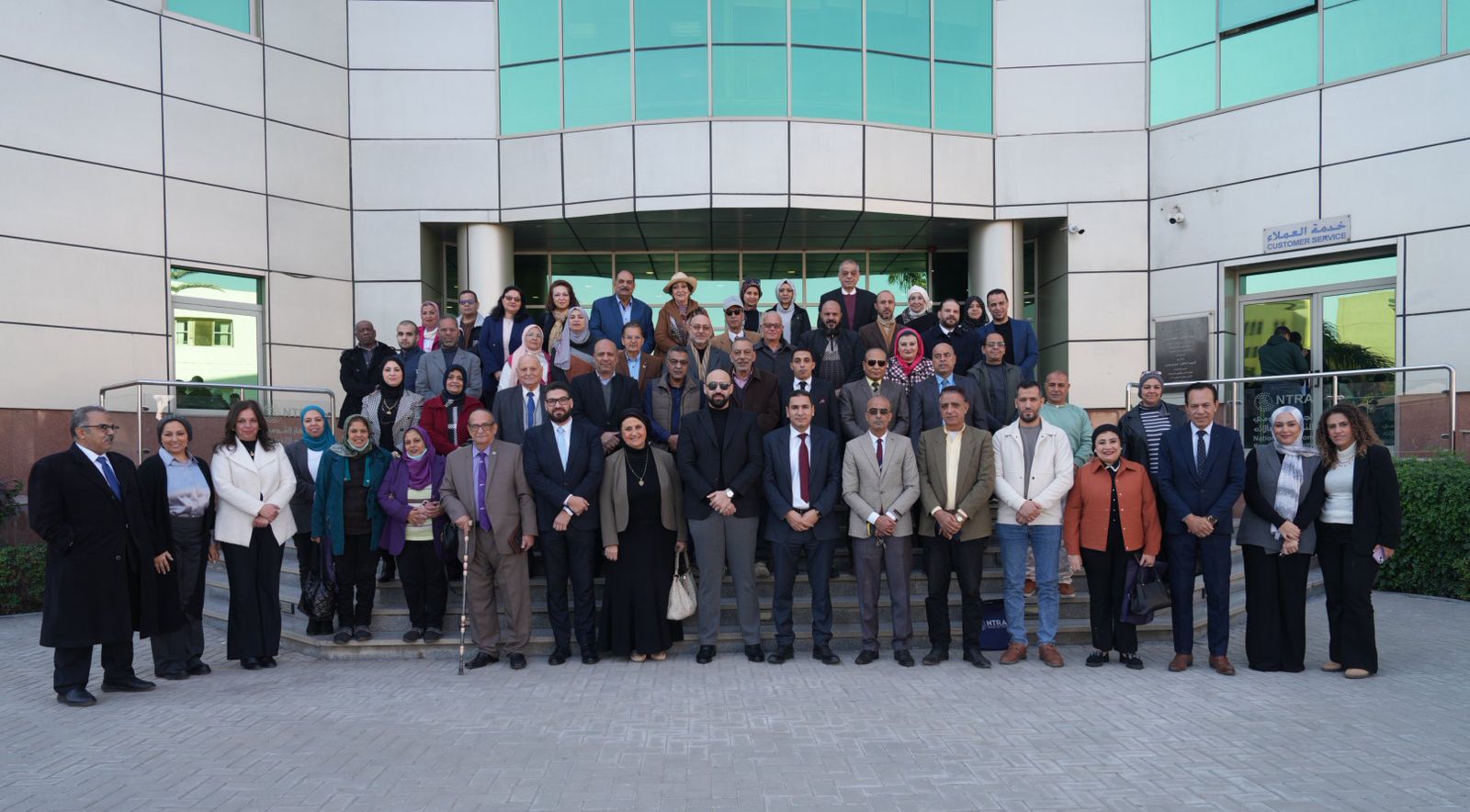
The program focused on building both institutional and
operational capacities for staff members of consumer protection associations.
It introduced participants to the NTRA’s role in regulating the
telecommunications market and monitoring service providers, outlined the
approved channels for receiving, registering, and following up on complaints,
and reviewed mechanisms for protecting user rights and ensuring service
quality. The training also highlighted key articles and provisions of the
Consumer Protection Law relevant to the telecommunications and information
technology sector, reinforcing the role of civil society organizations in
protecting users’ rights.
The training sessions included specialized lectures
addressing cooperation and integration between the NTRA and consumer protection
associations. These sessions aim to enhance the efficiency of the user
protection system and ensure swift and effective handling of complaints.
In this context, the NTRA stressed that protecting the
rights of telecommunications service users is a central pillar of its strategy.
The authority noted that it continuously works to develop regulatory and
supervisory frameworks to balance improvements in service quality with the
protection of users’ rights. It emphasized that raising awareness among users
about their rights and responsibilities, along with supporting partnerships
with civil society organizations—particularly consumer protection
associations—directly contributes to efficient and timely resolution of
challenges, positively impacting service standards, market stability, and the protection
of user interests nationwide.
The NTRA added that its cooperation with the Consumer
Protection Agency is part of building an integrated system for user protection,
based on institutional coordination, knowledge sharing, and unified oversight
efforts. This ensures that the voice of Egyptian users reaches the relevant
authorities accurately and objectively, enhancing the state’s ability to
respond effectively to complaints from telecommunications service users.
Meanwhile, the Consumer Protection Agency affirmed that the
Federation of Consumer Protection Associations serves as a key pillar of public
oversight. The agency explained that this training program helps unify efforts
between state institutions and civil society, ensuring effective law
enforcement and providing the technical support needed for associations to act
as an effective link between citizens and the relevant authorities.
At the conclusion of the program, both parties emphasized
the importance of continued cooperation between the NTRA, the Consumer
Protection Agency, and consumer protection associations. The collaboration aims
to raise awareness of telecommunications users’ rights, strengthen
complaint-handling mechanisms, and activate community participation in
monitoring market issues. Both parties also stressed the importance of
continuing specialized training programs in the areas of supervision and
regulation, supporting the state’s efforts to reinforce the system for
protecting user rights and to uphold principles of transparency and governance
within the telecommunications and information technology sector.