
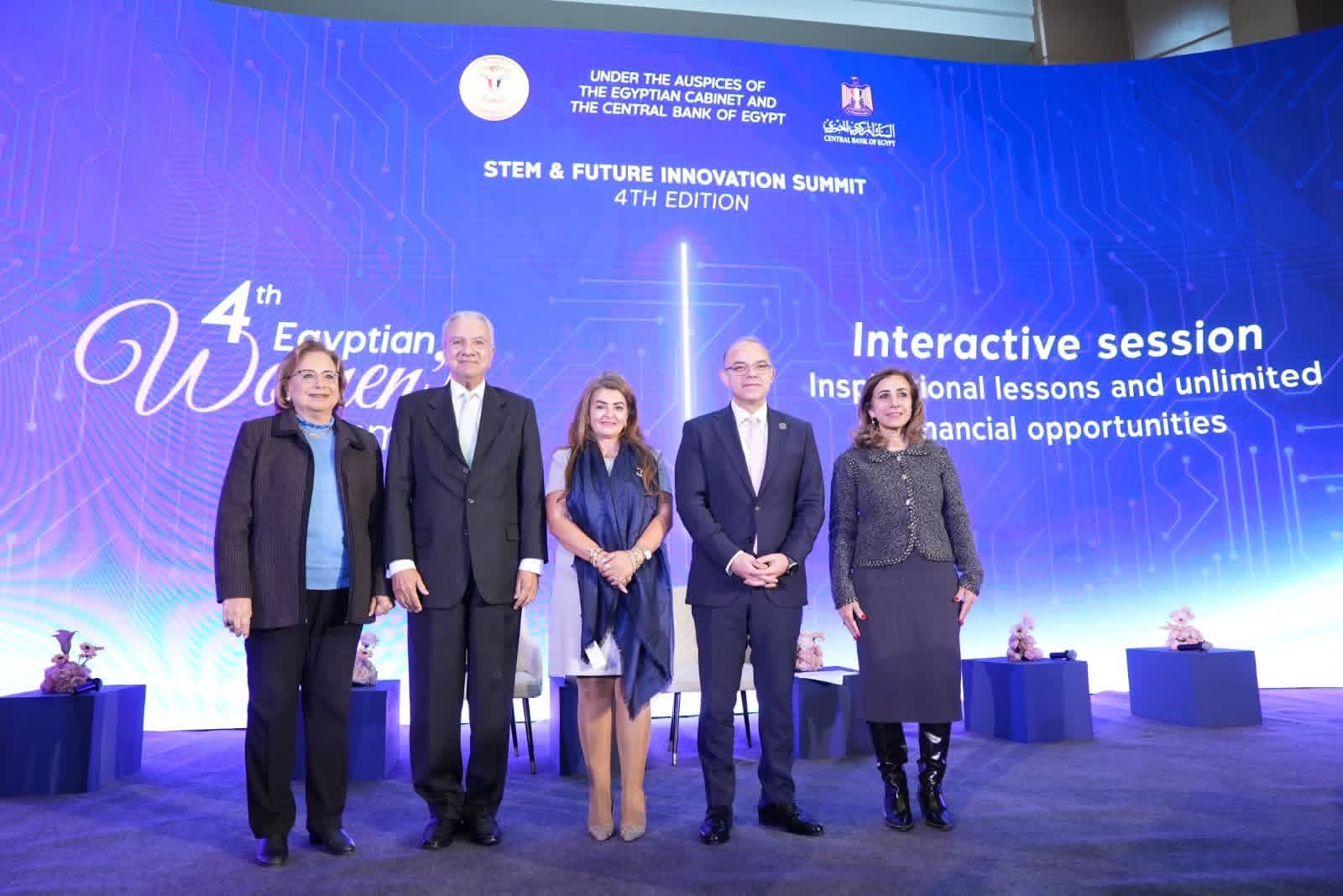
Dr. Farid's remarks came during his keynote speech at the Top 50 Women STEM and Future Innovation Summit, held under the patronage of Prime Minister Dr. Moustafa Madbouly and in collaboration with the National Council for Women (NCW). The summit gathered female leaders, experts in science, technology, and innovation, and university students.
The FRA Chairman explained that public service faces complex
challenges due to interconnected interests and numerous stakeholders, which
necessitates continuous diligence and the establishment of strong scientific
and professional foundations.
He stressed that lifelong education and engaging with
international experiences, particularly in advanced economies, are crucial for
understanding markets and communicating effectively with global investors and
institutions.
Dr. Farid highlighted his personal commitment to this
principle, noting that he pursued four Master’s degrees to continuously update
his knowledge and remain current with global developments, emphasizing that
scientific and professional references are the governing standards for
regulatory bodies.
Dr. Farid shared that his career and personal journey were
shaped by influential figures, beginning with his father, Ambassador Farid
Saleh, from whom he learned that the value of work is tied to commitment and
continuous contribution, not merely position. He also lauded his mother,
describing her as a model of discipline and sacrifice who resigned from her
academic post at the Faculty of Pharmacy to support her diplomat husband
abroad, instilling in him the belief that institutional success requires
commitment and responsibility.
He also cited Dr. Mahmoud Mohiedin as an academic and
professional mentor, seeing him as a model for combining academic excellence,
comprehensive economic vision, and practical application within international
institutions. This reinforced his conviction in the necessity of linking
scientific research and financial analysis with the requirements of sustainable
development and serious institutional work.
Dr. Farid noted that the FRA oversees sectors deeply
intertwined with citizens' daily lives, including compulsory and supplementary
motor insurance, private insurance and pension funds, and investment funds.
He highlighted the success of gold investment funds, which
launched from a standing start in 2023 and quickly attracted EGP 4-5 billion
from nearly 250,000 investors. This success reflects the FRA's goal of
achieving "democratization of investment" by making it accessible to
various segments of society, even with limited amounts.
He recalled that the insurance sector in 1999 suffered from
low premiums, accounting for less than 1% of GDP (about 0.9%), indicating
limited market penetration compared to 5-7% in emerging markets and 12-15% in
developed markets. He pointed out that this stagnant situation, coupled with a
lack of qualified actuaries and outdated training curricula for insurance
brokers, persisted until he assumed the FRA chairmanship in 2022.
Adopting a quote from Albert Einstein about the folly of
repeating the same action and expecting different results, Dr. Farid explained
that the FRA adopted a different approach centered on updating curricula and
knowledge as a key to genuine reform.
The FRA recognized that younger generations (Gen Z and
Alpha) are reluctant to complete traditional procedures. This led to the
issuance of Law No. 5 of 2022 on the regulation of technology use in
non-banking activities, which has profoundly impacted market products.
Amendments were introduced to allow young people to invest
in the stock exchange by digitizing Know-Your-Customer (KYC) procedures.
Annual new investor codes jumped from an average of
25,000-29,000 to approximately 340,000 in 2023, followed by 240,000 in 2024,
and reaching 281,000 by October of the current year.
Dr. Farid noted the capital gap in the insurance sector,
where the minimum capital for insurance companies was only EGP 60 million
compared to EGP 5 billion for banks.
The FRA championed the Unified Insurance Law, which merged
four separate laws and, after extensive discussions, raised the minimum capital
for insurance companies from EGP 60 million to EGP 750 million. This aims to
recapitalize companies, strengthen their risk-bearing capacity, and encourage
product development.
As a result, three to four insurance companies have already
begun issuing fully digital insurance policies for new car insurance funds.
Dr. Farid emphasized that these regulatory and legislative
actions have created a high demand for critical oversight roles, such as internal
audit, governance, and compliance, which the FRA mandates for the roughly 3,900
institutions under its supervision.
He highlighted the role of the FRA’s Financial Services
Institute in qualifying human capital through specialized training programs.
The FRA has also placed health care management companies (TPA) under direct
regulatory oversight to organize the market and protect the rights of
policyholders.
Dr. Farid concluded by stressing the importance of empowering women and youth, especially in STEM and innovation, as they are the fundamental pillar for building a more efficient and sustainable financial future.