
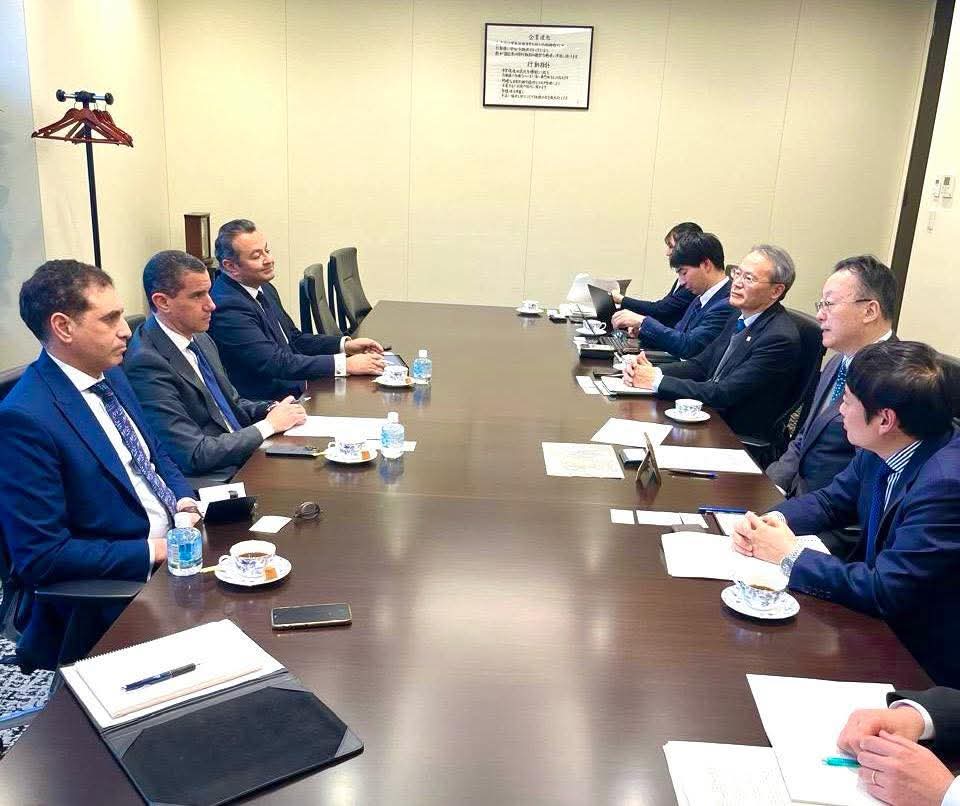
El-Etreby highlighted the structural economic reforms
implemented in Egypt and the unprecedented investment opportunities they have
created, whether in infrastructure projects, manufacturing, or through economic
zones, particularly the Suez Canal Economic Zone, which Egypt seeks to attract
further Japanese investment.
He noted that Egypt now offers promising opportunities in
the manufacturing, food, information technology, renewable energy, and
transportation sectors. These opportunities align with the growing interest of
Japanese companies in using Egypt as an export hub to African, Arab, and
European markets, supported by the country’s extensive network of free trade
agreements.
Kuroda emphasized Egypt’s importance as a key hub for
Japanese companies in the Middle East and Africa. He highlighted the success of
numerous Japanese projects in Egypt and praised the improvements in
macroeconomic conditions resulting from successive reforms, which have led to
higher foreign currency reserves and a more favorable business environment. He
also commended the significant support provided by the Egyptian government to
Japanese companies and the close cooperation between the embassies of both
countries in Tokyo and Cairo.
The parties agreed to continue coordination and joint
efforts, and to organize promotional events in the coming period to showcase
promising investment opportunities to the Japanese business community.