
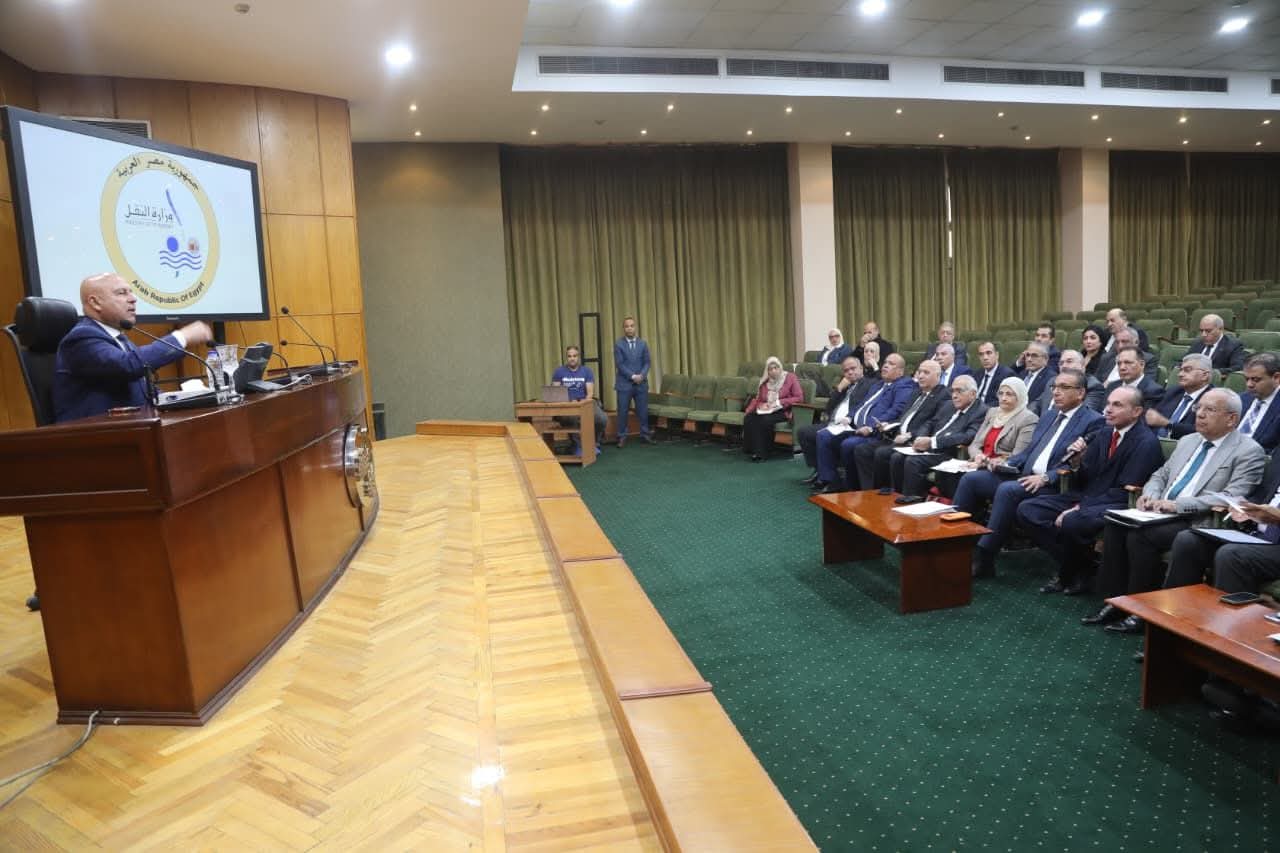
Al-Wazir emphasized that the meeting follows up on the National Program for the Domestication of the Automotive Industry. The session aims to enhance networking with component manufacturers, thereby deepening local manufacturing and strengthening domestic supply chains, aligning with President Abdel Fattah El-Sisi's directives to support national production and maximize value-added.
The Minister explained that accurately identifying the
capacities of local factories is a pivotal step, especially since some
components are currently produced domestically but others are still imported
due to a lack of necessary coordination. He stressed the need to strengthen
communication channels among manufacturers, noting the role of regular
"negative exhibitions" organized by the Ministry to highlight
production inputs and spare parts requiring local manufacturing.
Al-Wazir presented a list of components targeted for
domestication steel used in strategic structures and components, galvanized
steel compliant with international specifications, glass and rubber components
meeting vehicle quality standards, manufacturing of screws, rivets, and
fasteners, bus dashboards and air conditioning units, and increasing the local
production percentage of lithium batteries for electric vehicles.
He stressed focusing on these to achieve complete local
manufacturing, noting the list was based on a comprehensive database of local
production capacities. He affirmed these components are the cornerstones of the
localization plan. The Ministry will provide all supportive measures—including financing,
incentives, and facilitations—to achieve fully integrated local manufacturing
relying on national products and enhancing industry competitiveness.
Engineer Al-Wazir outlined the ministry’s two core axes for success in the automotive sector: Sustainability: Seen as the foundation for successful industrial domestication, encompassing the sustainability of legislation, the investment environment, and laws regulating the vehicle sector.
Vehicle Domestication: Achieved by increasing reliance on
local products and deepening the local manufacturing of all car, bus, and mass
transport components.
Component manufacturers presented their demands, including
addressing customs distortions on certain raw materials and production inputs,
and providing unified technical specifications. They also showcased their current
capabilities and future expansion plans, demonstrating their readiness to
contribute.
Manufacturers praised the Ministries' efforts in supporting
local factories, citing the continuous follow-up, technical support, and
programs linking factory capacities with the actual needs of vehicle
manufacturers.
The Minister confirmed that local factories are close to fully localizing automotive glass manufacturing (including required thicknesses, printing, and curvature). Significant progress has also been made in manufacturing screws, fasteners, car interiors, and exterior body parts. He concluded this progress reflects the local industry's ability to meet production requirements with high quality, moving Egypt closer to full reliance on local products in the automotive sector.