
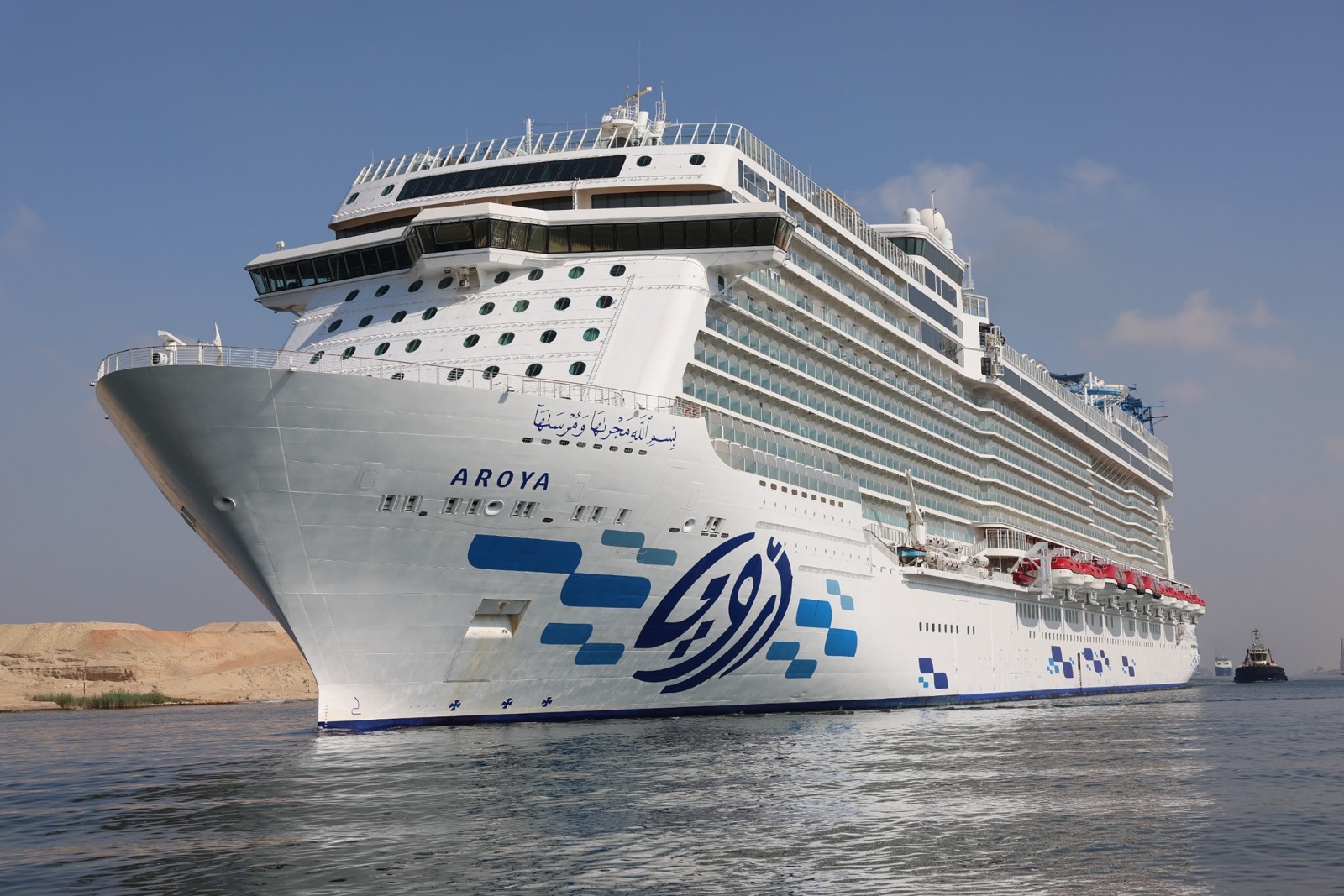
The transit of the cruise ship comes as part of ongoing efforts to reinforce the Suez Canal's position as a hub for maritime tourism and logistics. The ship is scheduled to make a stop at the Sharm El Sheikh port, carrying approximately 2,300 tourists of various nationalities and a crew of over 1,500.
Flying the flag of the Marshall Islands, the
"Aroya" is 335 meters long, 38 meters wide, and can carry up to 3,362
tourists and 1,620 crew members.
Rabie confirmed that this is the third time the ship has
transited the canal in less than a year, demonstrating growing confidence in
the canal's readiness and ability to accommodate all types of cruise ships. The
vessel previously passed through the canal in December 2024 and June 2025.
Rabie explained that the authority's flexible marketing
policies have successfully attracted international passenger ships to transit
the canal. Cruise ships passing through the canal benefit from discounts and
incentives on transit fees if they make stops at Egyptian ports on the Mediterranean
and Red seas.
He added that these flexible marketing policies for cruise
ships have yielded positive results. The incentives have attracted 69 cruise
ships between 2021 and 2024, carrying a total of about 38,000 tourists and
generating revenues of around $15.8 million.
The authority's marketing policies come amid expectations of significant growth in the global maritime tourism market. Projections indicate that the number of cruise ship tourists will reach about 38 million by the end of 2025, rising to 40 million by the end of 2026.