
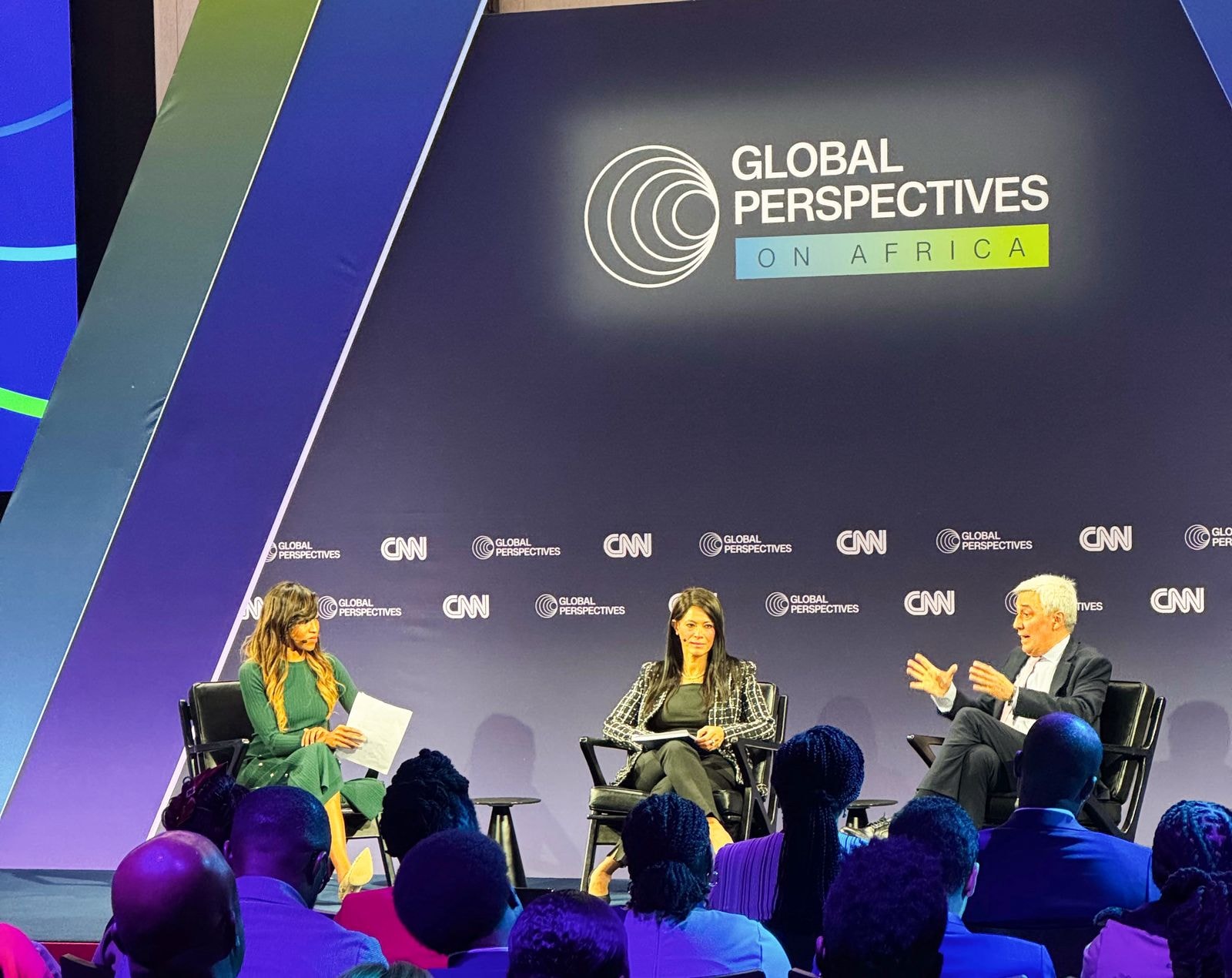
The Minister emphasized that Africa stands at a critical juncture amid global geopolitical shifts, noting its vast resources: the continent holds about 30% of the world's mineral wealth and enjoys a pivotal strategic location linking three continents. This positions Africa to become a major hub for global trade and supply chains. Al-Mashat argued that Africa's potential requires maximizing its role in the global economy through mutually beneficial development and investment partnerships.
She highlighted the importance of
the African Continental Free Trade Agreement (AfCFTA) for regional economic
integration, which will create one of the world's largest commercial markets,
encompassing over 1.4 billion people. The AfCFTA, she stated, is a fundamental
pillar for boosting investment, joint manufacturing, and building an African
economic power capable of delivering genuine added value.
Al-Mashat stressed that financing
challenges persist across many African nations due to high borrowing costs,
which hinder investment capacity and the implementation of vital projects in
health, education, and infrastructure. She pointed out that African countries
spending a large percentage of revenue on debt servicing reflects a gap that
demands reform of the global financial system to ensure fair funding and
support developing nations in achieving economic growth and the Sustainable
Development Goals (SDGs).
Reviewing Egypt's experience, the
Minister highlighted its success in mobilizing finance and maximizing private
sector participation through innovative, transparent partnerships based on national
ownership, rather than a typical lender-borrower relationship. She noted that
international institutions provided about $16 billion to the Egyptian private
sector in recent years. She cited Egypt's "NWFE" program (Nexus of
Water, Food, and Energy) platform as a global model for climate investment
mobilization, successfully forging partnerships to encourage green investments.
Al-Mashat added that Egypt is
continuing its economic reform via a "National Economic Development
Narrative" focused on transitioning to a private sector-led,
export-oriented growth model. This involves improving the investment climate
and directing public investments to enhance competitiveness and achieve
sustainable and inclusive growth.
The Minister also outlined
Egypt's vision for strengthening inter-regional alliances by developing
strategic partnerships between Africa, Europe, and the Gulf, leveraging Egypt's
geo-economic position as a gateway between the North and the South. She
affirmed that developing sustainable trade corridors and funding clean energy
and green manufacturing projects will drive the continent toward a new phase of
growth.
Concluding her remarks, Al-Mashat
stressed that achieving fair and sustainable growth depends on building
economic alliances capable of expanding investment and boosting integration.
She reiterated that Africa has the prerequisites to be central to global
economic transformations, and Egypt will continue working with partners to foster
a more inclusive and sustainable development environment across the continent.
The conference, organized by CNN International, also saw participation from senior figures, including WTO Director-General Ngozi Okonjo-Iweala and EIB President Nadia Calviño.