
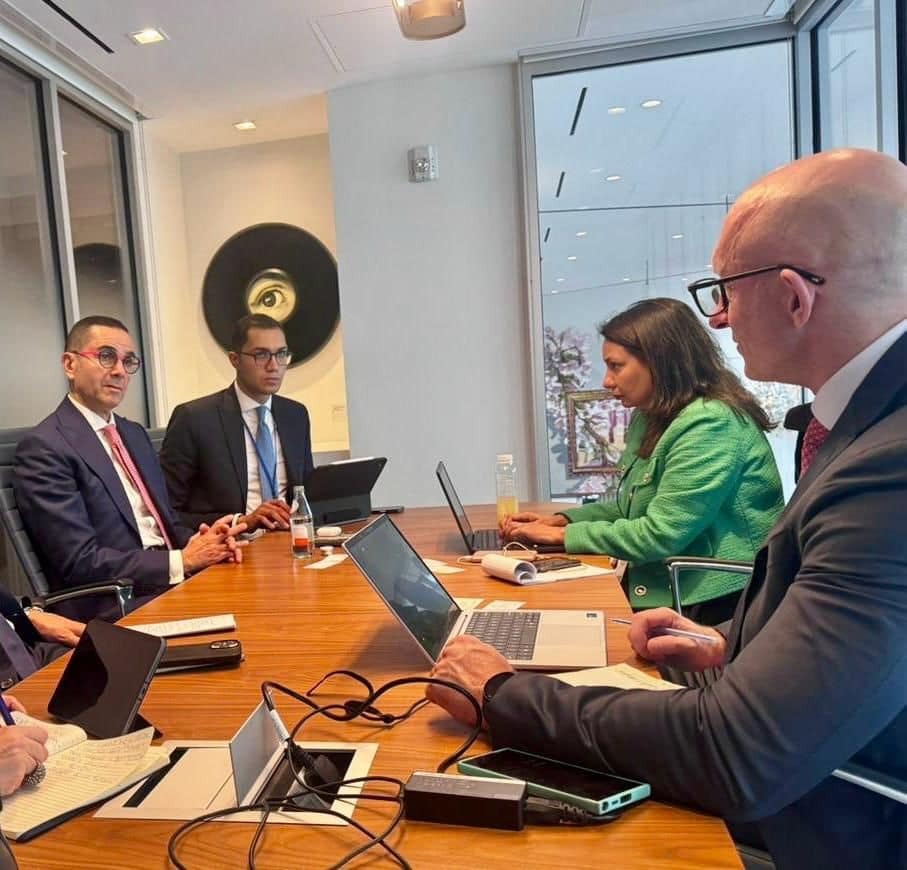
El-Khatib stressed that the Egyptian government is executing a comprehensive economic program aimed at building a more flexible, diversified and competitive economy. The program is based on a partnership with the private sector and is stimulating sustainable growth through structural reforms and stable financial and monetary policies to ensure a stable business environment.
The Minister clarified that recent exchange rate policy
reforms, which adopted genuine flexibility driven by market forces, along with
increased Foreign Direct Investment (FDI) inflows, have helped bolster foreign
reserves and restore international institutions' confidence. This has
positively impacted the current account balance, which is gradually improving
due to growth in non-petroleum exports, rising Suez Canal revenues and the
recovery of the tourism sector.
El-Khatib noted that the state is continuing to develop the business
environment by accelerating the digital transformation of the investment
system, which includes activating the unified licensing platform, reducing the
time and cost of company establishment, and implementing more flexible and
attractive incentive policies in high-value-added sectors. He added that a new,
more open and flexible trade policy has significantly reduced customs clearance
time, with an effort to achieve a 90% reduction in both time and cost.
The Minister indicated that while FDI figures show an upward
trend, they remain below ambition. The government is working to double these
inflows through a new national investment strategy based on in-depth sectoral
analysis, citing the need for an integrated system for tourism that includes
infrastructure, promotion and easing entry procedures.
El-Khatib explained that Egyptian monetary policy is now
focused on inflation targeting as the primary criterion for investors, noting
that macroeconomic indicators have begun to improve. He asserted that ensuring continuity,
consistency and transparency is vital for long-term investors.
He also reviewed new policies aimed at unifying the economic
vision and strengthening market stability, pointing to efforts to improve state
asset management through a central unit for governance and monitoring of
state-owned companies, which integrates with the role of the Sovereign Fund of
Egypt to maximize investment returns.
For their part, Friederich and Shetty praised the serious steps taken by the Egyptian government to maintain macroeconomic stability and enhance fiscal discipline. The Fitch Ratings officials stressed that the continued implementation of financial and monetary reforms contributes to increasing the economy's flexibility and its ability to face global challenges. They noted that recent measures in monetary policy and the exchange rate are positive indicators that strengthen the confidence of international institutions and investors in the Egyptian economy.