
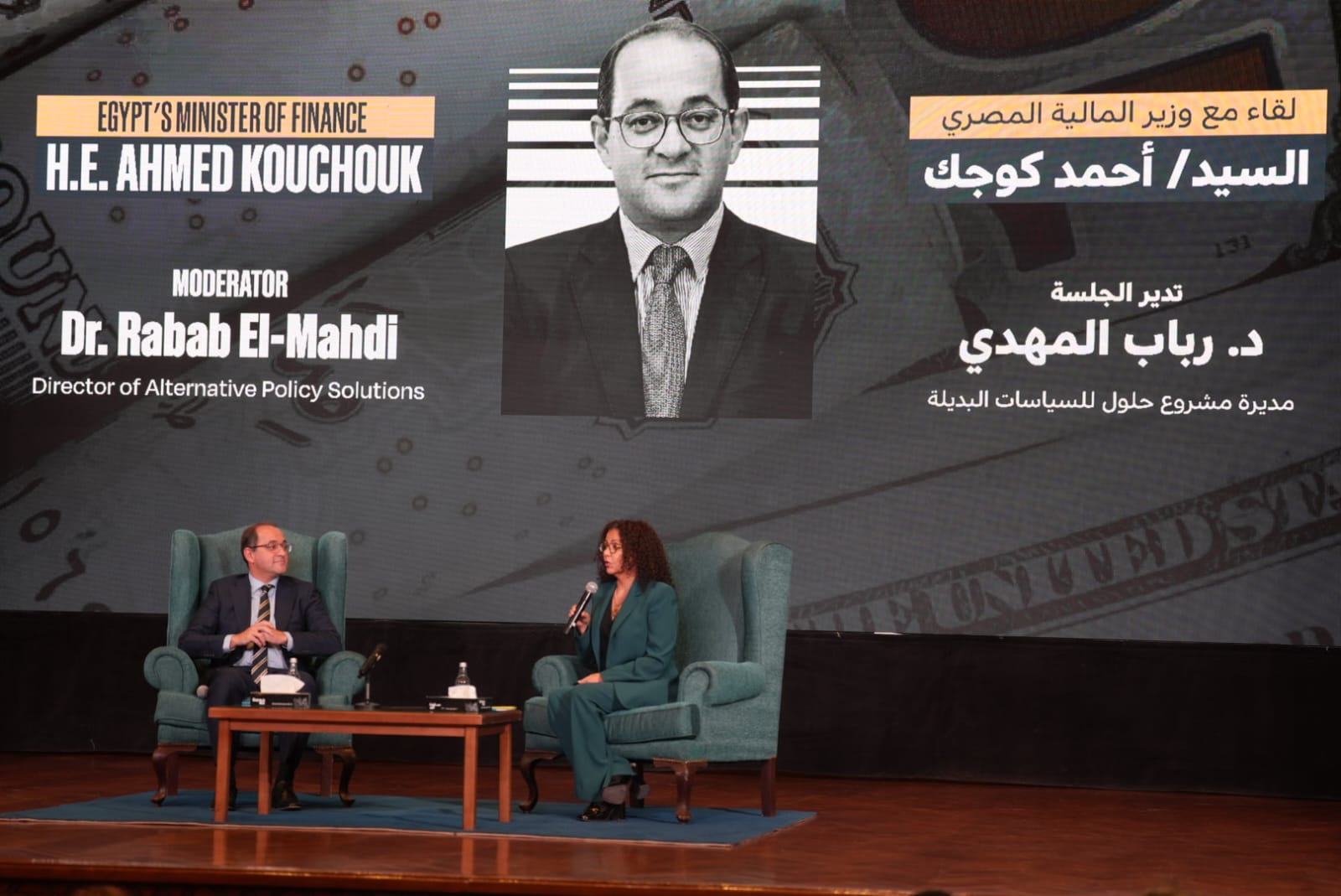
Kouchouk spoke during an open dialogue at the American
University in Cairo, moderated by Dr. Rabab El Mahdi, Professor of Political
Science. He said that Egypt expects to complete the fifth and sixth reviews of
the economic reform program with the International Monetary Fund soon. The
debt-to-GDP ratio has declined by 10% over the past two years, while in other
emerging economies it has risen by about 7%.
He pointed out that the Ministry of Finance is currently
repaying more than it borrows. The external debt linked to the state budget has
decreased by USD 3 billion over the past two years. The government is also
working to exchange part of the debt for investments and to direct any
exceptional revenues toward debt reduction.
Kouchouk emphasized that prioritizing debt reduction as a
state objective reflects the alignment of national policies and priorities. He
noted that Egypt continues to adopt tax policies that support economic activity
and encourage partnerships with the private sector by easing burdens and
simplifying procedures for investors.
He added that the main focus is on broadening the tax base,
protecting taxpayers’ rights, and improving services within a comprehensive
framework of trust-based partnership. Coordination is underway with the Minister
of Investment to unify fees and service charges and to amend the solidarity
contribution system to make it more equitable.
Kouchouk explained that the government is working to
stimulate the economy so that it becomes more capable of attracting investments
and meeting citizens’ needs. Allocations to support economic activity have
increased fourfold this year, with priority given to manufacturing and exports,
particularly in sectors with strong potential for future growth.
He said that the elimination of preferential tax advantages
for state-owned entities engaged in commercial activities was an important
reform that achieved positive results. New initiatives are being developed in
cooperation with the Micro, Small, and Medium Enterprise Development Agency to
promote entrepreneurship and support startups.
He added that additional incentives will be offered to
businesses joining the simplified and integrated tax system. These incentives
aim to encourage growth and highlight the benefits of integration into the
formal economy.
Kouchouk affirmed his commitment to all matters that
directly affect citizens. He noted that spending on health and education
increased by 21% last year, recording the highest growth among all sectors. The
government aims to increase spending on health and education through programs
with stronger and more direct impacts on people’s lives in the coming period.