
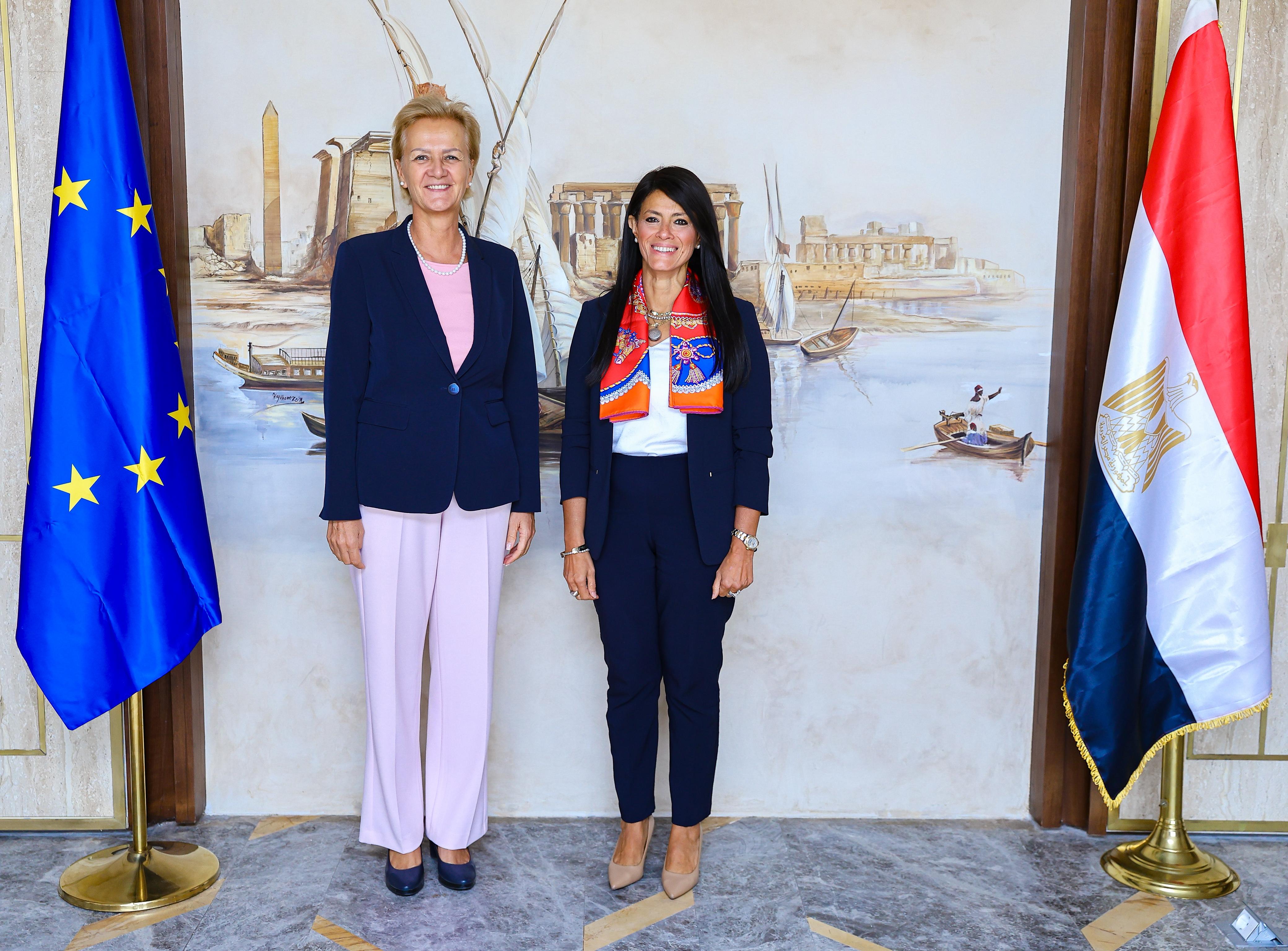
During the meeting, Al-Mashat highlighted the depth of
Egyptian-European relations. She noted that these ties are undergoing a
strategic transformation under President Abdel Fattah El-Sisi. This shift
followed the elevation of relations to the level of a strategic partnership in
March 2024, along with the announcement of the €7.4 billion European financial
package for Egypt. She stressed that the Ministry is committed to ensuring
continuous coordination between national and European authorities to implement
the economic component of this partnership.
The two sides discussed the future of bilateral and
strategic relations, particularly in the economic sphere. Talks focused on
efforts to attract investments through the €1.8 billion investment guarantee
mechanism. Al-Mashat emphasized that the upcoming EU-Egypt Summit, scheduled
for October in Brussels, will consolidate the partnership and reflect the
convergence of visions. She said the summit underscores both sides’ commitment
to shared interests and to achieving sustainable development.
Al-Mashat pointed out that the development of
Egyptian-European relations coincides with Egypt’s ongoing economic
transformation. The government is pressing ahead with reforms through the
“National Narrative for Economic Development.” The initiative aims to maximize
the benefits of advanced infrastructure built over the past decade, strengthen
competitiveness, shift toward higher-productivity sectors, empower the private
sector, localize industry, attract investments, and improve labor market
efficiency.
She praised the partnership with the European Union,
especially in areas of common interest that will shape the future of economic
relations. These include green hydrogen, renewable energy, digital
transformation, SME development, and increased investment. She added that Egypt
welcomes cooperation with the EU under the “Global Gateway” initiative, which
promotes green and digital transformation partnerships with friendly countries.
The meeting also addressed Egypt’s efforts to adapt to the
EU’s Carbon Border Adjustment Mechanism (CBAM). Al-Mashat outlined measures
being taken by the government to accelerate the green transformation in the
industrial sector and to boost the competitiveness of Egyptian products under
the new mechanism. The discussions also reviewed progress in the joint project
to support public and economic governance in Egypt, carried out with the EU and
the Organization for Economic Co-operation and Development (OECD).
It is worth noting that Egypt received €1 billion from the
EU at the end of last year under the “Macroeconomic and Budget Support”
mechanism. The Ministry of Planning, Economic Development, and International
Cooperation is currently monitoring the implementation of the second phase of
this agreement as part of the National Structural Reform Program.