
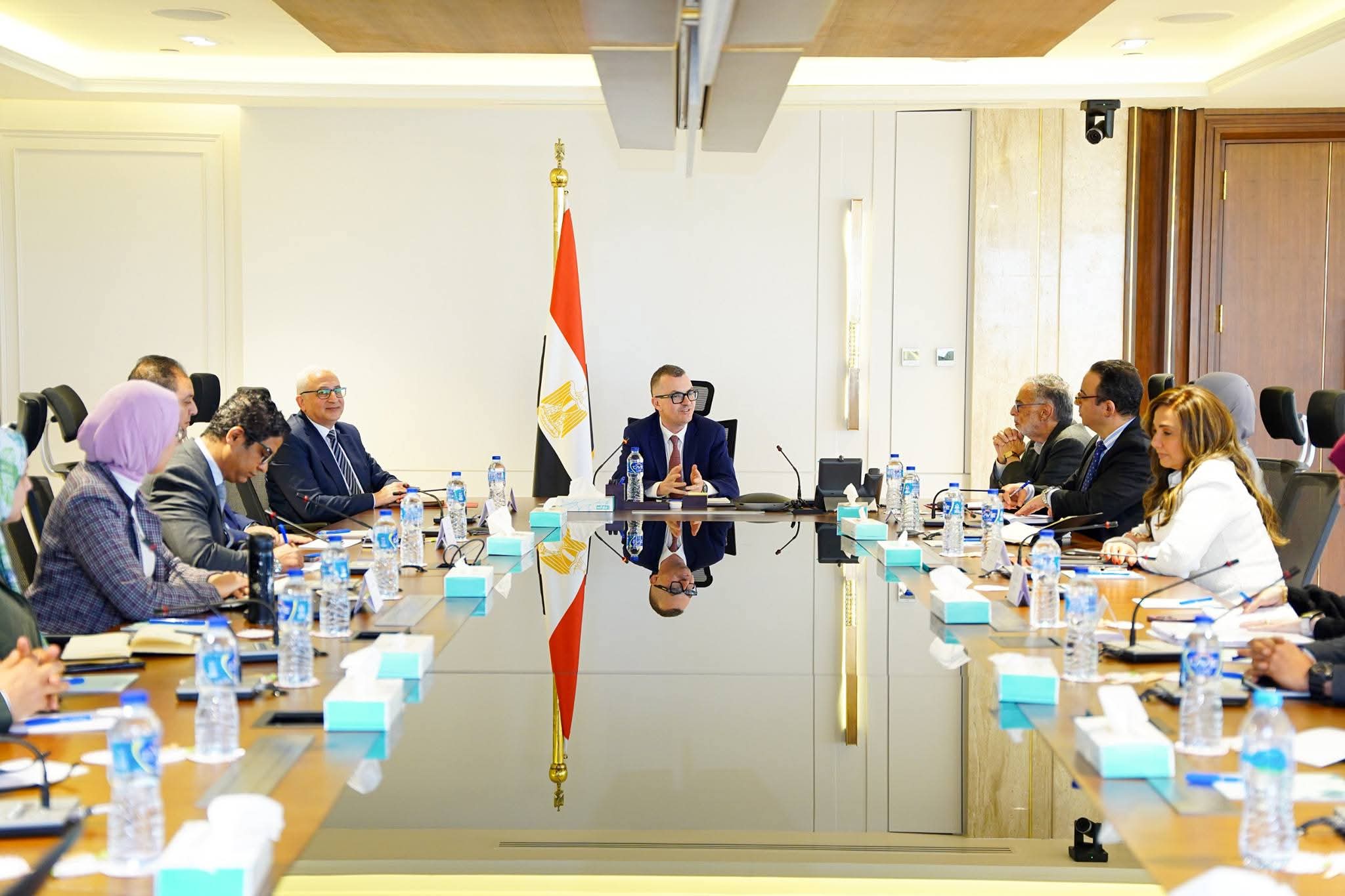
During the meeting, the minister reviewed priority work files. He directed the swift completion of ongoing efforts to ensure smooth operations and enhance coordination across sectors. The aim is to achieve the state’s targets for sustainable economic development.
Dr. Rostom emphasized that the efficient and consistent
operation of the ministry is a top priority. He called for regular monitoring
of implementation rates and accelerating performance. This approach ensures
maximum utilization of available resources and supports comprehensive and
sustainable development objectives.
He highlighted the importance of teamwork and strengthening
internal communication in all sectors linked to the plan. These measures align
with Vision 2030 and aim to improve the efficiency of the work system.
The minister reaffirmed the government’s full commitment to
implementing President El-Sisi’s directives. He stressed that citizens remain
the top priority. The state’s vision focuses on achieving sustainable growth,
enhancing economic stability, and improving the efficiency of public spending.
Dr. Rostom added that the president’s directives aim to
improve quality of life, raise service standards, and optimize public
expenditure. The ministry’s plans seek to support the state’s efforts in
providing decent job opportunities and expanding social protection coverage.
In a related context, Dr. Rostom referred to Prime Minister
Dr. Mostafa Madbouly’s guidance on government priorities for the upcoming
phase. These focus directly on citizen-centered issues, including improving
quality of life, alleviating living burdens, and meeting essential needs.
He highlighted two top-priority files. The first is the
presidential “Decent Life” initiative, aimed at developing rural Egypt, with
instructions to accelerate its implementation and meet citizens’ expectations.
The second is comprehensive health insurance, with efforts to expedite the
integrated plan for this vital sector.
The minister stressed the importance of strengthening public
investment governance. This is considered a key pillar for enhancing spending
efficiency and maximizing developmental returns on available resources. He
emphasized adherence to objective criteria in project selection, aligning
projects with the state’s strategic goals, and continuously monitoring
implementation rates.
Dr. Rostom noted that directing investments to priority
sectors contributes to financial sustainability and boosts national economic
competitiveness. He affirmed that the goal is to maximize the developmental
return on public investments while ensuring efficient and effective resource
management.
He also pointed to the importance of coordination and
integration across ministries and relevant authorities. This ensures unified
efforts and consistency between sectoral plans and the strategic objectives of
the annual and medium-term plans, in accordance with the Unified Planning Law.
Collaborative work among government institutions is a fundamental pillar for
successful reform and development programs. It prevents duplication of efforts,
maximizes resource utilization, and positively impacts growth rates, ensuring
that citizens’ needs and priorities are effectively met.